I Let My Colleague Steal My Work to See How Far She'd Go—Then Watched Her Career Collapse in Real Time
I Let My Colleague Steal My Work to See How Far She'd Go—Then Watched Her Career Collapse in Real Time
I Let My Colleague Steal My Work to See How Far She'd Go—Then Watched Her Career Collapse in Real Time
The Algorithm Takes Shape
I'd been staring at the same spreadsheet for three hours, and my eyes were starting to blur. The client retention data sat there in neat columns, mocking me with its refusal to reveal any obvious patterns. I knew there was something in these numbers—some combination of variables that would unlock the cost-saving strategy our department desperately needed. I'd tried sorting by industry sector, by contract value, by geographic region. Nothing clicked. The coffee next to my keyboard had gone cold an hour ago, but I kept sipping it anyway, more out of habit than anything else. Around me, the office had mostly emptied out. A few dedicated souls remained at their desks, their faces lit by the blue glow of monitors. I pulled up another quarter's worth of financial reports and started cross-referencing them against the retention metrics. There had to be a connection I was missing, some insight that would make all these late nights worth it. The answer was buried somewhere in the numbers, and I had three weeks to find it.
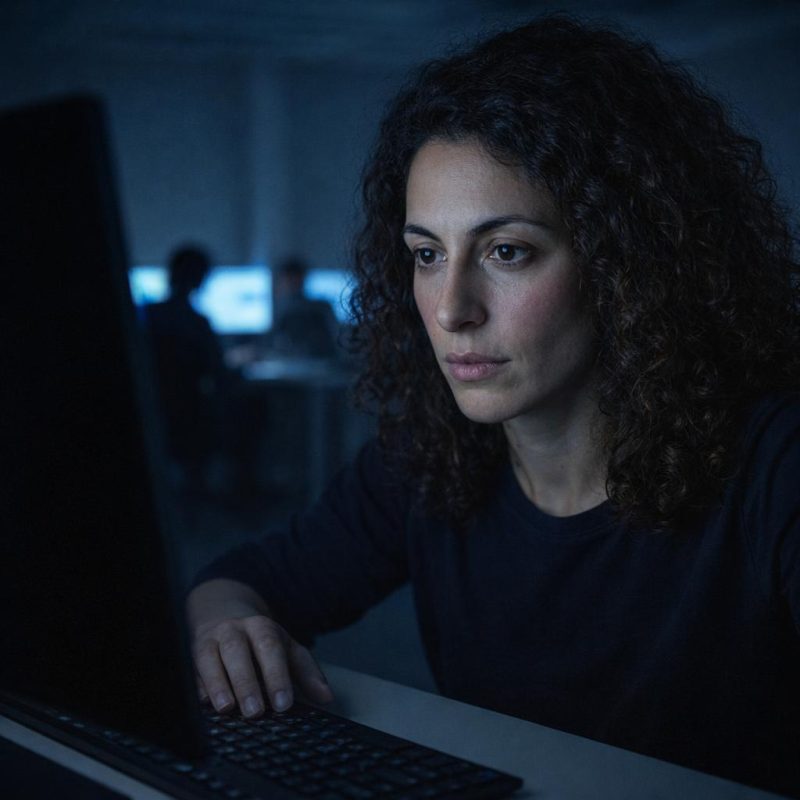 Image by RM AI
Sleepless Nights and Data Points
Sleep became optional after that first breakthrough moment. I spent the next seventy-two hours building financial models that could project market behavior three years out, subsisting on coffee and the quiet hum of the office after hours. My apartment saw me only for quick showers and changes of clothes. The cleaning staff knew me by name now, nodding as they emptied my overflowing trash can of energy drink cans and takeout containers. I tested scenario after scenario, adjusting variables and watching the projections shift. The legacy server data from our archives turned out to be gold—nobody had thought to cross-reference it with our current metrics before. I documented everything meticulously, knowing that any algorithm this complex would need ironclad methodology behind it. My handwriting got messier as exhaustion set in, but the numbers kept getting clearer. I discovered that phased implementation could reduce risk while maximizing adoption rates across different client segments. By Thursday morning, the algorithm started producing results that looked almost too good to be true.
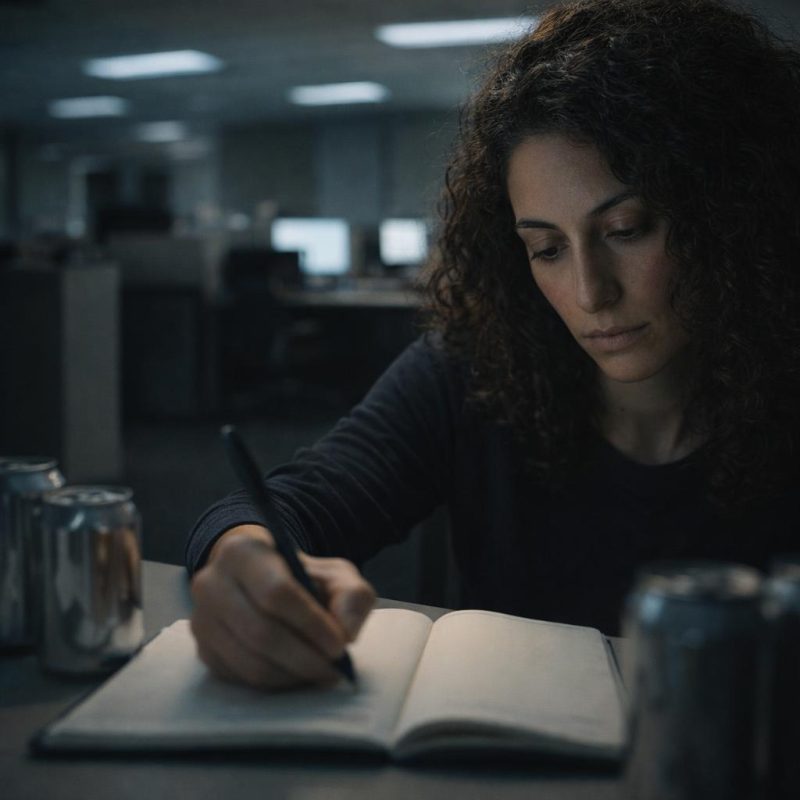 Image by RM AI
Coffee and Curiosity
Jenna caught me in the break room on Friday afternoon, and I was too tired to be anything but honest. She had this way of making conversation feel effortless, leaning against the counter with her coffee cup and asking about my project like she genuinely cared. I found myself explaining the market analysis I'd been developing, probably in more detail than I should have. She nodded along, her eyes bright with what seemed like authentic interest. "That sounds incredibly complex," she said, shaking her head with an impressed smile. "Financial modeling was never my strong suit. I don't know how you keep all those variables straight." I laughed and admitted it had been a challenge, then walked her through some of the technical approaches I'd used. She asked smart questions about the data sources and implementation timeline. It felt good to talk about the work with someone who seemed to appreciate the effort behind it. As we headed back to our desks, she made a joke about stealing my ideas, and I laughed, not thinking much of it at the time.
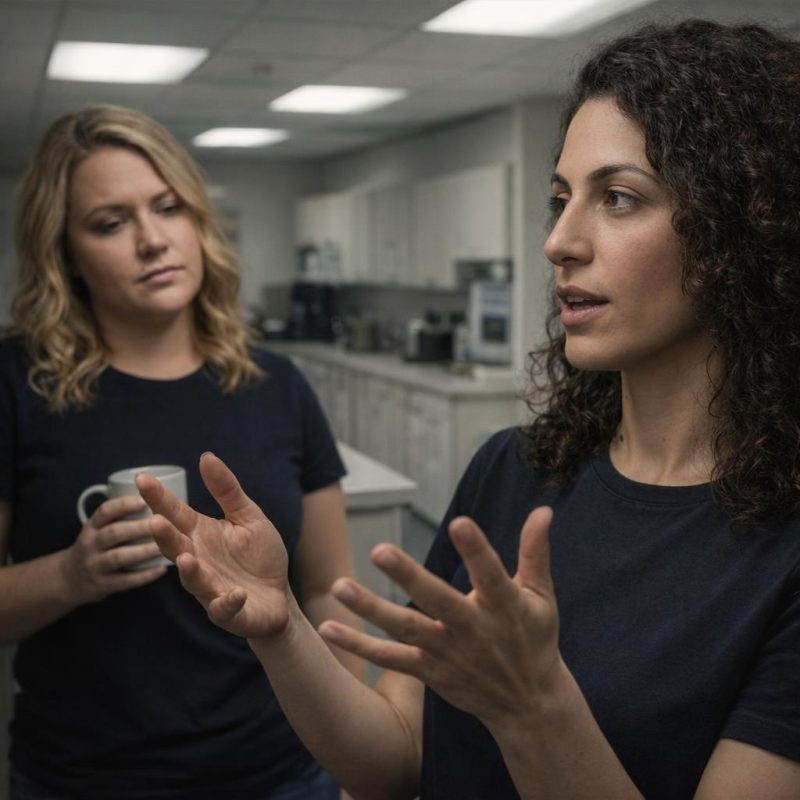 Image by RM AI
The Breakthrough
The algorithm finally clicked into place on a Tuesday afternoon, and I actually gasped out loud at my desk. The variables aligned in a way that produced scalable cost-savings across multiple client sectors—not just one or two, but consistently across the board. I ran the model three more times just to make sure I hadn't made an error. Same results. I tested it against different industry verticals: manufacturing, retail, healthcare. The projections held steady, showing implementation pathways that were both practical and profitable. My hands were shaking slightly as I documented the mathematical approach, making sure every assumption was clearly stated and every calculation was transparent. This was the kind of work that could actually make a difference, the kind of proposal that executives noticed. I created a new folder on the shared drive, then immediately copied everything to two separate backup locations. My personal external drive. A cloud storage account. I wasn't taking any chances with three weeks of intensive work. I saved the file, backed it up twice, and allowed myself a moment of pride before starting on the presentation slides.
 Image by RM AI
Submitting the Package
I walked to Sarah Mitchell's office with my completed proposal on a Wednesday morning, three weeks of work compressed into a seventy-page document with embedded financial models and implementation timelines. She looked up from her computer as I knocked on her open door, and I saw her reading glasses hanging from the chain around her neck. "The market penetration proposal," I said, setting the bound document on her desk. She picked it up, weighing it in her hands with a slight smile. "Comprehensive," she observed, flipping through the first few pages. I walked her through the key innovations—the algorithm's approach to phased implementation, the way it accounted for sector-specific variables, the projected ROI timelines. Sarah made notes in her leather portfolio, nodding occasionally. "This is solid work," she said, her tone warm but professional. "I'll need to review it thoroughly over the weekend. The executive committee has their next review cycle coming up, and this could be a strong addition." I thanked her and turned to leave, feeling that particular satisfaction that comes from delivering something you know is good. Sarah glanced at the title page, nodded approvingly, and said she'd review it over the weekend for the upcoming executive cycle.
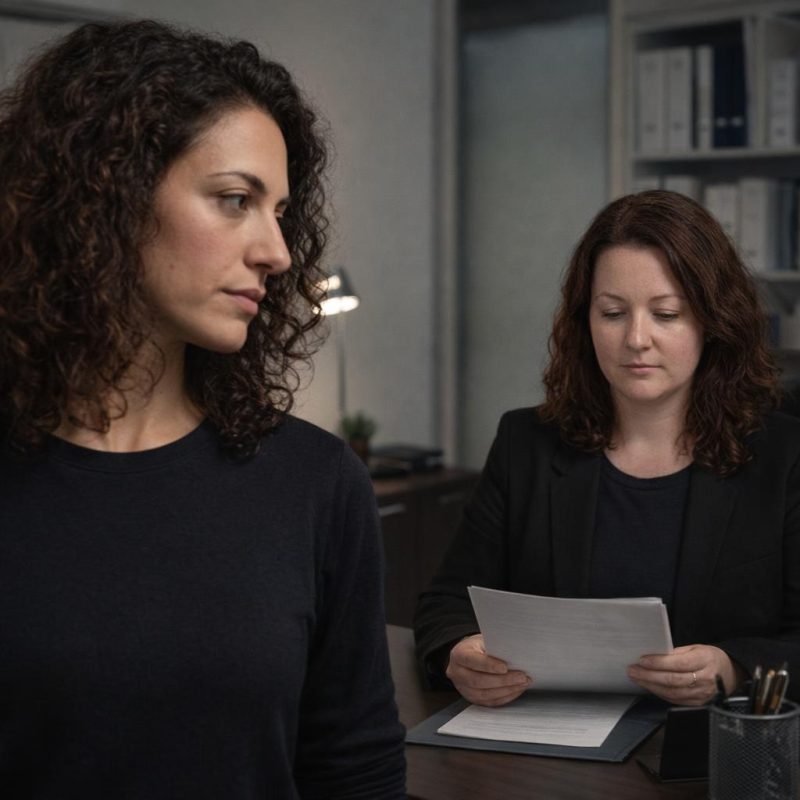 Image by RM AI
The Waiting Game
I checked my email compulsively for three days, refreshing the inbox between client calls and meetings, waiting for Sarah's feedback on the proposal. Every notification made my heart jump, but it was always something routine—meeting confirmations, project updates, the usual corporate noise. I told myself Sarah was busy, that a seventy-page proposal deserved thorough review, that no news didn't mean bad news. I had regular work to focus on anyway. Client presentations to prepare, quarterly reports to file, the normal rhythm of corporate life. But my mind kept drifting back to that proposal sitting on Sarah's desk, wondering what she thought of the algorithm, whether the executive committee would see its potential. I resisted the urge to follow up too quickly. Nobody likes an anxious employee hovering over their shoulder, and I'd worked with Sarah long enough to know she appreciated patience and professionalism. By Wednesday afternoon, my phone buzzed with a calendar invite for an impromptu team meeting scheduled for the next morning.
 Image by RM AI
Collaborative Approaches
Sarah opened the morning meeting by talking about new executive preferences for team-based presentations and collaborative project ownership, her words careful and diplomatic. I sat across from her in the small conference room, Jenna to my right, both of us listening as Sarah explained some shift in corporate culture I hadn't heard about before. "The committee has expressed interest in seeing how teams work together on major initiatives," Sarah said, adjusting her reading glasses. "They believe collaborative approaches demonstrate our department's cohesion." That seemed reasonable enough, though I wasn't sure why it required an emergency meeting. Then Sarah mentioned my proposal specifically, and I sat up straighter. "The market penetration strategy is exactly the kind of innovative thinking we need," she continued, but then she used phrases like "team effort" and "shared credit," and I felt my stomach tighten slightly. I asked who would be presenting it, how the collaboration would work in practice. Sarah's answers were diplomatic but vague, talking about "finalizing the approach" and "determining the best team structure." Jenna stayed quiet throughout, taking notes. She mentioned my proposal specifically but used phrases like 'team effort' and 'shared credit,' and I felt my stomach tighten slightly.
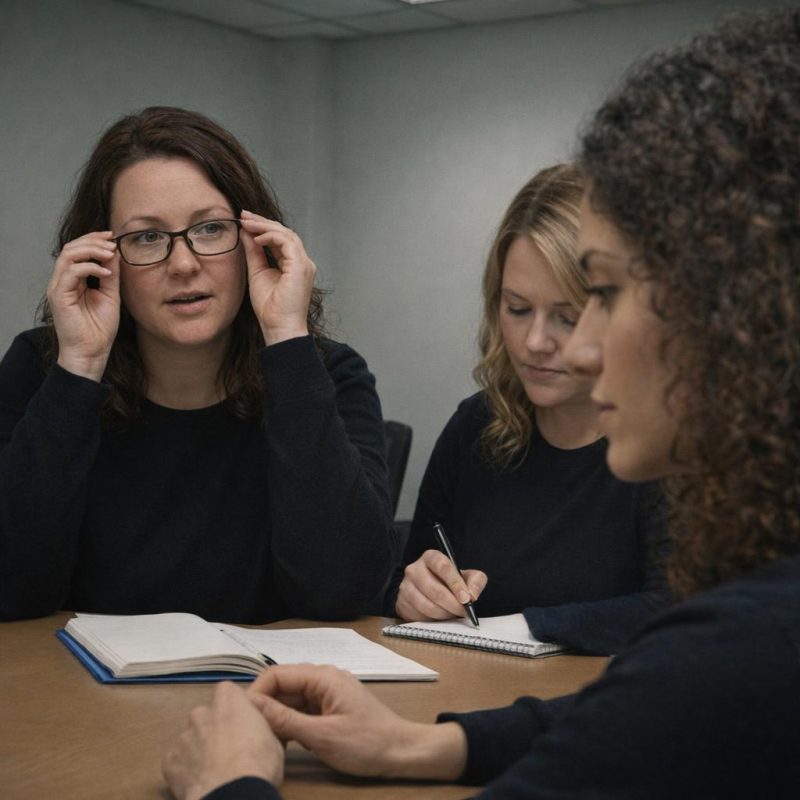 Image by RM AI
Seeking Clarity
I caught Sarah in the hallway after the meeting and asked directly about the presentation timeline and my role in delivering it to the executives. She paused mid-stride, her leather portfolio clutched against her chest, and gave me that professionally pleasant smile that somehow communicated nothing. "We're still finalizing the details," she said, which wasn't really an answer. I pressed a bit more—would I be the primary presenter, would there be a team component, when exactly was the executive review scheduled? Sarah's responses stayed frustratingly vague. "There are ongoing discussions with upper management about the best approach," she explained, already edging away from me. "These decisions take time, and we want to make sure we position everything correctly." I opened my mouth to ask another question, something more specific about my three weeks of work and where exactly it was going, but she was already excusing herself, mentioning another meeting she was late for. She said decisions were still being finalized and walked away before I could ask anything else, leaving me standing there with more questions than answers.
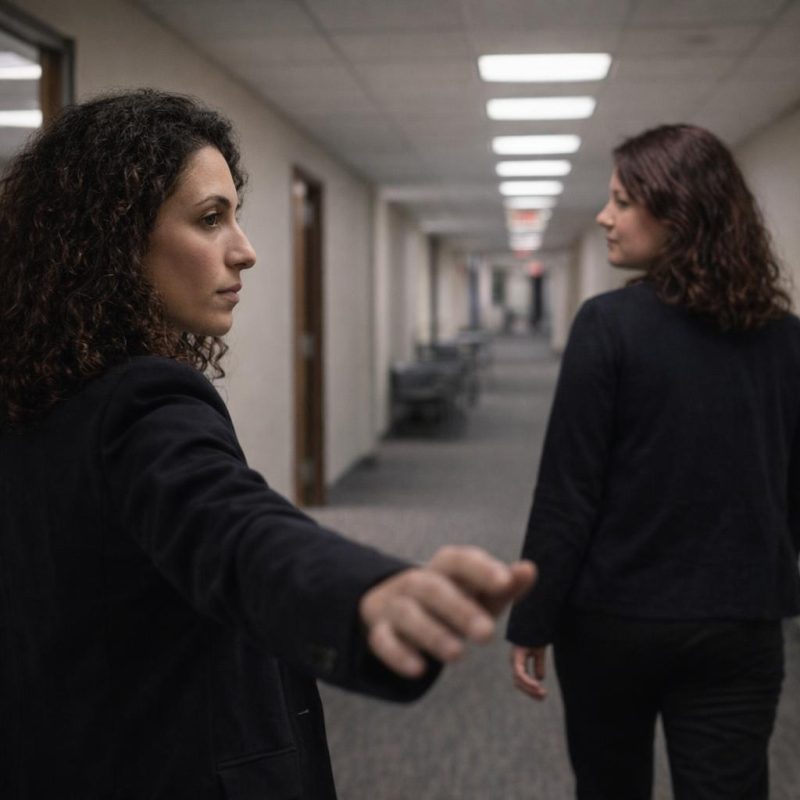 Image by RM AI
The Announcement
The email arrived Friday afternoon with the executive committee agenda attached, and I saw Jenna's name listed as lead presenter for my proposal under a slightly modified title. I stared at my screen, reading the line once, then twice, then a third time, each pass hoping I'd somehow misread it. But the words stayed exactly the same: "Jenna Morrison - Lead Presenter: Strategic Algorithm Implementation for Client Retention Optimization." My proposal had been called "Predictive Algorithm Framework for Client Retention," but the content description matched mine word for word. I scrolled down looking for my name somewhere in the credits, maybe as a contributor or research lead, but found nothing. The meeting was scheduled for the following Thursday, giving Jenna less than a week to prepare a presentation on work she'd barely discussed with me. I sat back in my chair, trying to process what I was seeing. Maybe this was some administrative error, I told myself. Maybe Sarah had accidentally listed the wrong name when she compiled the agenda. But even as I formed these explanations, something in my chest tightened with an unease I couldn't quite shake. I read the line three times, each time hoping I'd misunderstood, but the words remained the same.
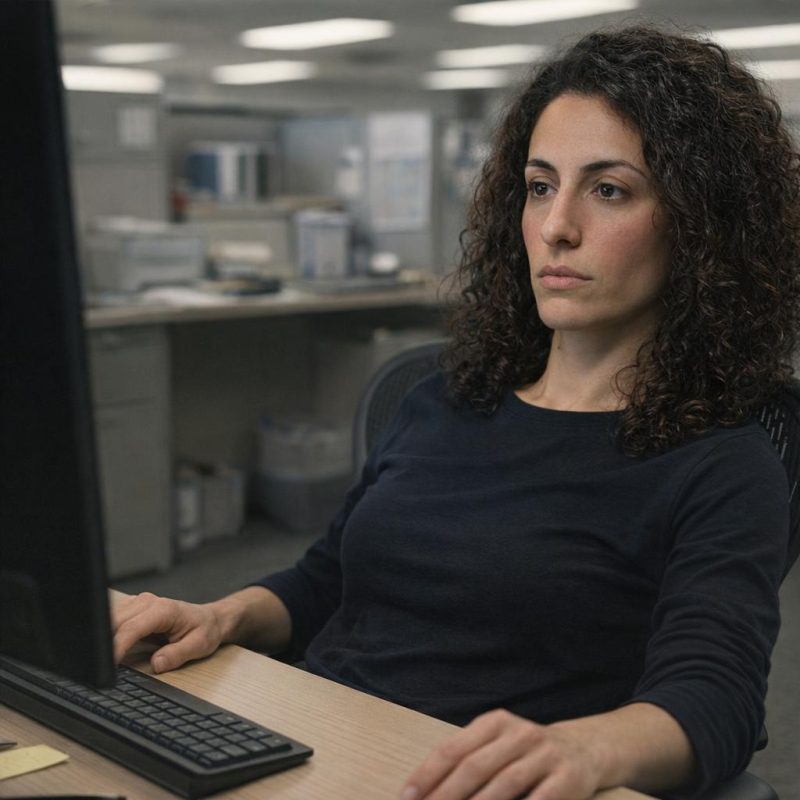 Image by RM AI
Rationalizing the Shift
I sat at my desk convincing myself this was normal, that consulting firms operated on team dynamics and shared credit, that my work would still be recognized even if Jenna delivered it. I'd seen this before on other projects—junior consultants did the research, senior consultants presented to executives. That was just how the hierarchy worked, right? I pulled up old project files from my first year, looking for examples where my contributions had been presented by someone else, and found a few instances that seemed similar enough. Sarah had used that collaborative language in the hallway, talking about team approaches and positioning. Maybe Jenna was just the face of our combined effort, and I'd get proper credit in the actual presentation slides or the follow-up documentation. I tried to hold onto that explanation, repeating it to myself like a mantra that might make it true. But every time I circled back to that reasoning, it felt thinner, more transparent. The justifications kept crumbling under the weight of what I actually knew—that this was my proposal, my algorithm, my three weeks of work. I couldn't stop picturing my proposal file sitting on Jenna's computer with her name typed across the top. But the justifications felt hollow, and I couldn't shake the image of my proposal file sitting on Jenna's computer with her name on top.
 Image by RM AI
Dodging Questions
I approached Jenna Monday morning to ask about modifications to the proposal, but she kept redirecting the conversation to surface-level topics, her smile bright and her answers vague. "Hey, I saw the executive agenda," I said, keeping my tone casual and collaborative. "I wanted to touch base about the presentation approach." She glanced up from her coffee, that practiced smile already in place. "Oh, it's going to be great! Sarah's really excited about the direction." I nodded, waiting for more, but she'd already turned back to her phone. "I was wondering about the modifications to the framework," I pressed. "Did you want to walk through the technical components together?" Jenna waved her hand dismissively. "We'll have plenty of time to coordinate. I'm still reviewing everything." I tried a more specific angle. "What about the algorithm's learning rate parameters? I had some thoughts on how to explain those to non-technical executives." She looked at her phone again, her smile never wavering. "That's perfect, I'll definitely circle back on that." Then she was gathering her things, mentioning a meeting she was already late for. When I asked a specific technical question about the algorithm, she glanced at her phone and said she'd circle back later, then disappeared into a meeting.
 Image by RM AI
Access Logs
I logged into the shared drive that night and pulled up the file access history, scrolling through timestamps that showed Jenna had opened my proposal documents seventeen times in the past week. The system tracked every view, every download, every modification, and there was her name appearing over and over in the log. Monday at 9:47 AM, Tuesday at 2:13 PM, Wednesday at 11:28 AM—the list went on. I'd accessed my own files maybe four times in that same period, just routine checks and minor updates. But Jenna had been in there constantly, opening the main proposal document, the supporting research files, even the raw data spreadsheets I'd compiled. I started taking screenshots, capturing each page of the access log with its damning timestamps. Some of the access times were late at night, others during normal business hours when she should have been in meetings or working on her own projects. I cross-referenced a few timestamps with my calendar and found instances where she'd been reviewing my files during times she'd told me she was too busy to discuss the proposal. The pattern was unmistakable, even if I didn't want to see it. The most recent access was stamped two hours ago, well after she'd claimed to be in meetings all afternoon.
 Image by RM AI
Original Documentation
I opened my original files and compared them line-by-line with the shared drive versions, finding that every innovation I'd developed remained intact while only formatting had changed. The core algorithm structure I'd spent days refining—still there, unchanged. The client segmentation methodology I'd developed from scratch—identical. The predictive modeling approach that had kept me up until 3 AM three nights running—preserved exactly as I'd written it. Someone had adjusted the slide layouts, changed the color scheme from blue to teal, and modified a few section headers to sound more corporate. But the substance, the actual intellectual work, was completely mine. I pulled up my timestamped drafts from three weeks ago and matched them against the current version paragraph by paragraph. Every key insight, every analytical framework, every data interpretation—it was all my work, just dressed up in slightly different packaging. I felt something fierce and protective rising in my chest as I scrolled through the comparison. This wasn't collaborative refinement or team contribution. This was my research, my methodology, my sleepless nights of problem-solving. My algorithm, my research, my three weeks of sleepless nights—all of it was still there, just waiting to be presented by someone else.
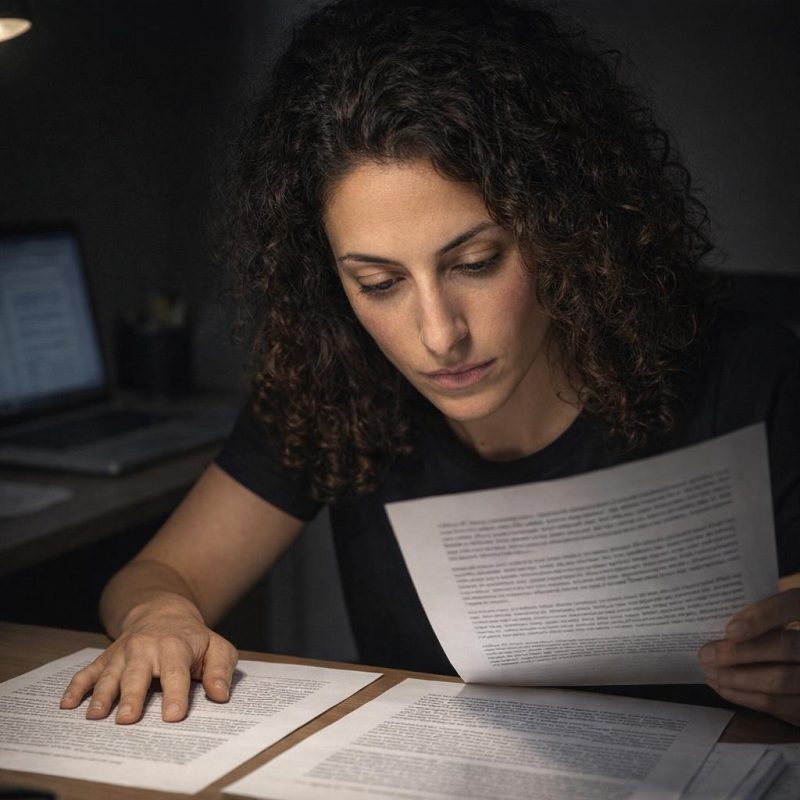 Image by RM AI
Weighing Options
I made a list of possible responses—confront Jenna directly, escalate to Sarah, present evidence to HR—but each option felt risky in ways I couldn't fully predict. Direct confrontation might give Jenna time to create a cover story or claim we'd been collaborating all along. Going to Sarah seemed problematic given how vague she'd been in the hallway, almost like she was already aware of the arrangement and had chosen not to clarify my role. HR was supposed to handle intellectual property disputes, but I'd watched them navigate a similar situation last year where the person who raised concerns ended up transferred to a different team while the accused got promoted. I pulled up my company handbook and read through the sections on work attribution and dispute resolution, finding mostly corporate language that protected the firm more than individual contributors. The problem with being right in these situations was that you still had to prove it, and proving it meant accusing a well-liked colleague of theft in an environment where collaboration was the stated value. I'd seen careers stall over less, watched people get labeled as "not team players" or "difficult to work with" after raising legitimate concerns. Corporate politics had a way of turning accusers into problems, and I'd seen careers damaged by being right at the wrong time.
 Image by RM AI
Strategic Patience
I decided to wait and watch, remembering a mentor's advice that direct accusations in boardrooms often backfire on the accuser more than the accused. She'd told me once, years ago when I was still new to consulting, that the person who looks paranoid or territorial rarely wins, even when they're completely justified. "Let people reveal themselves," she'd said. "Give them enough rope." I closed my laptop and sat in the dark of my apartment, thinking through what waiting actually meant. It meant watching Jenna prepare to present my work. It meant sitting through that executive meeting while she took credit for my algorithm. It meant swallowing my anger and my sense of violation while I built an undeniable case. But it also meant I'd have proof, real documentation that couldn't be dismissed or explained away. If I moved too early, this became a he-said-she-said situation where Jenna's charm and seniority would probably win. If I waited and documented everything, I'd have timestamps, access logs, original files, and a clear timeline that told the whole story. The strategy felt counterintuitive, almost painful, but it was the smart play. If Jenna was going to present my work, I'd let her—but I'd make sure there was a record that proved whose work it really was.
 Image by RM AI
Embedding Evidence
I spent Tuesday evening creating subtle watermarks in the background images of my original presentation, embedding my name in faint gray text that would only appear under specific lighting conditions. I'd researched digital watermarking techniques for about an hour, learning how to manipulate opacity levels and color values to create marks that were essentially invisible under normal viewing. Using a light gray text at 2% opacity, I typed my name and the original creation date into the corner of each slide's background image. Under standard projection settings or normal screen brightness, the marks disappeared completely into the background. But if someone knew exactly where to look and adjusted the contrast settings, the text would emerge clearly. I tested it multiple times, projecting the slides onto my wall and viewing them on different devices. Nothing showed up unless I deliberately increased the contrast or knew the precise pixel coordinates. I applied the watermarks to every slide in my original deck, then saved separate copies with different embedding locations as backup. The process was meticulous and slightly tedious, but by midnight I had a complete set of marked files that looked identical to the unmarked versions. The marks were invisible under normal projection settings but would reveal themselves if someone knew exactly where to look.
 Image by RM AI
Building the Case
I spent Wednesday evening building what I mentally called my insurance file. I started with a blank spreadsheet and began logging every single timestamp I could find—the original email I'd sent to Sarah with the proposal attached, the file creation dates on my laptop, the modification history showing every revision I'd made over those three weeks. I pulled up my cloud storage and documented when each backup had been saved, then cross-referenced those dates with my work calendar to show I'd been in the office during every development session. I exported email threads, screenshot file properties, and even pulled server logs showing when I'd accessed the research databases. By midnight, I had a chronological timeline that tracked the proposal's evolution from initial concept to final submission, every entry stamped with dates and times that proved I'd created it. I organized everything into folders labeled by evidence type, then created redundant backups on my personal cloud account, an external hard drive, and a USB stick I locked in my desk drawer. The evidence was airtight—if I needed to use it, there would be no room for doubt about who had created the work.
 Image by RM AI
High-Contrast Watermarks
Thursday night, I went back to the watermarks. The 2% opacity marks I'd embedded earlier were good, but I wanted something more dramatic for the actual presentation environment. I researched how conference room projectors handled contrast settings and discovered that most modern systems had accessibility features that could boost contrast to maximum levels with a single button press. I adjusted my watermarks accordingly, increasing the opacity to 8% and creating a repeating diagonal pattern of my name and the original creation date across every slide's background. Under normal viewing conditions, they remained completely invisible. But when I tested them on my monitor at maximum contrast, my name appeared in clear, unmistakable rows across each slide. I ran the presentation on three different devices, adjusting contrast settings each time, and watched my watermarks emerge like invisible ink under a blacklight. I even tested what would happen if someone converted the files to PDF or printed them—the marks survived every format change. It was a small insurance policy, but in a room full of executives and an IT director, it might be the difference between vindication and silence.
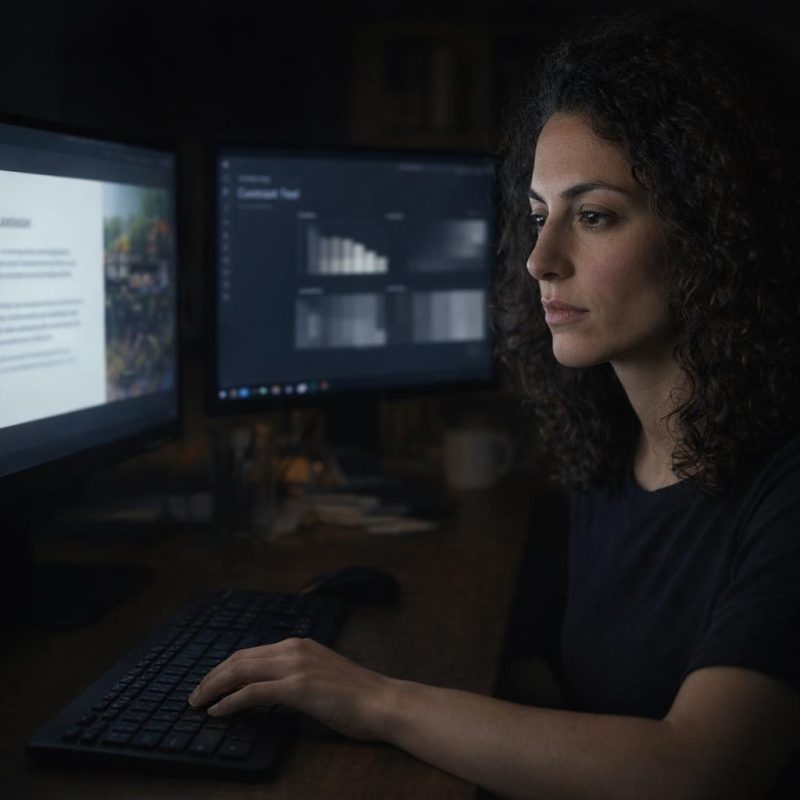 Image by RM AI
The Decommissioning Schedule
Friday morning, I was clearing out my inbox when I noticed an IT department email I'd almost deleted without reading. It was one of those routine system maintenance announcements that usually went straight to trash, but something made me open it. The subject line read "Legacy Server Decommissioning Schedule," and buried in the third paragraph was a date that made me sit up straighter—next Thursday, the same day as the executive presentation. The legacy server housed archived financial data from our older client accounts, the exact datasets I'd used for the proposal's comparative analysis dashboards. I pulled up my proposal files and checked the data links, confirming what I'd suspected—several of the live dashboard elements pulled directly from that server. I logged into the system and verified my access credentials, noting that the authentication required my specific employee ID and password. Most people had migrated their data to the new servers months ago, but I'd kept mine on the legacy system because it was more stable for complex queries. If the proposal's live data links relied on that server, and only I had the credentials to access it, then Jenna's presentation would have a very public weak point.
 Image by RM AI
Setting the Trap
I spent Friday evening at my kitchen table with my laptop, a notepad, and a growing sense of calculated determination. I opened the proposal files and systematically modified every live dashboard link to pull exclusively from the legacy server, removing any redundant connections to the newer systems. Then I accessed the server's security settings and added a secondary authentication layer that required my specific employee ID to view the archived financial data. I tested it thoroughly, logging out and attempting to access the dashboards without my credentials—each time, I got a clear error message stating that authentication had failed and access was denied. I verified that the denial messages would display prominently if someone tried to run the presentation without proper authorization, appearing as red text boxes over the dashboard areas. I checked the timing again—the server would be taken offline for decommissioning at 8 AM on presentation day, but the data would still be accessible to authorized users until the final shutdown at noon. The presentation was scheduled for 10 AM. The presentation would work perfectly—but only if I was the one controlling the access, and I had no intention of sharing those credentials with anyone.
 Image by RM AI
The Observer
Monday morning, I found myself watching Jenna from my desk across the office floor. She was at her workstation, leaning forward slightly as she reviewed something on her monitor, her posture radiating the kind of confidence that came from believing everything was going according to plan. I pretended to work on a budget report while keeping her in my peripheral vision, noting how absorbed she seemed in whatever she was reviewing. Her fingers moved across her keyboard with practiced efficiency, and occasionally she'd pause to study the screen more intently, her head tilting slightly as if considering something. I watched her scroll through what I assumed were presentation slides, her expression focused and almost proprietary. Then a colleague from accounting walked past her desk, and Jenna's hand moved immediately to minimize the window. The movement was quick and smooth, practiced in a way that suggested she'd done it before. She turned to greet the colleague with a warm smile, chatting casually for a moment before the person moved on. I watched Jenna from across the office floor as she reviewed slides on her monitor, her posture confident and focused in a way that made my stomach clench. She minimized the window when a colleague passed by, and I wondered what she didn't want anyone else to see.
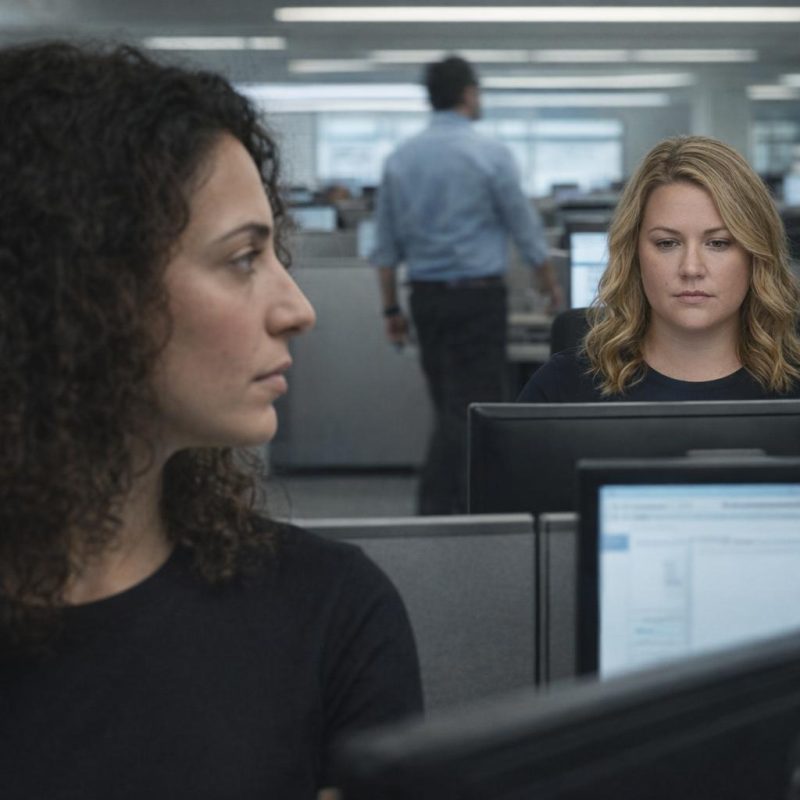 Image by RM AI
The Rehearsal
Tuesday afternoon, I was walking past the third-floor conference rooms when I heard a familiar voice coming from behind a half-open door. I slowed my pace and recognized Jenna's voice, clear and confident, describing implementation timelines and resource allocation strategies. I stopped just outside the doorway, positioning myself where I could hear but not be seen. She was rehearsing the presentation, running through the slides with the kind of polished delivery that came from multiple practice sessions. I listened as she explained the technical framework I'd developed, describing the integration challenges and solutions without a single stumble. There was no mention of collaboration, no acknowledgment of anyone else's contribution—just her voice, smooth and assured, presenting my work as if she'd conceived every element herself. She moved through the cost-benefit analysis section, the part I'd spent two full days building from scratch, pulling data from six different sources and creating custom visualizations. I stood outside the empty conference room where Jenna was practicing her delivery, her voice carrying through the half-open door as she described implementation strategies without once acknowledging their origin. She paused on a slide I remembered laboring over for two full days, then moved forward as if it had cost her nothing.
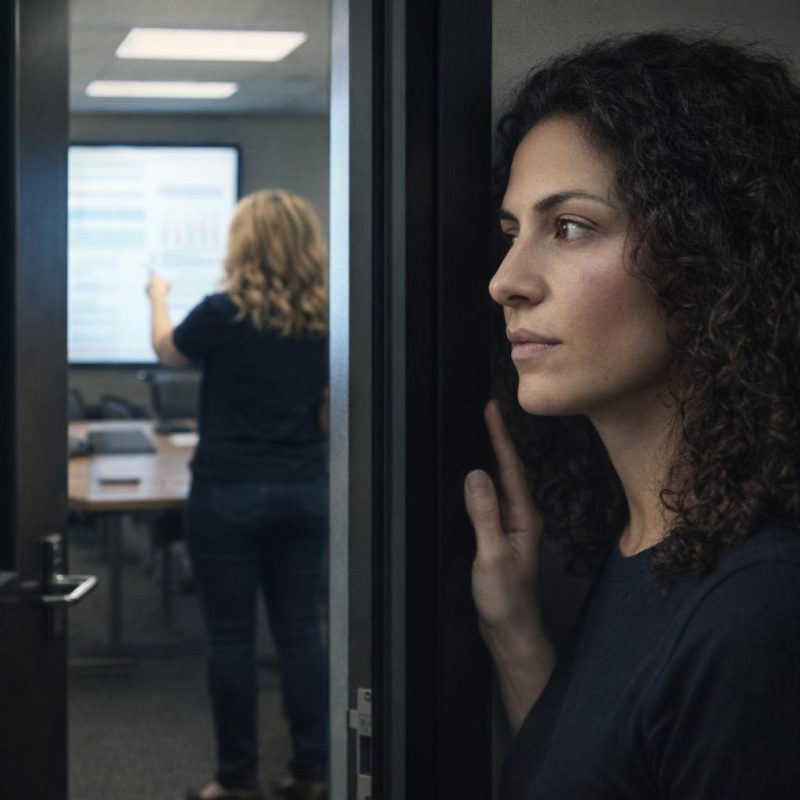 Image by RM AI
Sleepless Nights
Wednesday morning, I was refilling my coffee in the break room when I heard Jenna's voice from the hallway. She was talking to Sarah Mitchell, and something in her tone made me pause with my hand on the coffee pot. I stayed quiet, listening as Jenna described the sleepless nights she'd supposedly invested in perfecting the proposal, her voice carrying that warm, slightly exhausted quality that suggested genuine sacrifice. She talked about working until 2 AM multiple nights, about the research rabbit holes she'd gone down, about the moment everything had finally clicked into place. Sarah made sympathetic sounds, praising Jenna's dedication and commitment to excellence. I felt my jaw tighten as Jenna continued, describing the personal toll of the work, the coffee-fueled late nights, the weekends she'd given up. My hand gripped the coffee cup handle harder than necessary, the ceramic warm against my palm. I focused on keeping my breathing steady, on maintaining a neutral expression even though no one was looking at me. I overheard Jenna telling Sarah about the sleepless nights she'd invested in perfecting the proposal, her voice warm with false exhaustion, and I had to grip my coffee cup to keep my hands steady. Sarah praised her dedication, and Jenna smiled in a way that made me want to speak up, but I held my silence.
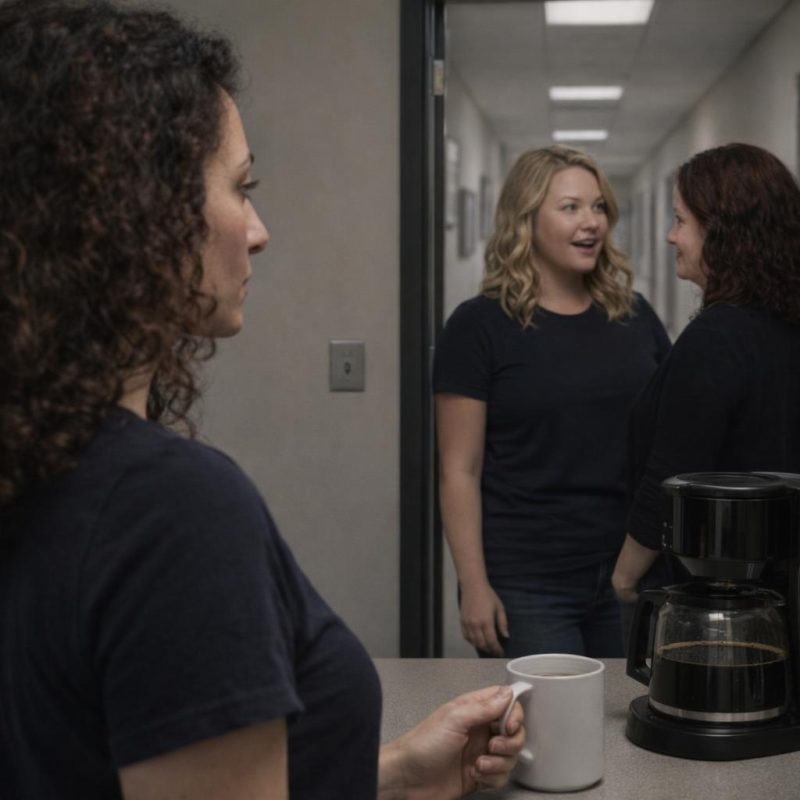 Image by RM AI
Final Preparations
Wednesday night, I sat at my dining table with my laptop and every piece of evidence I'd collected over the past week spread out in front of me. I created a new presentation file and began assembling everything into a clear, chronological narrative. First slide: the original email timestamp showing when I'd submitted the proposal to Sarah. Second slide: file creation dates and modification history from my laptop. Third slide: server logs showing my research database access. I continued building, adding screenshots of my cloud backup timestamps, excerpts from my development notes with dates clearly visible, and side-by-side comparisons of file properties. I included instructions for revealing the watermarks, with screenshots showing what would appear when contrast was increased. I organized the email records chronologically, highlighted the authentication requirements for the legacy server data, and created a final summary slide that laid out the timeline in undeniable clarity. The whole presentation took me three hours to perfect, testing every transition and making sure each piece of evidence was clearly labeled and easy to understand. I assembled my documentation into a single, comprehensive file that night, organizing every timestamp, every backup, every piece of evidence into a presentation that would speak for itself if needed. I saved it with a simple filename that only I would understand, then locked my laptop and tried to sleep.
 Image by RM AI
The Final Lock
Ten minutes before I left for the night, I pulled up the system administration panel on my laptop and stared at the access protocols screen. My hands were steady as I navigated to the legacy server authentication settings, the same servers where all my original research data lived. I updated the authorization requirements, adding a single line of code that would check employee ID credentials against a whitelist. My employee ID was the only one on that list. The change was elegant in its simplicity—nothing would look different on the surface, no alerts would trigger, no logs would flag the modification as unusual. Someone could browse the server directory, see the files, even click to open them. But the moment they tried to actually access the data, the system would check their credentials against my restriction and deny the request. I tested it twice using a dummy account, watching the access denied message pop up exactly as I'd designed it. Then I cleared my browser history, logged out of the admin panel, and shut down my laptop. The change was invisible until someone tried to use it, and by then, it would be too late to redirect.
 Image by RM AI
Presentation Morning
I woke up at five-thirty with my heart already racing, the morning of the presentation feeling heavier than any day I could remember in my consulting career. I lay there for a moment, staring at the ceiling in the gray pre-dawn light, trying to slow my breathing. This was it. Everything I'd built over the past week would either hold up under scrutiny or fall apart completely. I got up and went through my morning routine on autopilot—shower, coffee, the usual motions that felt anything but usual. My hands shook slightly as I poured the coffee, and I had to set the mug down to steady myself. I dressed carefully, choosing a navy suit that made me feel armored, something professional and unshakeable. At my dining table, I opened my laptop one last time and clicked through my evidence file, verifying every timestamp, every screenshot, every piece of documentation I'd assembled. It was all there, organized and irrefutable. I closed the laptop, slid it into my bag, and checked my watch. Six-forty-five. Time to go.
 Image by RM AI
Early Arrival
I reached the executive conference room forty minutes before the scheduled meeting, finding it empty and silent except for the hum of the projection system warming up. The space felt different when it was vacant like this—larger, more intimidating, with the long mahogany table stretching toward the presentation screen at the front. I walked past the executive chairs arranged around the table and headed straight for the back corner, the spot where junior staff usually sat during high-level meetings. From there, I could see the entire room, every seat, every face that would soon fill this space. I set my bag down quietly and pulled out my laptop, opening it on the small side table next to my chair. The evidence file was right there on my desktop, one click away if I needed it. I tested the trackpad, made sure the battery was fully charged, then positioned the laptop at an angle where I could see the screen without drawing attention. The projection system hummed steadily at the front of the room. I settled into my seat, folded my hands in my lap, and waited.
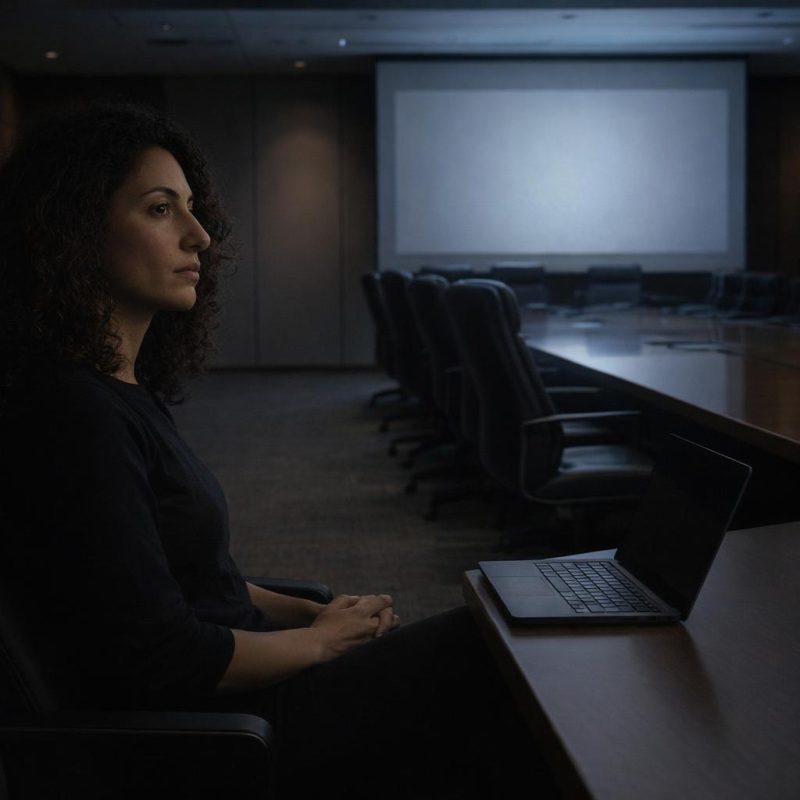 Image by RM AI
The Committee Assembles
The executives began filing in twenty minutes later, their voices low and professional as they claimed seats around the conference table. Mark Thompson arrived first, carrying a leather portfolio and settling into a chair on the left side. David Park followed a few minutes after, his laptop already open before he'd even sat down, wireless headset visible at his collar. They nodded to each other, exchanged brief comments about quarterly projections, then fell into reviewing their own materials. Sarah Mitchell came in next, her reading glasses on their chain, and took a seat near the middle of the table. She glanced back at me briefly, her expression neutral but acknowledging. Then Richard Chen entered, and the entire energy of the room shifted. Everyone straightened slightly, conversations dropped to silence. He moved with the kind of presence that didn't need announcement, his silver hair and impeccably tailored suit commanding attention without effort. He nodded to the assembled group, his gaze sweeping the room in one efficient scan. His eyes landed on me in the back corner for just a moment, then moved on. He glanced at his watch and asked where the presenter was.
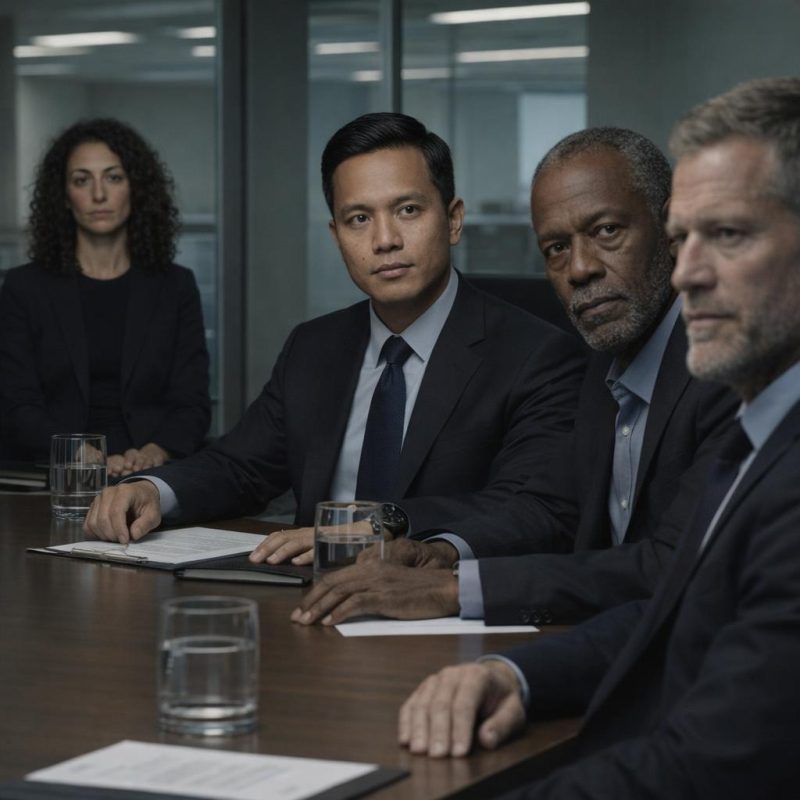 Image by RM AI
Taking Position
I sat perfectly still in my back-row seat as the room filled with senior leadership, my hands resting on my closed laptop while my pulse hammered in my ears. I could feel the weight of the evidence file sitting there under my fingertips, separated from the room by just a thin layer of metal and plastic. Sarah was reviewing something on her tablet two rows ahead. David Park was typing quietly, his screen angled away from view. Mark Thompson had his portfolio open, pen in hand, ready to take notes. Richard Chen sat at the head of the table, his posture relaxed but his attention sharp, waiting. I forced myself to breathe slowly, to keep my expression neutral and professional, to look like I belonged here even though my heart was trying to break through my ribs. The door opened again, and Jenna walked in three minutes before start time, her arms full of materials—a leather folder, a tablet, printed notes clipped together. She moved straight to the front of the room, setting everything down on the presentation table with practiced efficiency. She didn't even glance in my direction.
 Image by RM AI
The Opening Slides
Jenna clicked to the first slide—my title slide, with her name where mine should have been—and began speaking with the polished confidence of someone who had every right to be there. Her voice was smooth and assured as she introduced the proposal, thanking the committee for their time and explaining how excited she was to present this strategic framework. I stared at the screen, at the title I'd written, at the subtitle I'd revised four times to get the phrasing exactly right. Her name sat there in the author field, bold and professional, like it had always belonged. The executives leaned forward with interest as she outlined the agenda, their attention fully captured by her presentation style. She gestured to the screen, smiled at a comment from David Park, and transitioned smoothly into her opening remarks. Every word she spoke was familiar because I'd written it, every concept she introduced was mine because I'd developed it. I felt something cold and sharp settle in my chest as she moved to slide two.
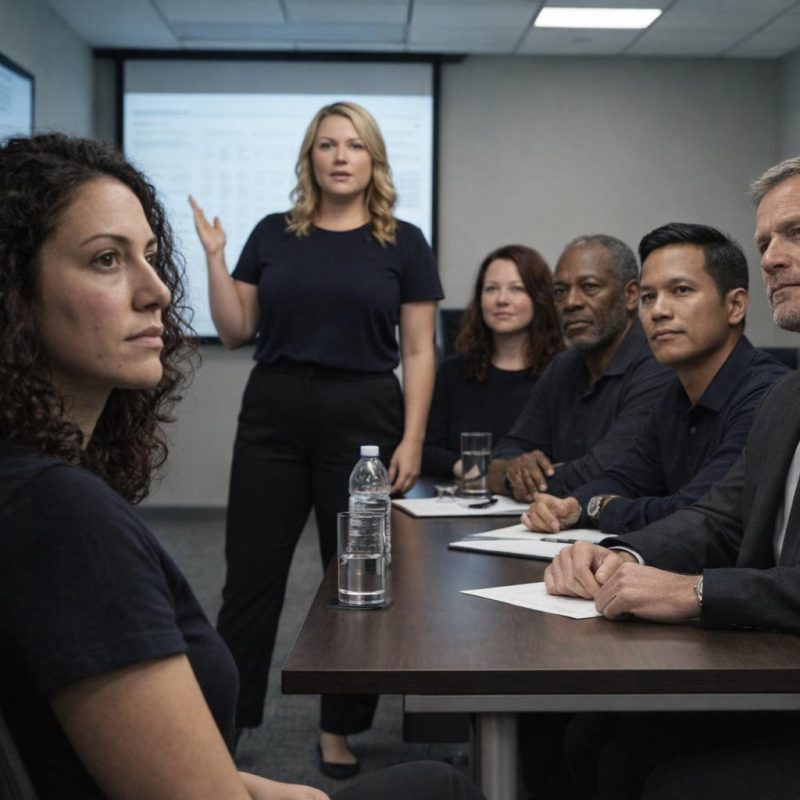 Image by RM AI
Phased Implementation
Jenna walked the committee through the phased implementation strategy, explaining each stage with fluid precision while I gripped the edge of my seat and remembered the three weeks I'd spent developing exactly what she was describing. Stage one, she said, would focus on infrastructure assessment and stakeholder alignment. Stage two would introduce the new protocols gradually, minimizing disruption. Stage three would scale the changes across departments with built-in feedback loops. She moved through each phase like she'd lived with this framework for months, like she understood every decision point and contingency I'd mapped out. Her hand gestures were confident, her eye contact with the executives was steady, and her explanations hit every key point I'd outlined in my original documentation. Mark Thompson asked a question about timeline flexibility, and she answered it perfectly, citing the exact buffer periods I'd calculated. Richard Chen nodded approvingly and made a note on his tablet, his expression showing clear interest. I had to remind myself to breathe.
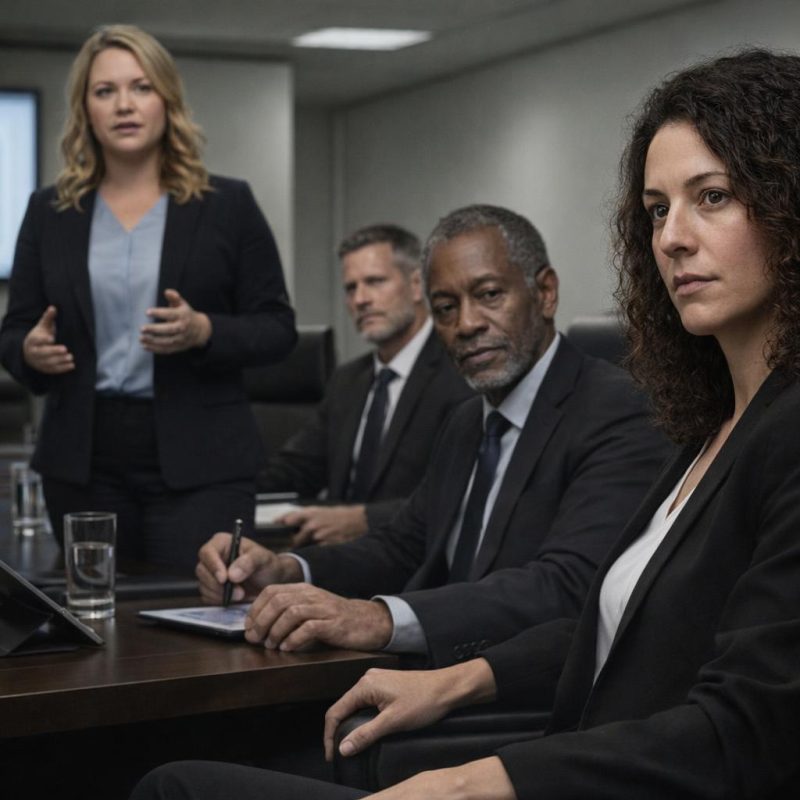 Image by RM AI
Cost-Saving Measures
The executives nodded as Jenna detailed the innovative cost-saving measures on slide twelve, measures I had discovered through analyzing patterns in client retention data that no one else had thought to examine. She explained how the proposal would reduce operational overhead by seventeen percent while actually improving service delivery, a finding I'd spent two weeks validating through multiple data sources. David Park leaned forward, asking about the methodology behind the projections. Jenna answered smoothly, referencing the retention analysis and cross-departmental efficiency metrics—my analysis, my metrics, my methodology. Richard Chen made another note, and I could see Mark Thompson nodding along, clearly impressed. Sarah was watching intently, her pen moving across her notepad. The room was completely focused on Jenna, on her presentation, on the work she was claiming as her own. I opened my laptop slowly, the screen glow drawing no attention in the darkened room, and positioned my fingers over the keyboard.
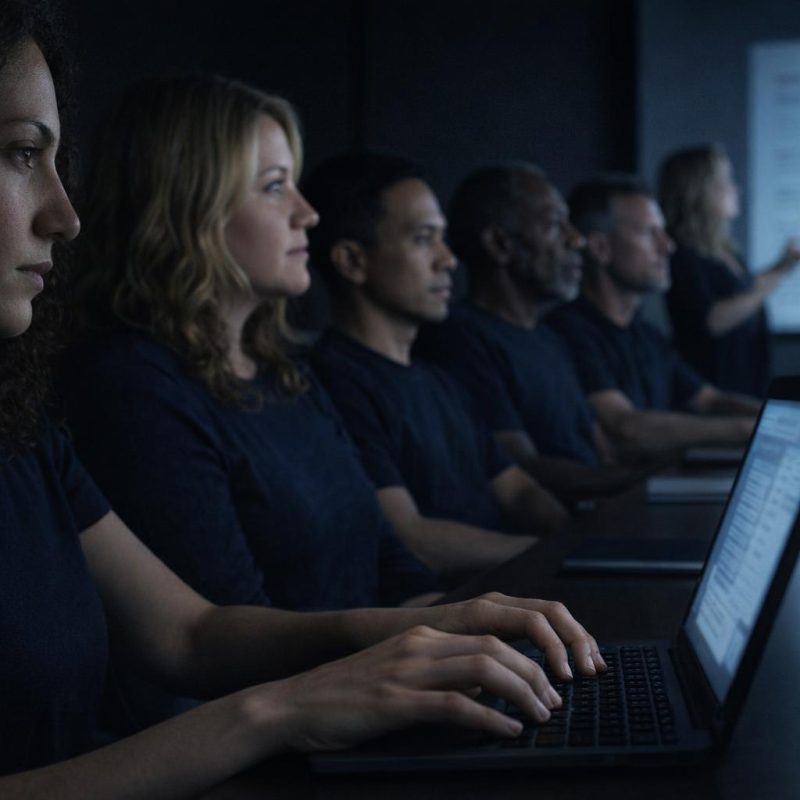 Image by RM AI
The Algorithm Question
Richard Chen looked up from his notes, and the room seemed to hold its breath. "I have a question about the market penetration algorithm," he said, his voice cutting through the presentation with surgical precision. "The predictive modeling here is genuinely brilliant work. Who developed this methodology?" The question hung in the air like a challenge. Every executive turned their attention to Jenna, waiting for her answer. Mark Thompson set down his pen. David Park paused mid-keystroke on his laptop. Sarah Mitchell looked up from her notepad, her reading glasses catching the light from the projection screen. I felt my heart hammering against my ribs, but I kept my expression neutral, my hands resting calmly on the table in front of me. This was the moment I'd been waiting for, the direct question that would force Jenna to either admit the truth or dig herself deeper into the lie. Jenna smiled broadly, that practiced, confident smile I'd seen her use a hundred times before. She tucked a strand of hair behind her ear with a casual gesture that somehow managed to look both modest and self-assured, and opened her mouth to respond.
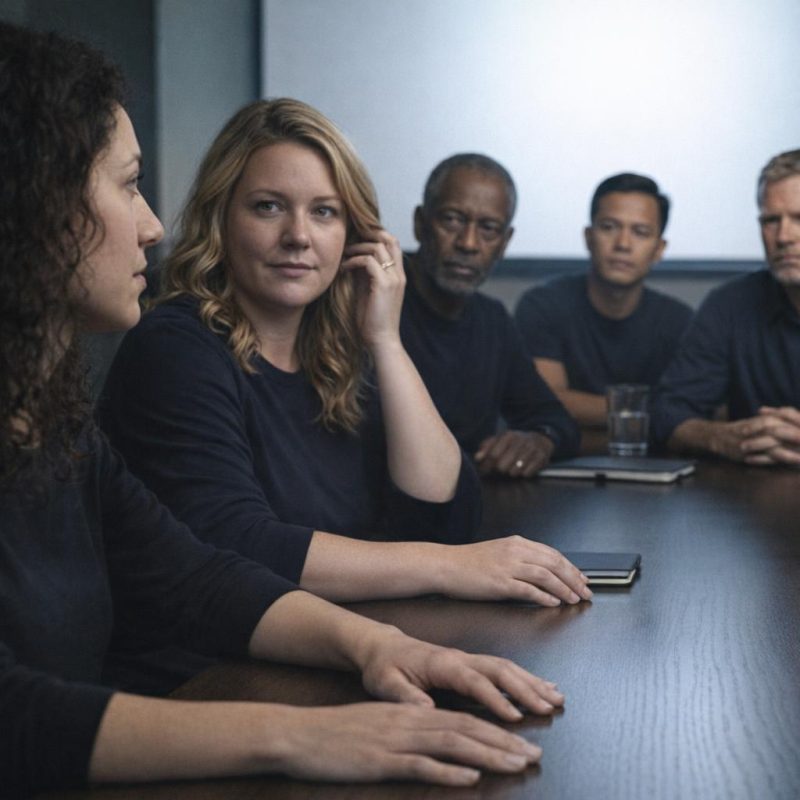 Image by RM AI
Sleepless Nights Claimed
"I spent many sleepless nights perfecting that algorithm," Jenna said, her voice taking on a warm, slightly exhausted quality that suggested dedication and sacrifice. "The breakthrough came around two in the morning one night, actually. I was running the numbers for the third time, and suddenly the pattern just clicked." She laughed softly, shaking her head as if remembering the moment with fond exhaustion. My fingernails dug into my palms under the table, the sharp pain the only thing keeping me anchored to my chair. Those sleepless nights had been mine. That two a.m. breakthrough had happened at my kitchen table, not hers. I'd been the one staring at spreadsheets until my eyes burned, the one who'd finally seen the pattern emerge from the data. Richard Chen nodded approvingly. Mark Thompson made an impressed sound. "That kind of dedication is exactly what we need on this team," Richard said, and several other executives murmured their agreement. The executives were buying it completely, and I made myself count to ten slowly, forcing air in and out of my lungs, before allowing myself to move even slightly.
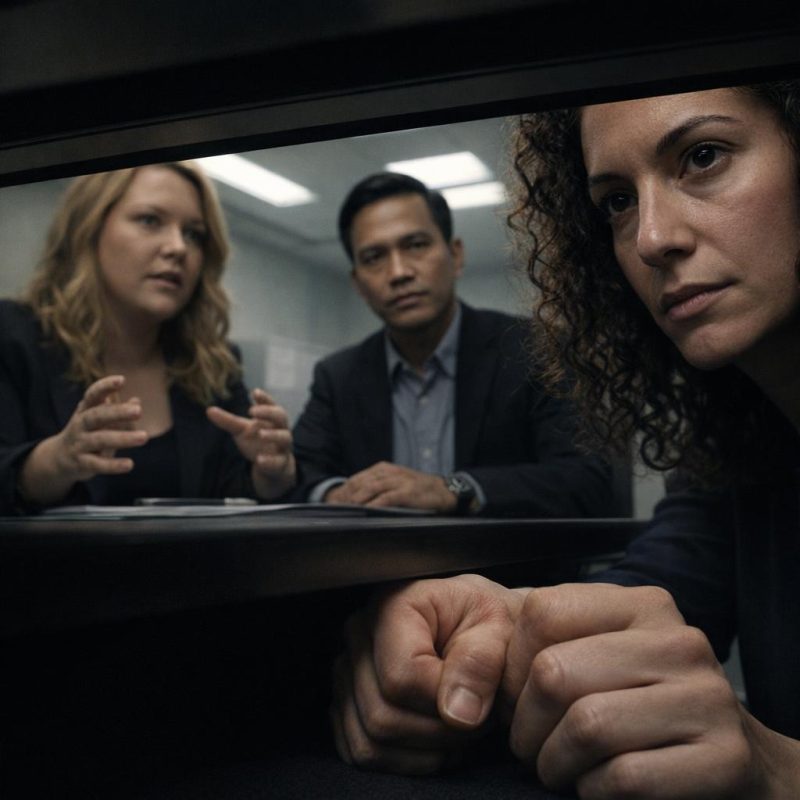 Image by RM AI
The Discipline of Silence
Every instinct I had was screaming at me to stand up, to interrupt, to correct the record right then and there. My muscles were tensed, ready to push back from the table and speak the truth that everyone in this room needed to hear. But I'd been in corporate settings long enough to know that interrupting a boardroom presentation rarely ended well for the interrupter. The person who disrupts a meeting looks emotional, unprofessional, unable to control themselves. The executives would see me as the problem, not Jenna. They'd remember my outburst, not my evidence. I'd learned that lesson watching other people make that mistake, watching their careers stall because they couldn't pick their battles or their timing. So instead of standing, instead of speaking, I forced myself to lean back in my chair, to let my shoulders drop slightly as if I were simply listening along with everyone else. My laptop was still open in front of me, the screen glowing softly with the files I'd prepared. I waited, knowing the moment I'd prepared for was coming, knowing that patience would serve me better than impulse ever could.
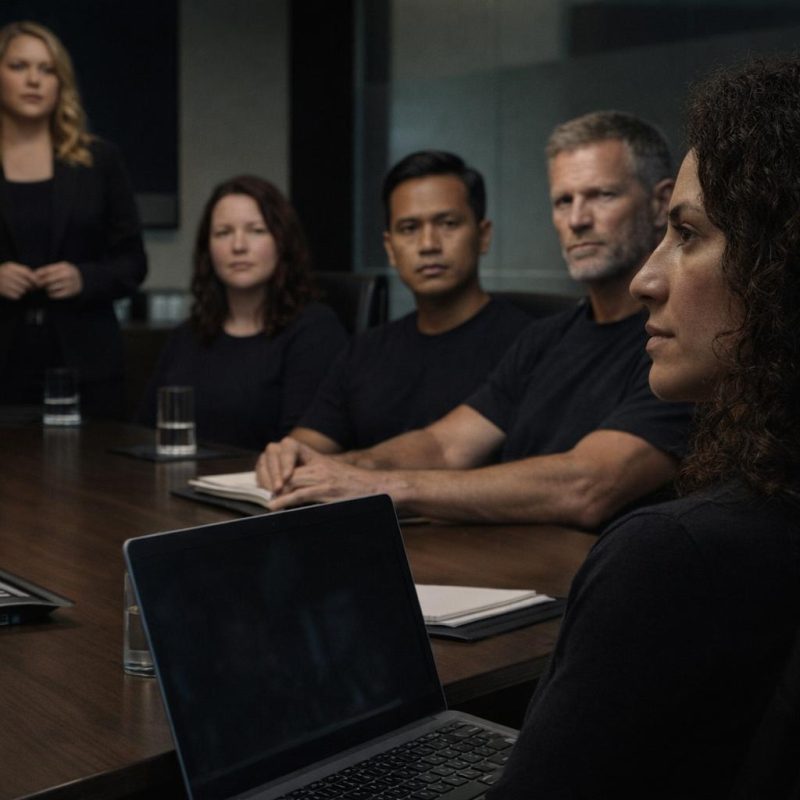 Image by RM AI
Year-Three Scalability
Richard Chen leaned forward, his expression shifting from impressed to analytically engaged. "Walk me through the year-three scalability projections," he said, his tone sharpening with the kind of technical interest that demanded real answers. "The growth curve you're showing here requires some sophisticated mathematical modeling to account for market saturation. How did you structure the underlying equations to maintain accuracy as the variables compound?" It was exactly the kind of complex follow-up question that required deep understanding of the mathematical models, the kind of question you couldn't answer with rehearsed talking points or surface-level knowledge. I saw Jenna's smile flicker for just a moment, a barely perceptible hesitation that probably no one else in the room noticed. But I noticed. I'd been watching for it. She recovered quickly, her expression smoothing back into confidence, but that split-second of uncertainty told me everything I needed to know. She didn't understand the math. She couldn't answer the question. Jenna turned back to the presentation screen and reached for the mouse, her hand moving toward the embedded dashboard link that would supposedly clarify everything.
 Image by RM AI
The Bluff Attempt
Jenna started to answer, her words flowing smoothly at first. "The scalability model accounts for market growth through a tiered approach," she said, gesturing at the screen. "We're looking at expansion patterns that align with industry standards and projected consumer behavior shifts." It sounded good, professional, the kind of answer that might satisfy someone who wasn't really listening. But Richard Chen was listening, and his expression shifted to one of polite skepticism as Jenna continued. "The algorithm incorporates standard growth metrics and adjusts for market variables," she added, her words becoming increasingly vague, increasingly general. She was using business buzzwords to cover the fact that she didn't actually understand the technical methodology. David Park glanced at Mark Thompson, and I saw the slight furrow in Mark's brow. They were starting to notice the lack of substance in her response. Jenna stopped mid-sentence, seeming to realize that her verbal explanation wasn't landing. "Actually, the live data will clarify everything much better than I can explain verbally," she said, turning back to the screen. Her hand hovered over the mouse, poised to click the dashboard link.
 Image by RM AI
The Click
Jenna clicked the embedded link, and I held my breath. The cursor turned into a loading icon, that spinning wheel that usually appeared for just a second or two before data populated on screen. The room waited in that particular kind of silence that happens when everyone's attention is focused on a single point, when a presentation hinges on what comes next. I could hear the faint hum of the projector, the quiet whir of David Park's laptop fan, the sound of someone shifting in their chair. My heart was pounding so hard I was sure someone would hear it, but I kept my face carefully neutral, my hands resting on the table as if I were just another audience member waiting to see the data. The system was processing the request, running through its security protocols, checking permissions and access levels. I knew exactly what was about to happen because I'd designed it to happen this way, but watching it unfold in real time was different from imagining it. The projection screen flickered once, twice, and then a bright red error message filled the entire seventy-inch display, impossible to miss, impossible to ignore.
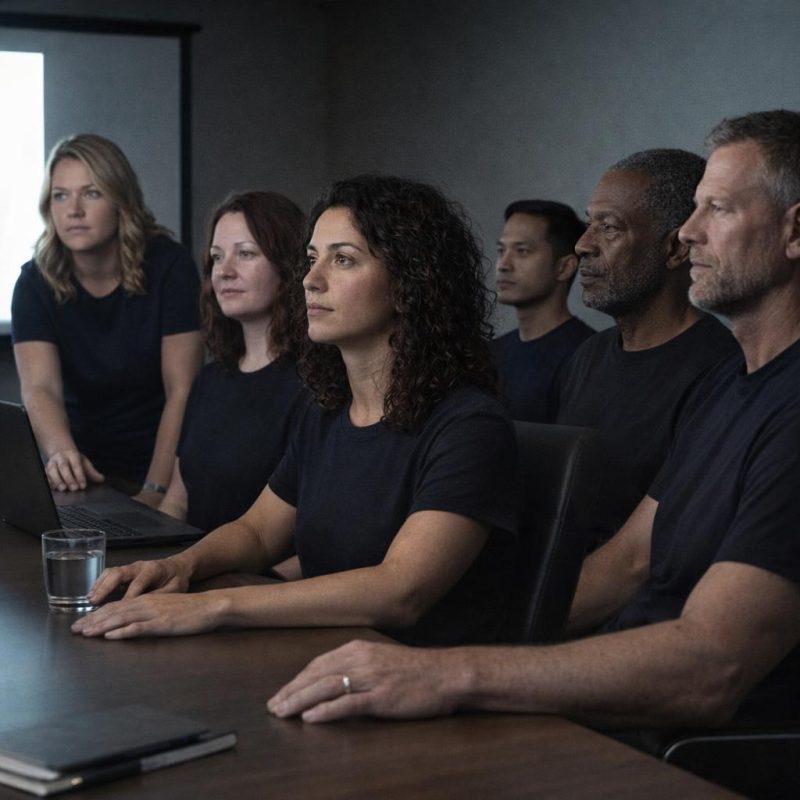 Image by RM AI
Access Denied
The words ACCESS DENIED - SECURITY BREACH flashed across the screen in harsh red letters that seemed to pulse against the white background. The room went completely silent. Not the polite silence of people waiting for a presentation to continue, but the shocked silence of people trying to process something unexpected, something wrong. I felt my pulse racing, but I kept myself perfectly still in my chair at the back of the room, my expression carefully arranged into the same surprised confusion that I saw on the faces around me. Richard Chen's pen stopped moving. Mark Thompson leaned forward, squinting at the screen as if he might have misread the message. Sarah Mitchell's mouth opened slightly, her reading glasses slipping down her nose. The error message stayed there, bright and accusatory, filling the entire screen where Jenna's carefully stolen data should have been. Jenna clicked frantically, the mouse cursor darting around the frozen screen, clicking on the error message, clicking on the menu bar, clicking anywhere that might make the screen respond. Nothing happened. The error message remained. David Park opened his laptop with a concerned expression, his fingers already moving across the keyboard.
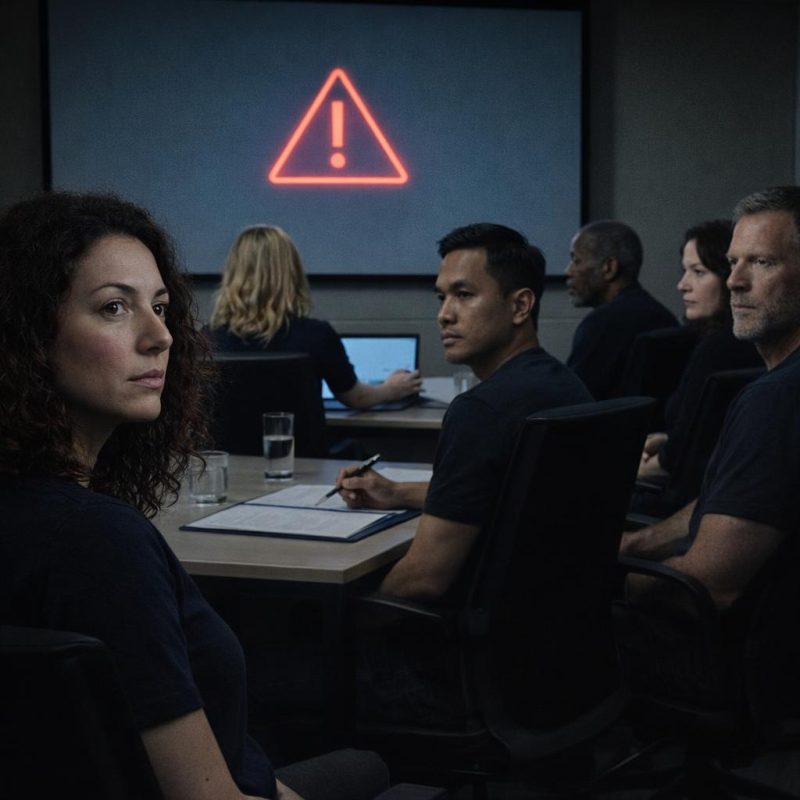 Image by RM AI
Frantic Clicking
The room remained frozen in uncomfortable silence while Jenna clicked desperately at the unresponsive screen. Each click seemed louder than the last in the quiet conference room, a rhythmic sound of increasing panic. Her polished confidence was cracking with each failed attempt to recover the presentation, her movements becoming less controlled, less measured. The practiced smile had disappeared entirely, replaced by a tight expression of concentration that was starting to edge toward visible stress. I watched from my position at the back of the room, maintaining my composed exterior while my mind raced through what would happen next. Richard Chen was watching Jenna with an unreadable expression. Mark Thompson had picked up his pen again but wasn't writing, just holding it while he stared at the error message. Sarah Mitchell glanced between Jenna and the screen, her brow furrowed. David Park's fingers flew across his laptop keyboard, his wireless headset slightly askew as he leaned into his screen. Then he looked up, his expression serious. "The system is flagging an unauthorized attempt to access restricted financial archives," he announced to the room, his technical precision cutting through the tension like a knife.
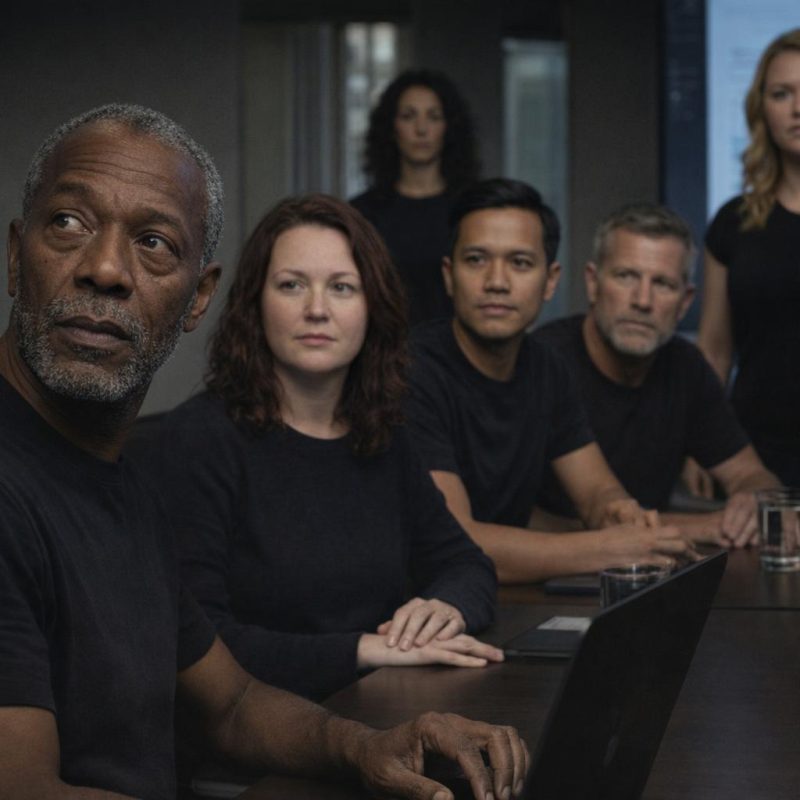 Image by RM AI
Ghost Login
David Park's fingers moved across his keyboard with practiced precision, his wireless headset slightly askew as he leaned closer to his screen. "The presentation file is attempting to bypass our company firewalls using what appears to be a ghost login," he announced, his voice clinical and measured as he read from the backend security logs. "It's trying to access restricted financial archives through an expired credential set." He looked up from his laptop, his expression serious. "This isn't a standard technical error. Someone configured this file to pull data from protected directories." The room absorbed his words in heavy silence. Mark Thompson set down his pen with deliberate care. Sarah Mitchell's leather portfolio slipped slightly in her hands. Richard Chen's jaw tightened as he processed the implications, his intense gaze fixed on the frozen presentation screen at the front of the room. Then the CEO turned slowly toward Jenna, and when he spoke, his voice carried a weight that made everyone in the room freeze. "Why," he asked with dangerous calm, "is your original work triggering security protocols designed to catch unauthorized data access?"
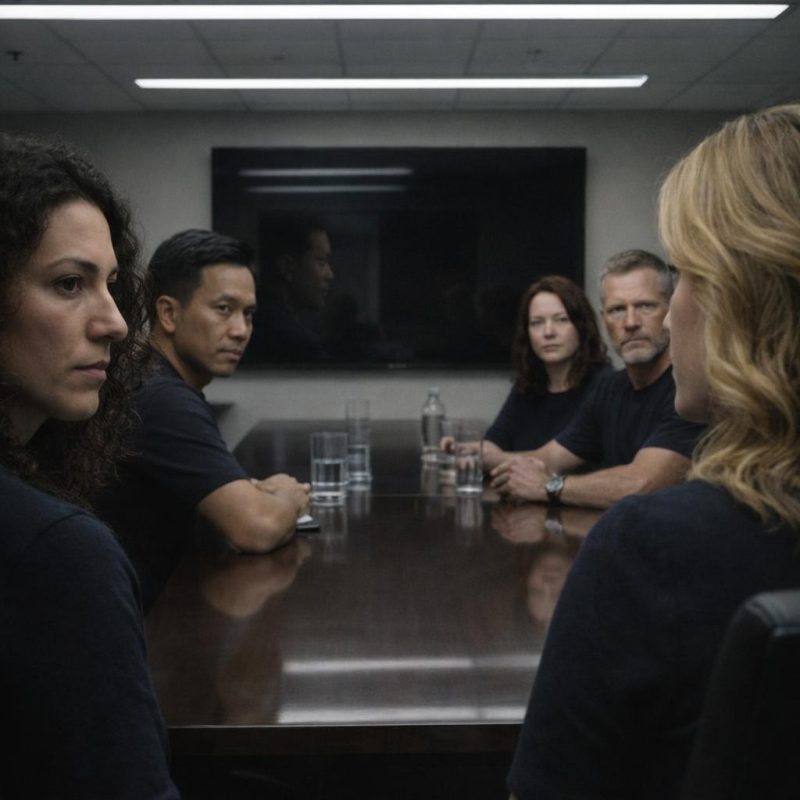 Image by RM AI
The Unraveling
Jenna's polished composure cracked like ice under pressure. "I—there must be some kind of technical difficulty," she stammered, her words tumbling over each other in a way I'd never heard from her before. "The server migration last month, maybe something got corrupted during the transfer process." Her hands gestured vaguely at the screen, then dropped to her sides. "I've been working on this for weeks, the files have been moved between systems, there could be version control issues." The executives watched her in stony silence. David Park glanced down at his laptop, checking her claims against the logs, his expression growing more skeptical with each passing second. Mark Thompson exchanged a look with Sarah Mitchell that spoke volumes. Richard Chen maintained his intense unwavering stare, not moving, not blinking. Jenna's voice became increasingly strained as she continued trying to explain away the security breach, her practiced charm completely absent now. Her voice broke mid-sentence, and for the first time since I'd known her, Jenna looked genuinely afraid.
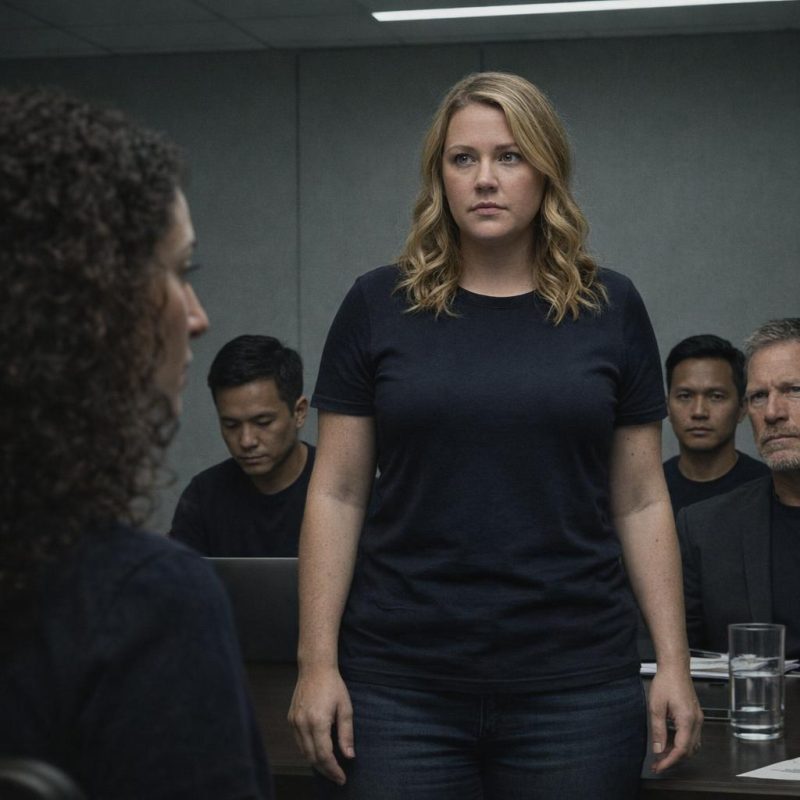 Image by RM AI
The Demand
Richard Chen rose from his seat with deliberate slowness, his impeccably tailored suit somehow making the movement feel even more commanding. The room seemed to shrink around his presence. "I need a clear explanation," he said, his tone cold and authoritative, "for why a presentation about your own original work is attempting to access restricted financial archives." He placed both hands flat on the conference table, leaning forward slightly. "If this proposal is yours, if you developed it through your own research and analysis, there should be no reason for it to pull data from protected directories." Jenna opened her mouth, closed it, opened it again. No satisfactory answer emerged. The tension in the room had become almost unbearable. I felt my muscles tense in my back-row seat, my hands gripping the edge of my chair. The moment was approaching—I could feel it building like pressure before a storm. Jenna's eyes darted around the room in visible desperation, searching for an escape, an explanation, anything. Then her gaze landed on me with sudden sharp focus.
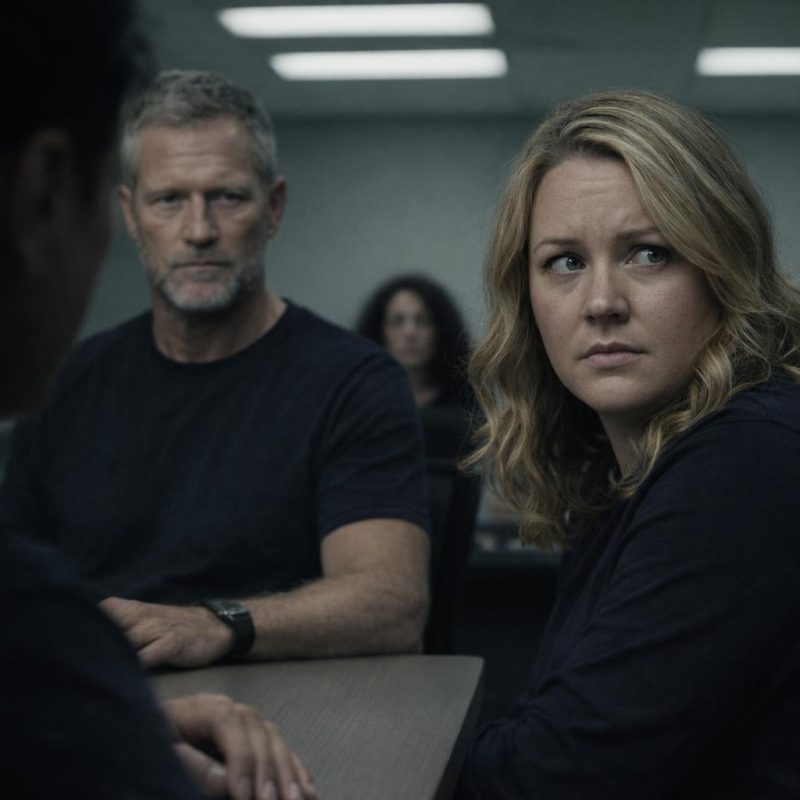 Image by RM AI
The Finger Points
Jenna raised a trembling hand and pointed directly at me, her finger extended like an accusation made physical. "She must have done something to my file," she said, her voice sharp with desperation. "Maya has access to the shared drive. She could have sabotaged it out of professional jealousy." The words hung in the air like smoke. "She's been resentful ever since I was promoted to senior analyst. This is exactly the kind of petty revenge someone like that would pull." Her voice gained false confidence as she continued building her narrative. "I've worked too hard on this proposal to let someone's jealousy destroy it. Check her access logs—she's been watching my career advancement for months." Every head in the room turned toward me in perfect synchronization. Sarah Mitchell looked between us, her expression uncertain. Mark Thompson's stern face revealed nothing. David Park's fingers hovered over his keyboard. Richard Chen's intense gaze shifted from Jenna to me, waiting. I felt the moment I'd been preparing for finally arrive.
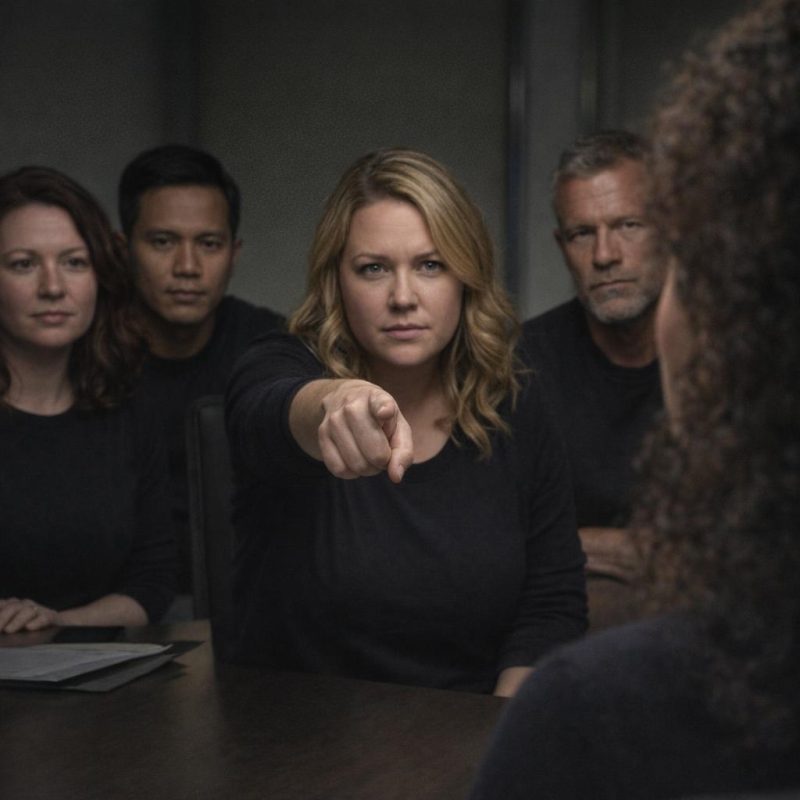 Image by RM AI
The Watermark
I stood slowly from my back-row seat, my movements calm and deliberate despite the adrenaline coursing through me. I opened my laptop, connected it to the auxiliary projector with steady hands, and pulled up my original proposal draft. The date stamp showed three weeks prior—before Jenna had even mentioned starting her project. Every slide displayed my name in the document properties, clear as day in the metadata panel. "David," I said quietly, my voice carrying across the silent room, "could you increase the monitor contrast to maximum, please?" He nodded and adjusted the settings on the main display. The change was immediate and undeniable. My name appeared in repeating gray text across every single slide Jenna had presented, watermarks I'd embedded in the background of every image, woven into every chart, hidden in plain sight across every element of the design. The sleepless nights had been mine all along, and now everyone in the room could see the proof spreading across the screen like truth finally coming to light.
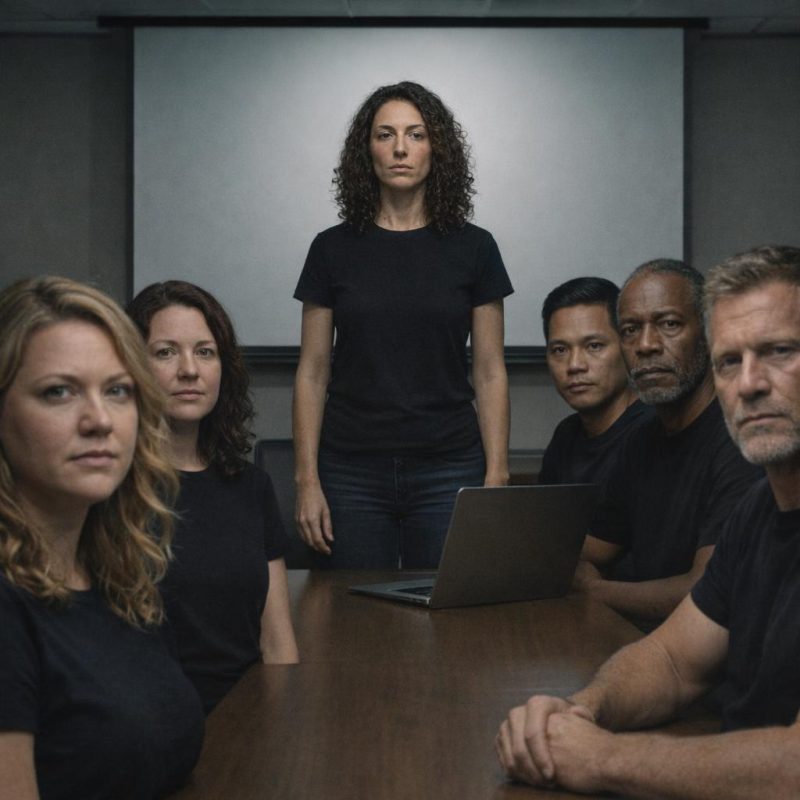 Image by RM AI
The Audit Ordered
Richard Chen's face hardened as he absorbed the watermark evidence in silence, his jaw working as he processed the full scope of what he was seeing. The repeating pattern of my name across every slide left no room for doubt, no space for alternative explanations. He turned slowly to Mark Thompson, his commanding presence filling the room. "I want an immediate comprehensive audit," he said, his voice carrying absolute authority. "Every project Jenna has ever claimed as her own. Every proposal, every presentation, every client deliverable. I want document metadata, version histories, access logs—everything." Mark Thompson nodded, his stern expression growing even more serious. "I'll start pulling records immediately." Sarah Mitchell had gone pale, her leather portfolio clutched against her chest. David Park was already typing, pulling up additional system logs. I felt vindicated but also troubled by the expanding scale of what was unfolding. Jenna's face went white as she realized the scope of what was about to unfold, the investigation spreading far beyond this single presentation.
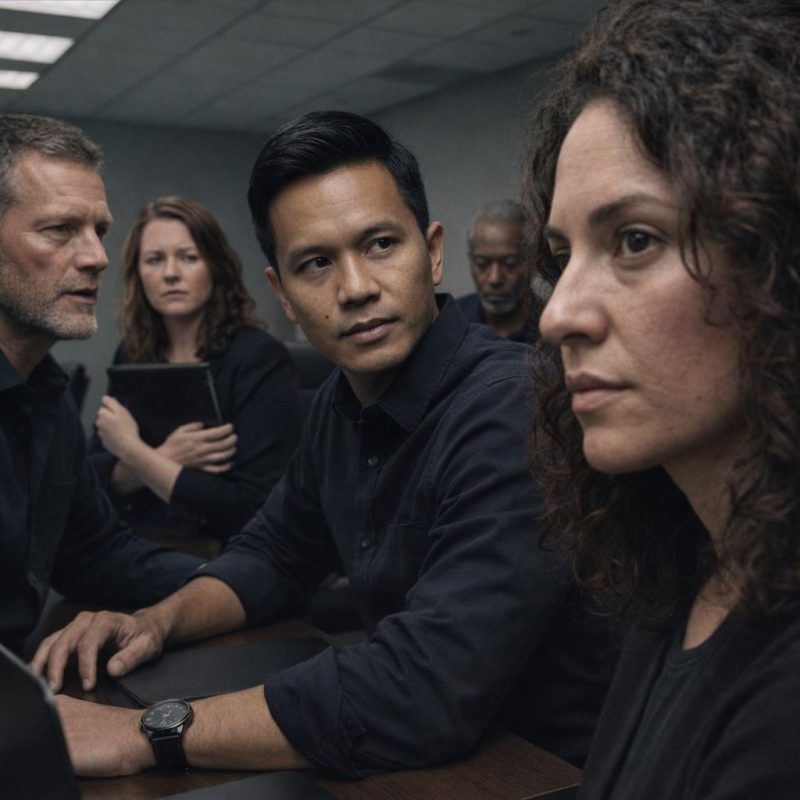 Image by RM AI
The Paper Trail
Mark Thompson gathered Jenna's billing records and retreated to his office, his conservative suit disappearing through the conference room door. The executive meeting devolved into urgent sidebar conversations—Richard Chen speaking in low tones with David Park, Sarah Mitchell making notes with shaking hands. I sat in the conference room watching what felt like the beginning of something much larger than I'd anticipated. The minutes crawled past. David continued reviewing system logs, his expression growing more concerned with each screen. Sarah appeared visibly shaken, occasionally glancing toward Mark's office down the hall. The weight of waiting pressed down on all of us. I processed the scope of what I'd set in motion, wondering how deep this really went. Jenna had been escorted out by security shortly after the watermark reveal, her polished appearance finally crumbling completely. An hour later, Mark returned with a stack of printouts clutched in both hands, his stern face carrying an expression that suggested my proposal theft was just the tip of something far darker.
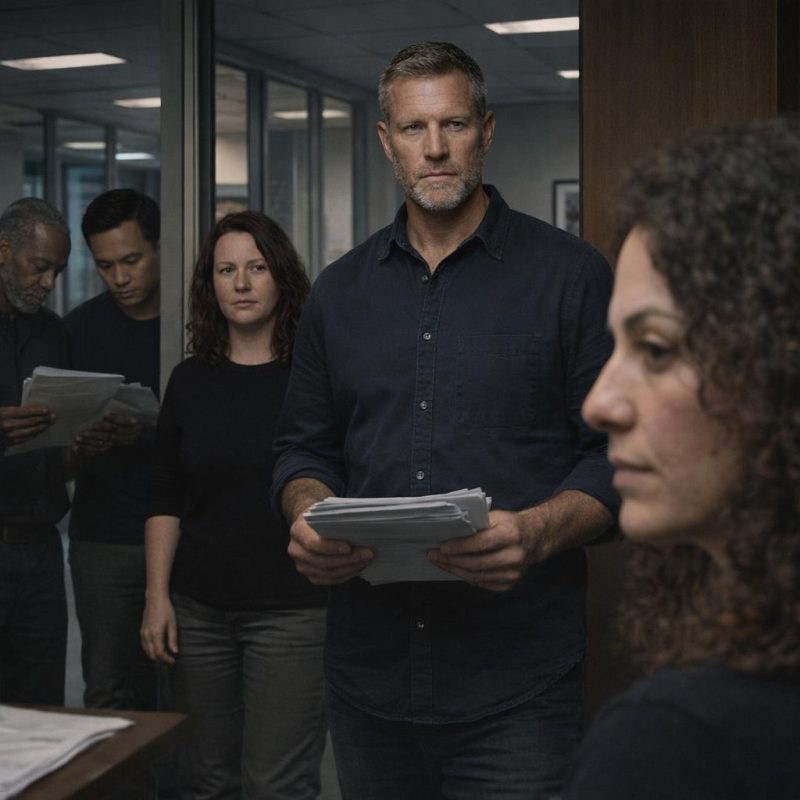 Image by RM AI
Red Flags
Mark Thompson spread the printouts across the conference table with methodical precision, his finger tracing line after line of billing entries. "Client charges wildly inconsistent with documented work hours," he said, his financially-minded focus evident in every word. "Project A billed for eighty hours, internal logs show thirty-two. Project B charged for comprehensive market analysis, file metadata shows it was completed in a single afternoon." He moved to another sheet. "The pattern repeats across multiple client accounts—overcharges, inflated hours, work attributed to extensive research that was clearly copied or minimally modified." Richard Chen leaned over the documents, his intense gaze scanning the numbers. David Park cross-referenced the printouts against his digital records, nodding grimly as the discrepancies confirmed across multiple systems. I sat processing the expanding scope, my vindication now mixed with disbelief at how extensive this had become. Mark looked up at Richard Chen, his expression grave. "The irregularities stretch back at least three years," he said quietly.
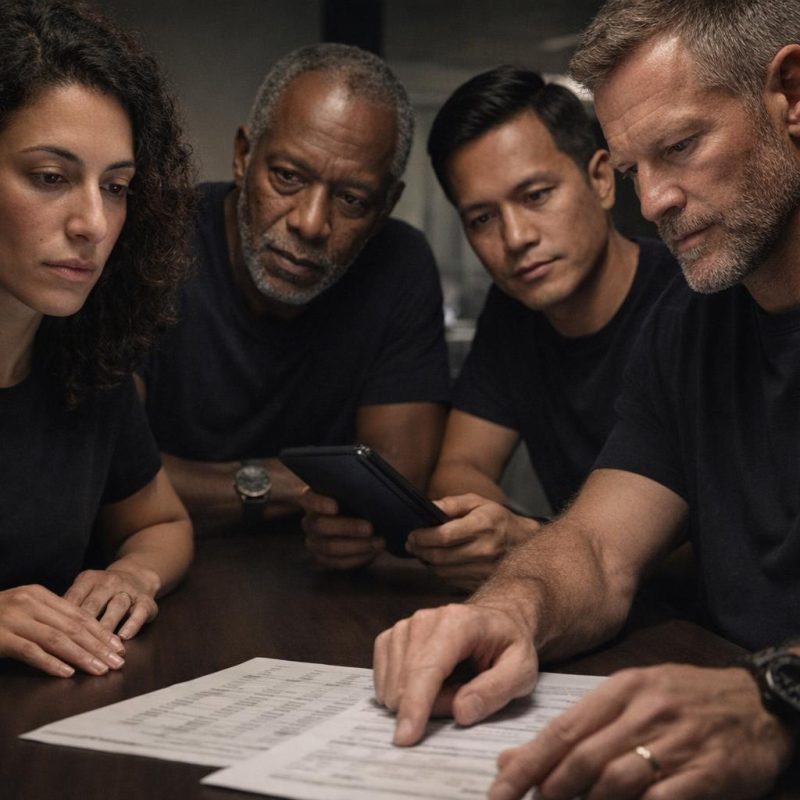 Image by RM AI
The Interviews
Lisa Rodriguez arrived that afternoon with the kind of professional warmth that somehow made you want to confess things you hadn't even done. She set up in one of the smaller conference rooms, arranging her laptop and legal pad with methodical precision, and I watched through the glass as she began calling people in one by one. The interviews were scheduled in fifteen-minute intervals, each team member emerging with carefully neutral expressions that told me absolutely nothing. I waited in the hallway outside, my stomach tight with apprehension, wondering who else might have stories like mine buried in their work history. The third person to exit was someone from the analytics team I barely knew—they glanced at me briefly before hurrying away. The fourth was a senior consultant who'd been with the firm longer than I had. She paused when she saw me sitting there, her eyes red-rimmed and exhausted, and our gazes locked for a long moment. Then she mouthed three words that made my heart stop: 'She did it to me too.'},{
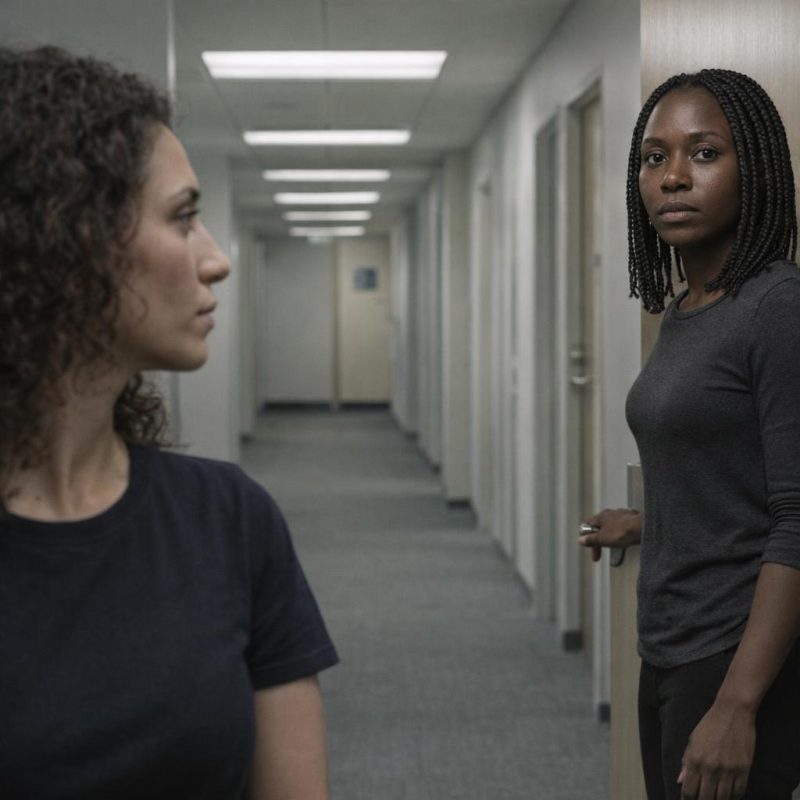 Image by RM AI
The Pattern
By the end of that afternoon, four colleagues had formally come forward with stories that mirrored my own with disturbing precision. Lisa Rodriguez compiled their testimonies with the same methodical care she'd shown setting up her interview space, and I sat across from her as she walked me through the pattern that had emerged. Stolen proposals on the Hendricks account two years ago. Claimed credit for a market analysis that had taken someone three months to develop. A presentation deck lifted wholesale and delivered to a client under Jenna's name. Each story followed the same arc—trust, theft, professional damage that lingered for months or years while Jenna's reputation grew brighter. One colleague had been passed over for promotion because Jenna's 'superior work' had made them look mediocre by comparison. Another had nearly been fired for missing a deadline on work that Jenna had already stolen and submitted early. I listened to each account and felt something cold settle in my chest. Later, I sat alone in the empty break room, staring at nothing, and felt nausea rise as I realized I had been the latest victim in a systematic pattern of theft stretching back years.
 Image by RM AI
The Shell Game
Tom Foster called an emergency meeting the next morning, his distinguished appearance and measured speech somehow making the news he delivered even more devastating. He'd been coordinating with external legal counsel overnight, and what they'd uncovered went far beyond intellectual property theft. Jenna had been routing client overcharges through a shell consulting firm registered under a relative's name—her cousin, apparently—and the scheme had been running for at least four years. David Park pulled up the digital paper trail on the conference room screen while Mark Thompson cross-referenced the financial records, both of them nodding grimly as Tom walked us through the mechanics of the fraud. Client invoices inflated by twenty or thirty percent, the excess routed to the shell firm, then presumably distributed back to Jenna through channels the forensic accountants were still tracing. Richard Chen sat at the head of the table, his intense gaze fixed on the documents, his expression unreadable. Tom clicked to the next slide, and the preliminary figure he projected on the screen made the room gasp—the fraud was measured in hundreds of thousands of dollars.
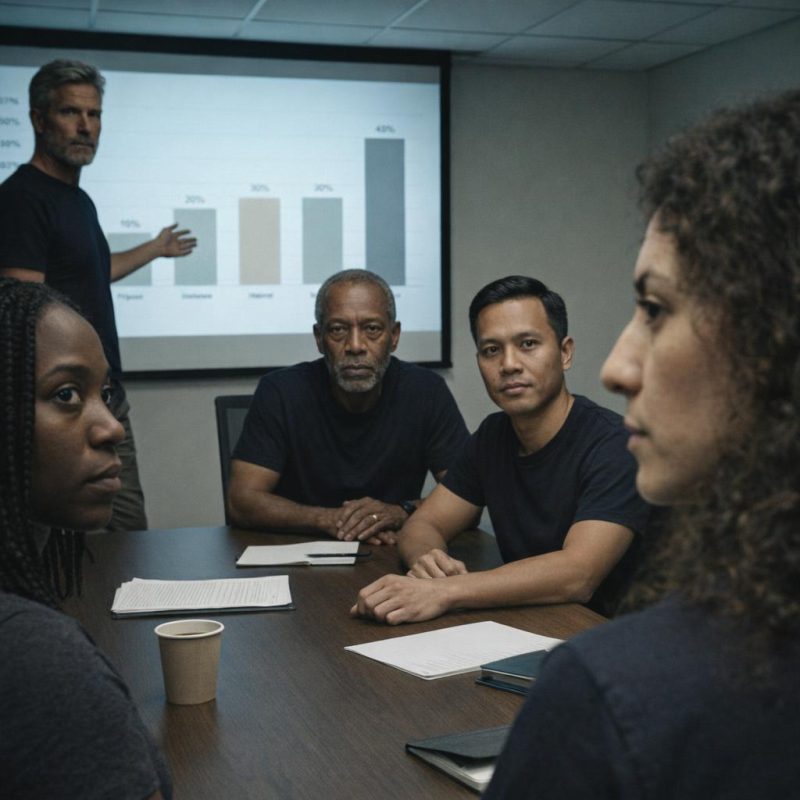 Image by RM AI
The Full Picture
The forensic accountants worked through the night, and by morning they'd produced a report that documented the full scope of what Jenna had built. I sat in Richard Chen's office with Tom Foster and Mark Thompson as they walked through the findings, my hands folded in my lap to keep them from shaking. Forty-seven separate client engagements had been affected over the four-year period. Systematic overcharging across nearly every major account Jenna had touched. The invoices had been carefully crafted to stay just below the threshold that would trigger automatic review, but when you added them all together, the number was staggering. Three hundred and forty thousand dollars in fraudulent fees, all routed through that shell company, all carefully hidden in the normal chaos of client billing. Mark Thompson's stern expression had gone even grimmer as he verified each calculation. David Park had confirmed the digital evidence chain was irrefutable. I struggled to comprehend the scale of what I was hearing, my small act of documentation suddenly feeling impossibly large. Richard Chen set down the report and said, with a calm that felt more frightening than anger, that this was now a criminal matter.
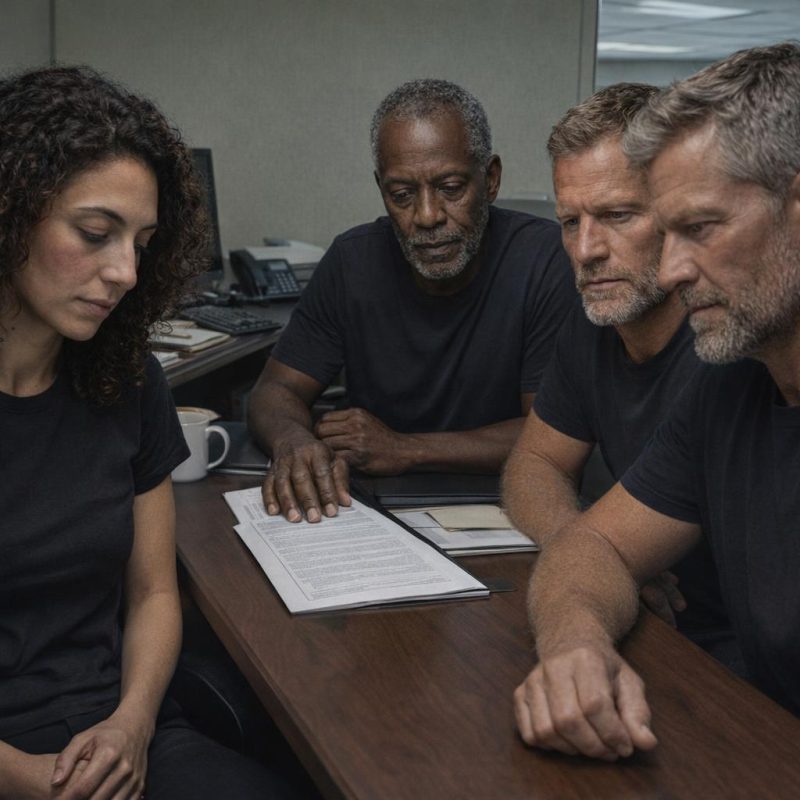 Image by RM AI
House of Cards
The investigation expanded outward like ripples from a stone dropped in still water. Lisa Rodriguez and Tom Foster spent the day contacting Jenna's previous employers, and by late afternoon they called me into a small office to share what they'd found. The pattern extended well beyond our firm—it had followed Jenna through her entire career. That promotion she'd earned at her last company? Built on a colleague's strategic plan that she'd presented as her own. The industry award from three years before that? Based on a white paper she'd stolen from a junior analyst who'd left the firm shortly after. Client testimonials that had helped her land this job traced back to projects where she'd claimed credit for other people's work. Every accomplishment, every glowing reference, every step up the corporate ladder—all of it borrowed or stolen from someone else who'd trusted her. Lisa Rodriguez showed me a timeline they'd constructed, and I stared at it feeling hollow. Tom Foster explained the legal implications were expanding with each new discovery. Nothing in Jenna's professional career was authentic—every award, every promotion, every glowing client testimonial traced back to work that had belonged to someone else.
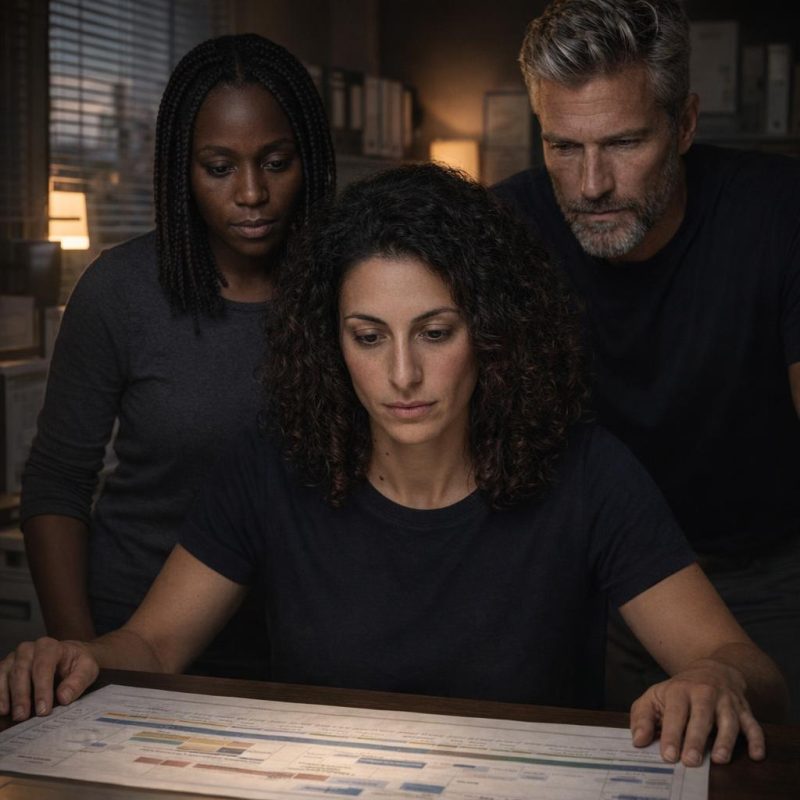 Image by RM AI
The Reckoning
The final calculations came in two days later, and Richard Chen called a small meeting to review them. Mark Thompson presented the numbers with his characteristic precision, his conservative dress and stern expression somehow fitting the gravity of what he was sharing. Four hundred and twelve thousand dollars in combined client fraud and internal damages. The figure hung in the conference room air like a sentence waiting to be pronounced. Client overcharges, stolen billable hours, the cost of remediation and client notification, potential lawsuit exposure—it all added up to a number that made my documentation of a single stolen proposal feel almost quaint. Tom Foster outlined the company's liability implications while Richard Chen listened with that intense focus that made you feel like every word was being weighed and measured. I sat there emotionally drained, exhausted by the expanding scope of what my watermarks had uncovered. I'd thought I was exposing workplace theft, maybe getting some professional vindication. Instead, I realized that my small act of documentation had exposed something far larger than workplace theft—it had uncovered a criminal enterprise hiding in plain sight.
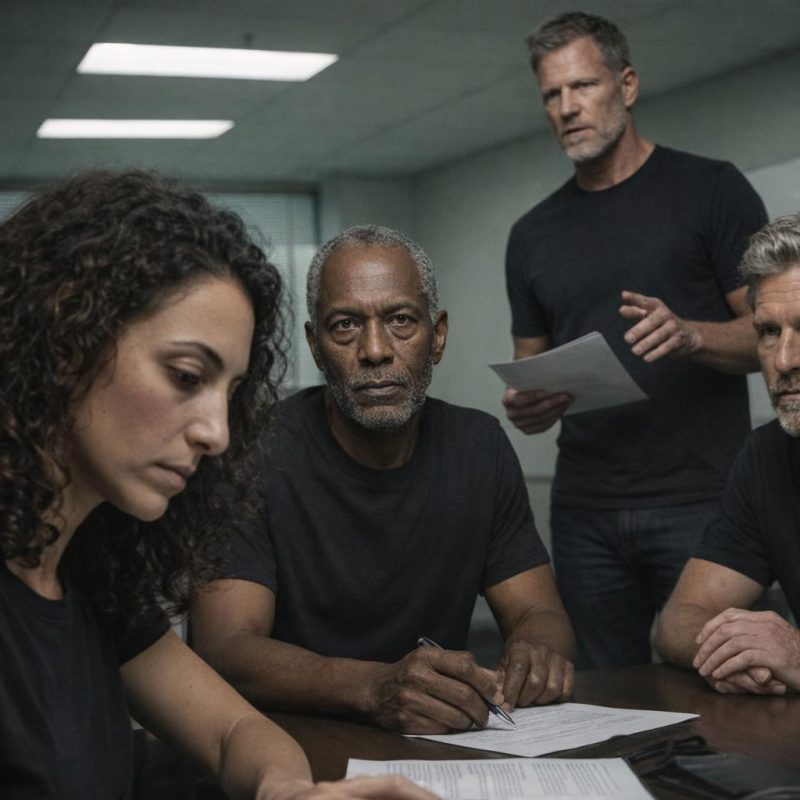 Image by RM AI
The Referral
Tom Foster spent the next day assembling the criminal referral package, and I watched from across the conference table as he organized evidence binders with the methodical care of someone who'd done this before. Each binder was labeled and indexed, the documentation comprehensive enough to tell the complete story without requiring explanation. He walked Richard Chen and me through the likely charges—wire fraud, primarily, given the interstate nature of some of the client transactions and the electronic transfer of funds. Federal charges, he explained, which could carry significant prison time if the district attorney's office decided to prosecute. Richard Chen reviewed the cover letter carefully before authorizing Tom to proceed, his commanding presence somehow making the moment feel even more solemn. I sat there watching justice unfold in real time, the process both slower and more thorough than I'd imagined. Tom pulled out a fountain pen and signed the cover letter with deliberate strokes, then looked up at both of us. He said the authorities would be contacted first thing tomorrow morning.
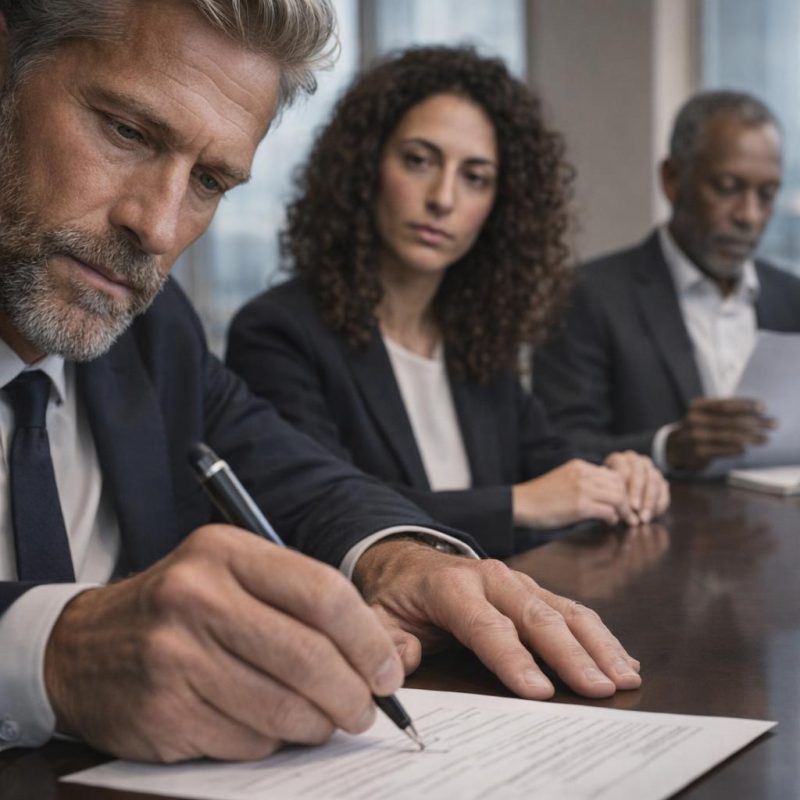 Image by RM AI
The Summons
The summons came the following afternoon, and I watched from my desk across the floor as Tom Foster approached Jenna's office with Lisa Rodriguez beside him. Even from that distance, I could see Jenna's face go ashen when she saw them together, could read the defeat in her posture as she stood and gathered nothing from her desk. They flanked her like guards escorting a prisoner, their professional composure somehow making the scene more devastating than any dramatic confrontation would have been. Jenna walked slowly across the open office floor toward Richard Chen's corner office, and I realized everyone had stopped working to watch. Her designer wardrobe and polished appearance looked wrong now, like a costume that no longer fit the person wearing it. Her practiced smile was nowhere to be seen. The walk couldn't have taken more than thirty seconds, but it felt like watching someone cross a stage toward a verdict they already knew. They reached the CEO's office and Tom Foster opened the door. The door closed behind them, and I knew that whatever conversation was happening inside would end her career at this company forever.
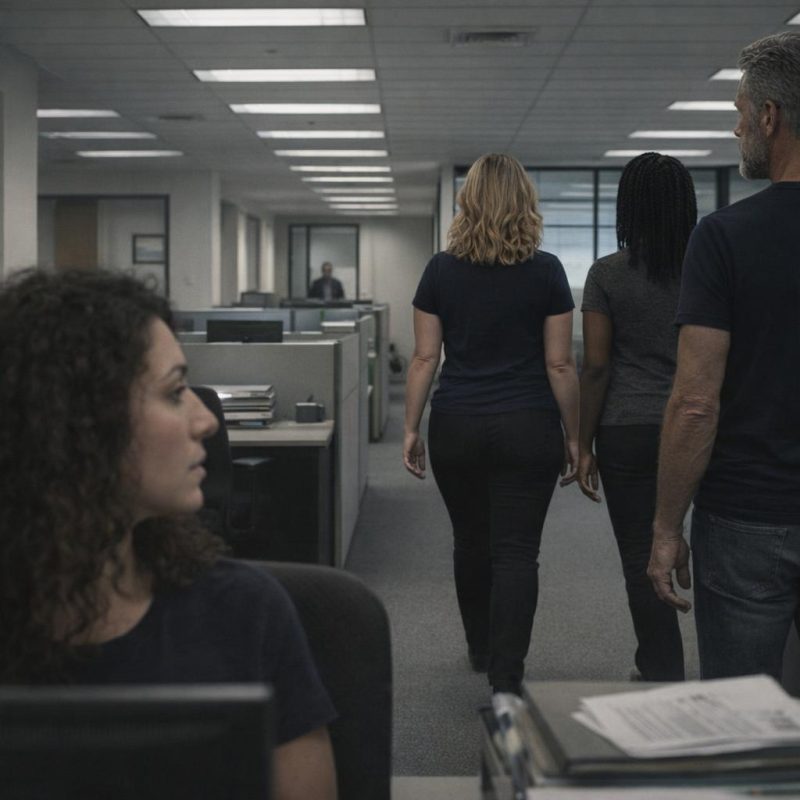 Image by RM AI
The Escort
Twenty minutes later, the CEO's door opened and Jenna emerged flanked by two security guards in navy uniforms. She clutched a cardboard box against her chest, the kind they keep in the supply closet for exactly this purpose. Her face was tear-streaked, mascara running in dark lines down her cheeks, and her polished appearance had completely shattered. The practiced smile I'd watched her deploy a thousand times was gone, replaced by raw devastation that made her look like a stranger. They walked her through the main office floor in complete silence, and I swear you could have heard a pin drop. Everyone had stopped pretending to work. They just watched as she made that long walk past the cubicles and desks, past the conference rooms where she'd presented my stolen work, past everything she'd tried to claim as her own. She passed within three feet of my desk, close enough that I could see her hands trembling against the cardboard. She didn't look at me. Didn't acknowledge my existence at all. The security guards guided her through the lobby doors, and I watched her disappear into a future that held nothing but consequences.
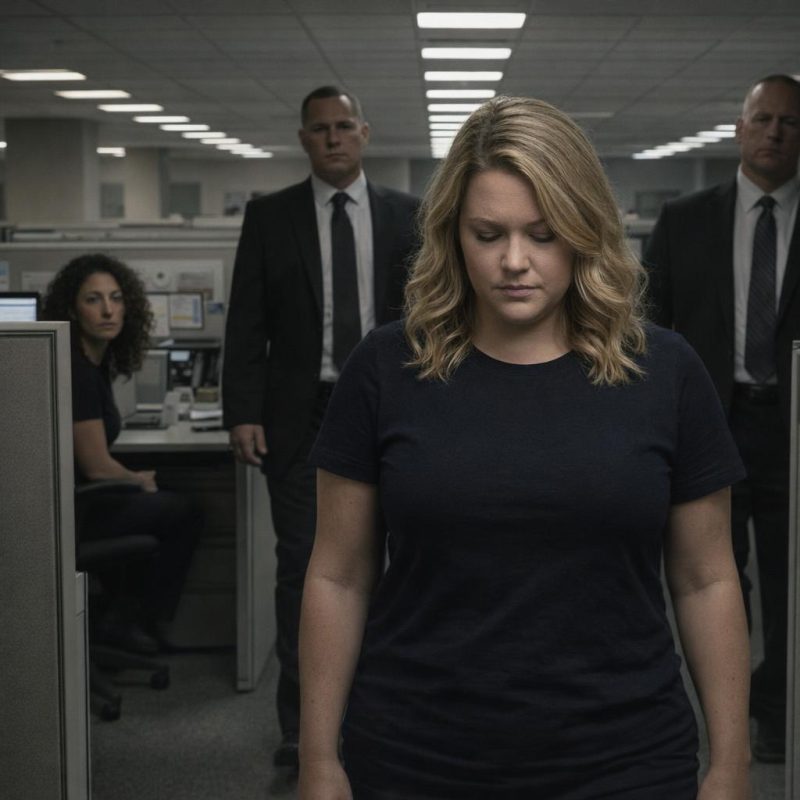 Image by RM AI
The Private Meeting
Richard Chen's assistant found me at my desk around six that evening, after most people had gone home. His office felt different in the lamplight, quieter and somehow more human than during business hours. He gestured to the chair across from his desk, and I sat while he studied me with that intense focused gaze I'd seen him use in board meetings. "I want to thank you for your integrity," he said, his voice softer than I'd ever heard it. "What you did—documenting everything, bringing it to Tom instead of making a scene—that showed real professional judgment." He leaned back in his chair. "So I'm curious. What do you want from your career here? Where do you see yourself going?" I started to answer, trying to find words that didn't sound rehearsed or desperate, but he held up one hand. He reached into his desk drawer and pulled out a formal letter on company letterhead. Before I could fully process what was happening, he slid the promotion letter across his desk and said the project was mine to lead.
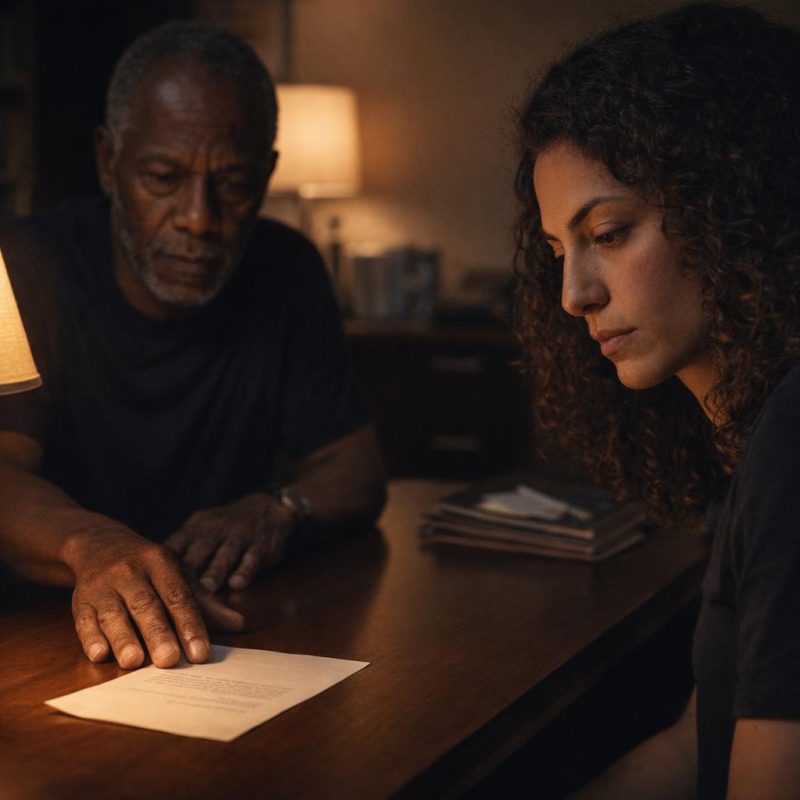 Image by RM AI
The Acceptance
I signed the promotion paperwork the next morning with a hand that didn't shake, my signature looking surprisingly steady on the official documents. Sarah Mitchell stood beside me in HR, her reading glasses on their chain and her leather portfolio open to witness the formalization of everything that had happened. The corner office they assigned me had windows on two sides and a view of the city I'd never had access to before. As I carried my box of belongings from my old desk to the new space, I passed the empty office that had been Jenna's just yesterday. Someone had already removed her nameplate. My new desk was solid wood, not the particle board I'd worked at for three years. I set down my things and looked around at the space that was now mine, at the project files that bore my original proposal date from three weeks ago. Three weeks. That's all it had taken for everything to completely transform. I'd gotten exactly what I'd originally wanted when I submitted that proposal—the recognition, the promotion, the leadership role. As I walked to the window and looked out at my new view, I realized the destination was right but the journey had been nothing like I'd imagined.
 Image by RM AI
The Lesson
I sat alone at my new desk as the evening sun slanted through the windows, painting everything in shades of amber and gold. The office was quiet, most people already gone for the day, and I let myself just sit with everything that had happened. Three weeks ago I'd submitted a proposal and watched someone else try to claim it. I'd made a choice then—not to fight, not to confront, but to document and wait. To let Jenna's own actions tell the story I didn't need to speak out loud. I thought about all the advice I'd heard over the years about fighting for your seat at the table, about demanding what you deserve, about making noise until someone listens. All of that had its place, I supposed. But there was something to be said for patience, for timing, for understanding that some battles win themselves if you just give them enough rope. I looked at the promotion letter on my desk, at the project files with my name on them, at the view I'd earned. Sometimes you don't have to fight for your place—you just have to wait for the person sitting in it to prove they don't belong there.
 Image by RM AI