My Late Husband’s Brother Sent Me $5,000 Every Month—Then a Letter Revealed the Shocking Reason Why…
My Late Husband’s Brother Sent Me $5,000 Every Month—Then a Letter Revealed the Shocking Reason Why…
Three Years of Deposits
Three years ago today, I buried my husband. And this morning, like every morning on the first of the month for the past three years, I opened my banking app and saw it — five thousand dollars, transferred in from Ryan's account, neat as a signature. I sat at the kitchen table in my robe and just stared at it for a while. Ethan had been gone thirty-six months. Thirty-six deposits. I did the math once and then wished I hadn't, because the number felt too large to hold alongside grief. Ryan never made a big deal of it. He'd set it up quietly, the way he did most things, and it just kept coming. I told myself it was his way of staying connected to Ethan, to us. I told myself it was love expressed in the only language some men know. Maybe that was true. I paid the mortgage with part of it. Bought school supplies. Kept the lights on through two winters when my part-time hours barely covered groceries. I was grateful — genuinely, deeply grateful — and I think that's exactly what made it so hard to sit with. Gratitude and confusion don't mix cleanly. They just sort of settle into each other, layer by layer, until you can't tell where one ends and the other begins.
 Image by RM AI
Ryan's Deflection
I asked Ryan to meet me at the coffee shop near his office, the one with the uncomfortable wooden chairs that he always complained about. I figured the discomfort might keep the conversation short and honest. I'd rehearsed what I wanted to say on the drive over — something about how three years was enough, how I was back on my feet, how he didn't need to keep doing this. He was already there when I arrived, hunched over an Americano, the gray at his temples a little more pronounced than I remembered. I sat down and thanked him, the way I always did, and he waved it off before I'd even finished the sentence. "It's for the kids," he said. Same four words, every time. I pushed a little harder than usual. I told him I appreciated everything but that I needed to understand the arrangement better — whether it had an end date, whether there was a plan. He looked at his coffee cup for a long moment. Then he looked up, and something in his expression had shifted, gone quieter and more closed off. "It's not an arrangement," he said. "It's just what I do." I asked him how long he intended to keep it up. He picked up his cup, took a slow sip, and said the payments would continue for as long as I needed them — indefinitely.
 Image by RM AI
What the Money Changed
I used to lie awake at night running numbers in my head. Mortgage, utilities, groceries, the kids' activities — it added up fast, and Ethan's life insurance had only gone so far. Without Ryan's monthly deposits, I would have had to sell the house. I knew that with a certainty that sat in my chest like a stone. Instead, we stayed. My daughter Lily kept her bedroom with the purple walls she'd painted herself the summer before Ethan died. My son Ben kept his backyard, his soccer net, the oak tree he'd been climbing since he was five. I was able to drop from full-time to part-time at work, which meant I was home when they got off the bus, home for dinner, home for the hard nights when grief came back around without warning. Lily started dance classes that first fall. Ben joined a soccer league the following spring. Small things, maybe, but they weren't small to them. I watched my daughter stretch at the barre in the studio window and thought about how close we'd come to a different life — a smaller apartment, a different school district, a version of normal that would have required so much more from all of us. The house still smelled like Ethan sometimes, in the early mornings. That alone felt like something worth holding onto.
 Image by RM AI
The Refusal
It was sometime in the second year when the guilt finally got loud enough that I picked up the phone and called Ryan to tell him I couldn't keep accepting the money. I'd thought it through carefully. I had a speech ready. He listened without interrupting, which should have been my first sign that he wasn't going to agree. When I finished, there was a pause — not an uncomfortable one, just a deliberate stillness on his end of the line. Then his voice changed. Not angry, not sharp, but firm in a way I hadn't heard from him before. He said three years wasn't long enough. He said the kids still needed stability. I told him I was managing better now, that my hours had increased, that I didn't want to feel like a burden. He cut me off, gently but clearly. "This isn't about what you want," he said. "It's about what they need. And what I need to do." I didn't have an answer for that. I tried once more, something about pride, about standing on my own, and he just waited until I ran out of words. "The money comes," he said. "That's not changing." I agreed to keep accepting it, because what else could I do. But I hung up the phone feeling more unsettled than I had before I called, the firmness in his voice still ringing in my ears long after the line went quiet.
 Image by RM AI
The Routine Settles
Somewhere around month twenty, I stopped checking my account on the first of the month with that tight, anxious feeling in my stomach. The deposit just became part of the rhythm of things, like the electric bill or the grocery run. I built my budget around it the way you build a budget around a salary — factored it in, planned against it, stopped treating it like a surprise. That probably sounds strange, accepting someone else's money as a fixed line item in your household finances. But grief does something to your relationship with pride. It files the edges down until you can live with things you never thought you could. I started thinking of it less as charity and more as just — the way things were. Ryan sent money. I raised the kids. Life moved forward. Then one morning I picked up my phone and saw the deposit notification: the twenty-ninth, not the first — two days early, sitting there in my account before the month had even turned.
 Image by RM AI
Growing Up Without Him
Lily turned thirteen in March, and I watched her blow out her candles with the particular self-consciousness of a girl who has recently decided that wanting things too openly is embarrassing. She had Ethan's careful nature — the way she thought before she spoke, the way she noticed things quietly and filed them away. Ben, at eleven, had gotten quieter too, in a different way. Less the boisterous kid who narrated his own soccer moves in the backyard, more the boy who sat with things. I noticed it most at dinner, the way he'd go still sometimes, mid-sentence, like he'd caught himself about to say something and thought better of it. That evening after the birthday cake, Lily was helping me clear the table when she stopped and looked at me with that careful expression of hers. She asked me about the years before she was born — specifically about what her father had been doing in business, whether he'd had a partner, whether things had ever been difficult for him financially. I told her what I knew, which wasn't much. Ethan had always handled the business side of things quietly, the same way he handled most things. I said something vague about early ventures and learning curves. Lily nodded slowly, like she was filing my answer away alongside a question I hadn't heard yet, and said, "Uncle Ryan told me it was more complicated than that."
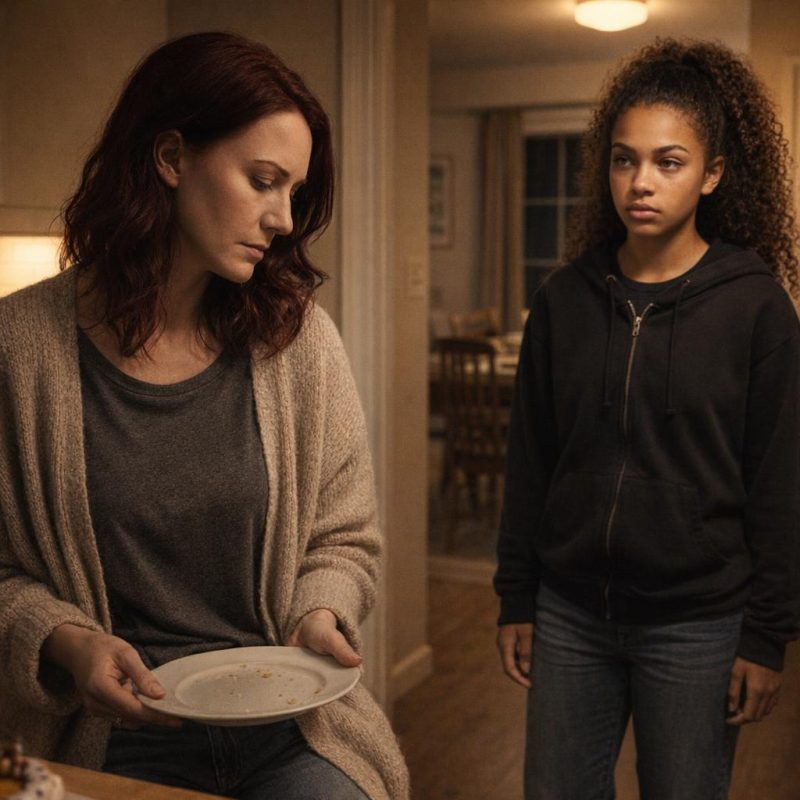 Image by RM AI
Uncle Ryan's Visits
Ryan came for Sunday dinner most weeks, and I'd come to count on it in a way I hadn't expected. He'd show up with something small — a book Ben had mentioned once in passing, a hair clip Lily had admired in a shop window — and he'd settle into the house like he belonged there, which I suppose in some ways he did. He was the closest thing my kids had to their father's presence, and he took that seriously. After dinner, I was in the kitchen running water over the dishes when I heard Ryan and Ben in the living room, their voices low and easy the way they got when they were just talking, not performing for anyone. I wasn't trying to listen. But then I heard Ryan say Ethan's name, and I turned the tap down without thinking. Ryan was telling Ben a story — something about a decision Ethan had made early in his career, a choice that had cost him significantly, a period Ryan described as the hardest years of Ethan's life. I didn't walk into the living room. I didn't interrupt. I just stood there with the water running cold over my hands — and then Ryan's voice dropped lower, and I caught a fragment of something that didn't fit any version of Ethan's past I'd ever been told.
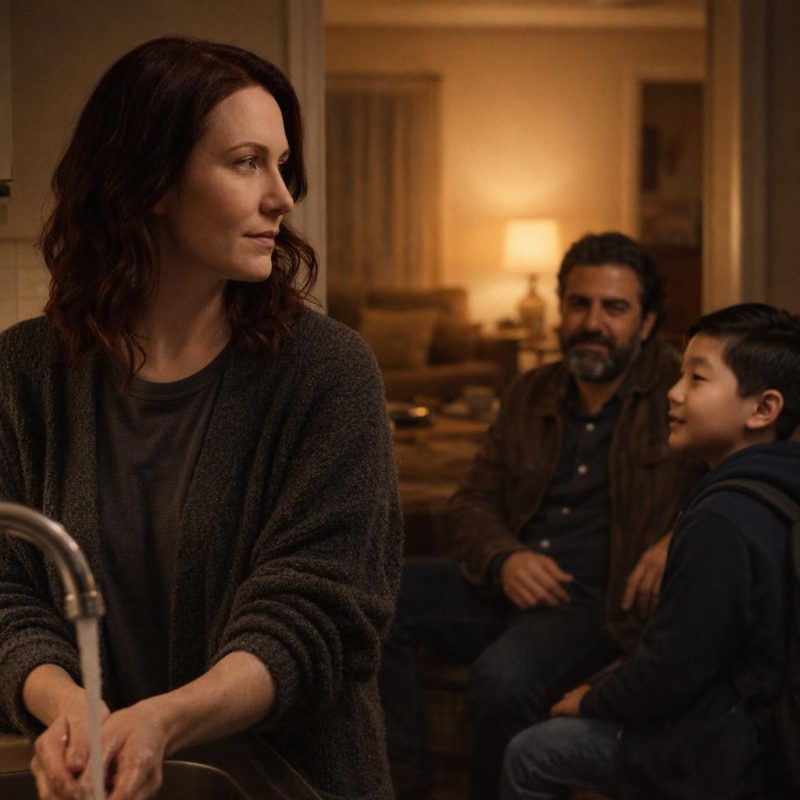 Image by RM AI
Letting Go of Questions
I sat down with my journal one evening after the kids were in bed, the house quiet in that particular way it gets after nine o'clock, and I wrote about the past three years. Not the events, exactly — more the feeling of them. The way grief had slowly, unevenly, made room for something that wasn't quite normal but was at least livable. I wrote about Ryan's money and my discomfort with it, and then I wrote something that surprised me a little: I wrote that I was choosing to stop pulling at the thread. I'd spent enough time turning the arrangement over in my mind, looking at it from different angles, wondering what it meant that he was so insistent, why he never wanted thanks. And I'd gotten nowhere. The wondering hadn't given me answers. It had just made me feel ungrateful for something that had genuinely kept my family afloat. So I wrote it down as a decision: accept it, be thankful, move forward. I closed the journal and sat with that for a while. It felt like the right thing. It felt like the mature thing. I thought about the last time I'd really questioned any of it — really sat down and turned it over with any seriousness — and I couldn't place it. The questions had just quietly stopped arriving, and I hadn't noticed until they were already gone.
 Image by RM AI
The Attic Discovery
This was two years ago, so bear with me — I need to back up. It was a Saturday in October, one of those gray, still mornings where the kids were at my mother's and I had the house to myself for the first time in what felt like months. I decided to clean the attic. Not because I wanted to, but because I needed to do something with my hands that wasn't crying or staring at the ceiling. I'd been avoiding it since Ethan died. Too many boxes with his handwriting on the sides. I got through most of it okay — old holiday decorations, the kids' baby clothes, a broken lamp I'd been meaning to throw out for years. Then, behind a stack of plastic bins near the far wall, I found a metal lockbox. Small, gray, the kind with a combination dial. I didn't recognize it at first. I sat down on the dusty floor and turned it over in my hands. It wasn't locked. Inside were tax returns, some insurance papers, a few photographs I hadn't seen in years. And then, tucked against the side, a plain white envelope. My name was written on the front in careful, even letters. I opened it. Inside was a single sheet of paper — completely blank. I sat there on the attic floor for a long time, holding that empty page, my name still visible on the envelope beside me.
 Image by RM AI
The Blank Page
I turned the paper over three times. I held it up toward the small attic window, looking for indentations, watermarks, anything that might explain why someone had sealed a blank page in an envelope with my name on it. Nothing. I checked the envelope itself — no postmark, no return address, no second sheet I might have missed. I even ran my fingers along the inside seam in case something had slipped down. Still nothing. My first thought was that whatever had been inside was gone — that someone had taken it out years ago and forgotten to throw the envelope away. That made a kind of sense. Ethan had been organized to a fault, but he'd also been the kind of person who kept things he probably should have discarded. Old receipts. Expired warranties. Maybe this was just one of those things. I thought briefly about calling Ryan and asking if he knew what the box was, but something stopped me. I couldn't explain it then and I still can't now — it just felt like a question I didn't want to open. So I put the envelope back in the lockbox, set the lockbox back behind the bins, and climbed down the attic stairs. I told myself it was nothing. I almost believed it. But I stood in the hallway for a moment longer than I needed to, and a small, involuntary laugh came out of me — the kind that happens when something doesn't add up and you have no idea what to do with that.
 Image by RM AI
Forgetting
The weeks after that Saturday had a way of filling themselves in. School pickups, grocery runs, a parent-teacher conference for Ben that I'd almost forgotten about, a work deadline that ate up two full weekends. Life has a talent for that — for covering things over with the ordinary until you can barely see them anymore. I thought about the envelope maybe twice in the first week, then once the week after, then not at all for a stretch I couldn't measure. When it did surface, I pushed it back down without much effort. I'd convinced myself the explanation was simple and boring: old papers removed, envelope forgotten, nothing to see. I was good at that kind of convincing by then. Three years of grief will teach you which thoughts to follow and which ones to set down before they take you somewhere you can't come back from easily. So I set it down. I moved through November and December and into the new year, and the lockbox stayed where I'd left it, and I didn't go back up to the attic. Now it was three years since Ethan had died. The kids were older. The house felt different in ways I couldn't always name. Ryan's deposits still came every month, steady as ever. I'd made my peace with all of it — or something close enough to peace that I'd stopped noticing the difference. But somewhere underneath all of that, quiet and patient, was the feeling that I'd walked past something important without stopping to look.
 Image by RM AI
The Letter Arrives
It was a Tuesday in March, and it had been raining since morning — the kind of slow, gray drizzle that doesn't feel worth an umbrella but soaks you anyway if you stand in it long enough. I'd gotten home from work a little after five, dropped my bag by the door, and remembered I hadn't checked the mail in two days. I pulled on my jacket and walked down the driveway. The mailbox had the usual stack — a water bill, a credit card offer, a catalog I'd never signed up for. I was already sorting through it on the walk back, not really paying attention, when I got to the last envelope. Plain white. No return address. My name and address printed in careful, deliberate handwriting across the front. I stopped walking. The rain was coming down a little harder now, and the paper was starting to spot with it, but I didn't move. I knew that handwriting. I had known it for fifteen years. I had read it on birthday cards and grocery lists and notes left on the kitchen counter. My hands had gone completely still. I stood in the middle of my driveway in the rain, holding an envelope addressed to me in my dead husband's handwriting.
 Image by RM AI
Opening the Envelope
I don't remember walking back inside. I remember being at the kitchen table, the envelope in front of me, my jacket still on and dripping onto the chair. The kids weren't home yet — Lily had volleyball, Ben was at a friend's house — and the house was very quiet. I sat there for probably two full minutes without touching it. Then I picked it up and tore it open, not carefully, just tore it, because I think if I'd been careful about it I would have talked myself out of opening it at all. Inside were several pages, handwritten on both sides, the paper slightly yellowed at the edges. My hands were shaking badly enough that I had to set the pages flat on the table to read them. I looked at the date at the top of the first page. Six months before Ethan died. Six months. I had to read that twice. Then I found the first line, and I read it, and I stopped. It said: if you're reading this, then something happened to me, and I'm sorry I couldn't tell you any of this in person. I sat back in my chair. The rain was still hitting the window above the sink. The pages lay on the table in front of me, waiting. The quiet in that kitchen settled around me like something with weight.
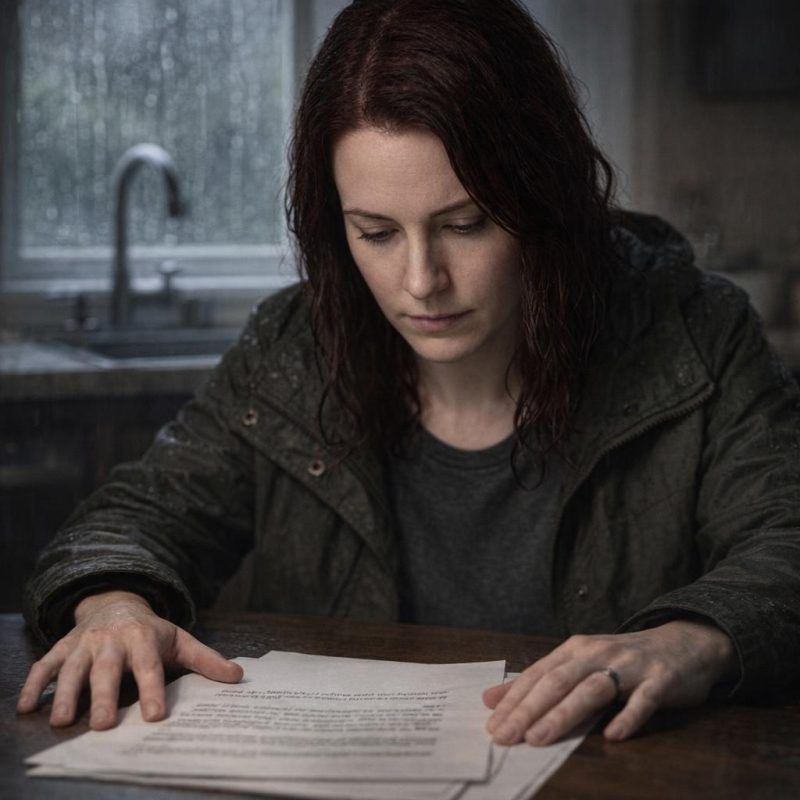 Image by RM AI
Reading His Words
I read the whole letter through once without stopping, then sat for a few minutes, then read it again. Ethan's voice was in every line — the way he built up to things slowly, the way he'd circle back to something he'd said three paragraphs earlier as if he'd been thinking about it the whole time. He wrote about the kids. He wrote about the way Lily laughed when something genuinely surprised her, and about Ben's habit of asking questions he already knew the answers to just to hear someone else say them out loud. He wrote about small things he was afraid he'd never told me — that he'd loved watching me read, that he'd always meant to take me back to the coast where we'd spent our first anniversary. It was beautiful and it was devastating and I had to keep stopping. But threaded through all of it were these other passages — careful, measured, like he was choosing each word slowly. He mentioned that the letter should only reach me under certain conditions. He didn't say what those conditions were. He mentioned promises he'd made and obligations he'd taken on, without naming them. He mentioned that there were things he hadn't been able to explain while he was alive, things he'd hoped he'd have more time to say properly. I read those sections over and over, trying to find the shape of what he was pointing at. Each time I thought I was getting close, the letter moved on to something else — a memory, a piece of advice for the kids — and I was left holding a question with no answer attached to it.
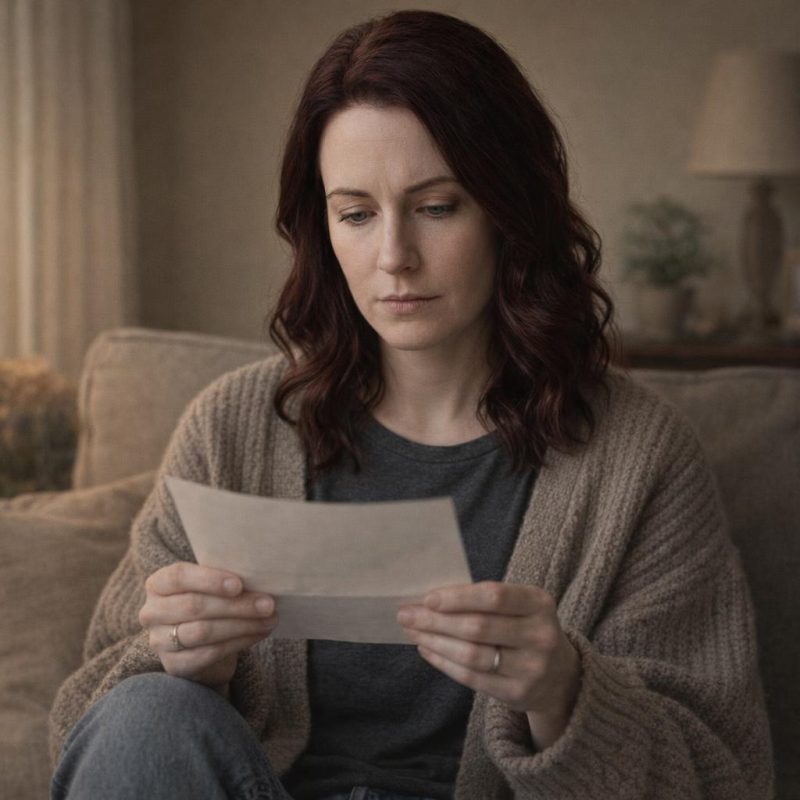 Image by RM AI
The Money Isn't Charity
I was near the end of the third page when I hit a paragraph that made me stop completely. The handwriting was the same — careful, even — but something about the way the sentences were constructed felt different from the rest of the letter. More deliberate. Less like a man writing to his wife and more like a man trying to make sure something was understood correctly. I read it once. Then I read it again. Then I set the page down and pressed both hands flat on the table. He had written: the money Ryan sends you every month is not charity. I sat with that for a moment. Three years of deposits. Three years of telling myself it was generosity, family loyalty, a brother doing what brothers do. I picked the page back up. The next sentence was right there beneath it, same careful handwriting, same even spacing. It said: he owes it to you.
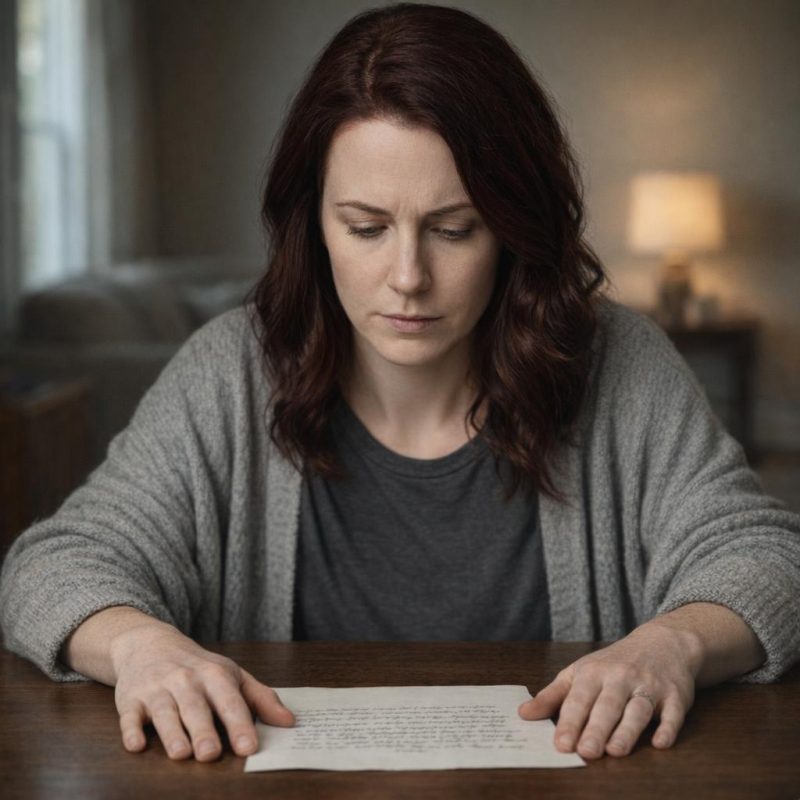 Image by RM AI
Nothing Makes Sense
I put the page down and picked it back up at least four times. I kept thinking I'd misread it, that the words would rearrange themselves into something that made more sense. They didn't. He owes it to you. I turned to the next page looking for the explanation — the sentence that would follow naturally and tell me why, tell me what that meant, give me the shape of it. What I found instead were more of those careful, circling passages. Ethan wrote about promises he'd made to people he loved. He wrote about mistakes — not his own, he seemed to be saying, but mistakes he'd been part of, mistakes that had consequences he'd tried to manage. He used the word debt twice, but never attached it to anything specific. He wrote about wanting to protect me from things that would have been hard to hear. He wrote about hoping I'd understand, someday, that everything he'd done had been for us. I kept scanning ahead, sure the explanation was just a few lines further. It wasn't. The letter moved back into memories — a camping trip we'd taken the summer before Lily started middle school, something funny Ben had said at dinner once — and then it moved into advice, and then it moved into goodbye. I turned the last page over. The back was blank. I sat at the kitchen table with all those pages spread out in front of me, and the letter was finished, and I still had no idea what any of it meant.
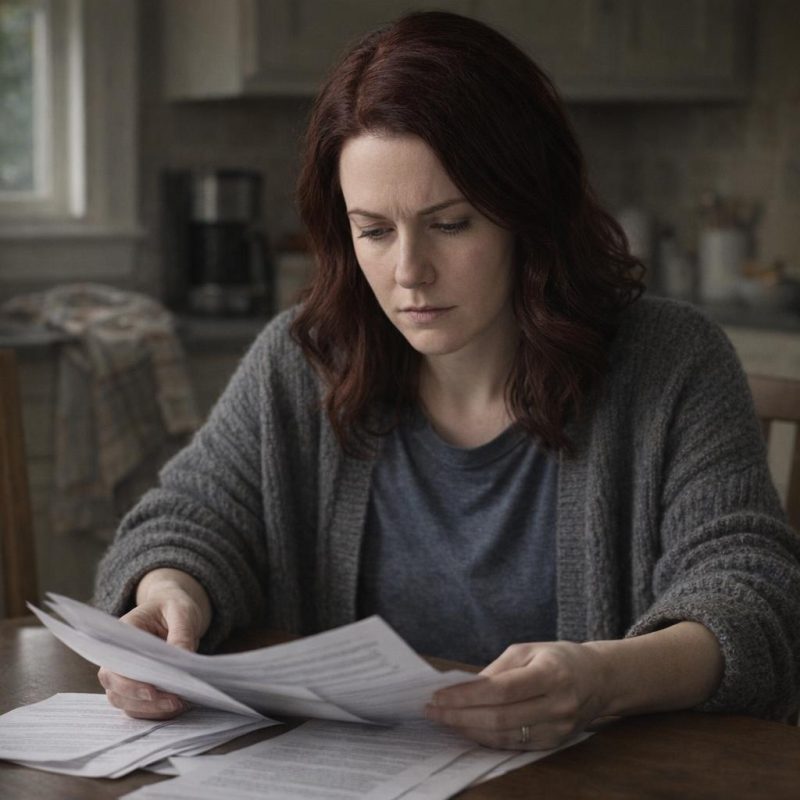 Image by RM AI
Ryan Will Understand
I almost missed it. I'd been so focused on the middle of the letter — all those careful, circling passages about promises and debts and mistakes — that I'd skimmed the last paragraph too fast the first three times through. It was only on the fourth read, somewhere around two in the morning, that I slowed down enough to catch it. Ethan's handwriting got a little looser toward the end, like he'd been tired when he wrote it, or maybe just relieved to be almost done. He wrote about the kids. He wrote about hoping I'd find something good again someday. And then, in the very last lines, almost like an afterthought, he wrote that there were things he hadn't been able to put into words — things that would be easier to understand once I'd talked to Ryan. He wrote that Ryan would understand. That Ryan would know what to say when the time came. I read that sentence four more times. I set the letter down on the table. I picked it up again. The kids were asleep upstairs. The house was completely quiet. I sat there in the kitchen with Ethan's handwriting in my hands, and one thought kept circling back: I needed to be at Ryan's office the moment it opened.
 Image by RM AI
The Sleepless Night
I didn't sleep. I tried, around four in the morning — I went upstairs, lay down on top of the covers, stared at the ceiling. But every time I closed my eyes, the letter was there. Not the whole thing. Just pieces of it, floating up in no particular order. Mistakes he'd been part of. Consequences he'd tried to manage. The word debt, twice, attached to nothing. I kept turning those phrases over, trying to find the shape underneath them. I thought about the payments — three years of them, five thousand dollars every month, arriving like clockwork. I'd told myself it was generosity. I'd told myself Ryan was just being family. But lying there in the dark, I couldn't make that explanation sit still anymore. Something had been there all along that I hadn't looked at directly. I thought about calling Ryan at four-thirty in the morning. I actually picked up my phone. Then I put it back down. Whatever this was, I didn't want to give him time to prepare. I wanted to see his face when I walked in. I lay there until the sky outside the window went from black to gray to the pale, flat white of early morning. The kids would be up in an hour. I hadn't moved. I still didn't have a single answer, and the questions just kept stacking up in the silence.
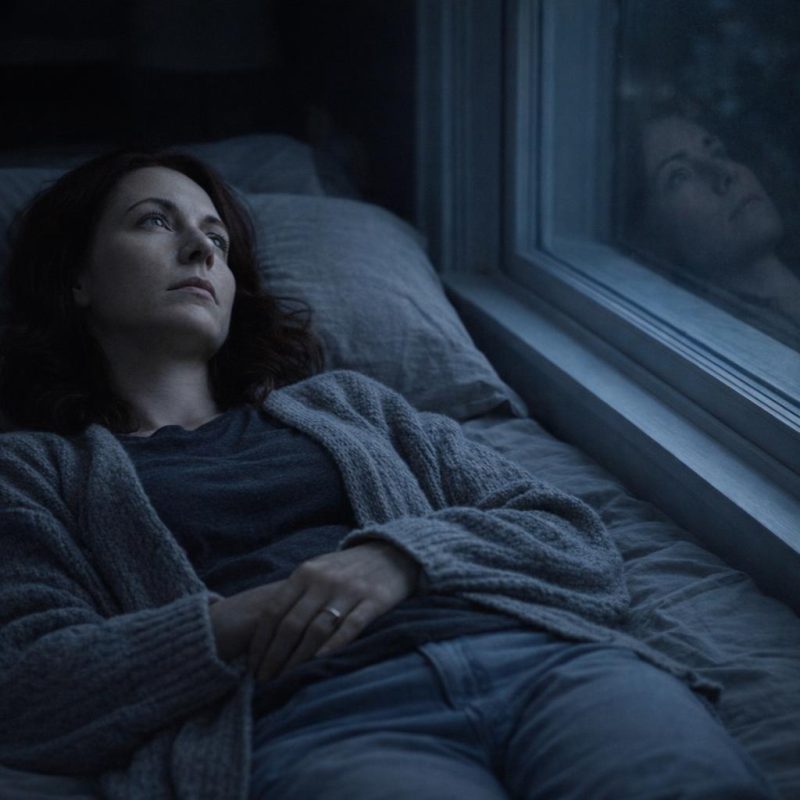 Image by RM AI
References to Promises
After I got the kids off to school, I sat back down at the kitchen table with the letter and a cup of coffee that went cold before I touched it. I read it again in the morning light, slower this time, with a pen in my hand. I underlined every phrase that felt like it was pointing at something. Promises he'd made to people he loved. Mistakes that had consequences he'd tried to manage. Things that would have been hard to hear. I counted the word promises — it appeared four times. Debt appeared twice. Neither one was ever attached to a name, a number, a date, anything I could hold onto. I kept thinking about the man I'd been married to for sixteen years. The man who remembered every anniversary, who called his mother every Sunday, who kept a running grocery list on the refrigerator so we'd never run out of the things the kids liked. I thought I'd known him completely. Sitting there with those underlined phrases staring back at me, I understood that there had been a whole room in him I'd never been shown. I didn't know what was in it. I didn't know how long it had been locked. But the letter made one thing clear enough: Ryan had a key. I folded the pages carefully, slid them back into the envelope, and set it by my bag.
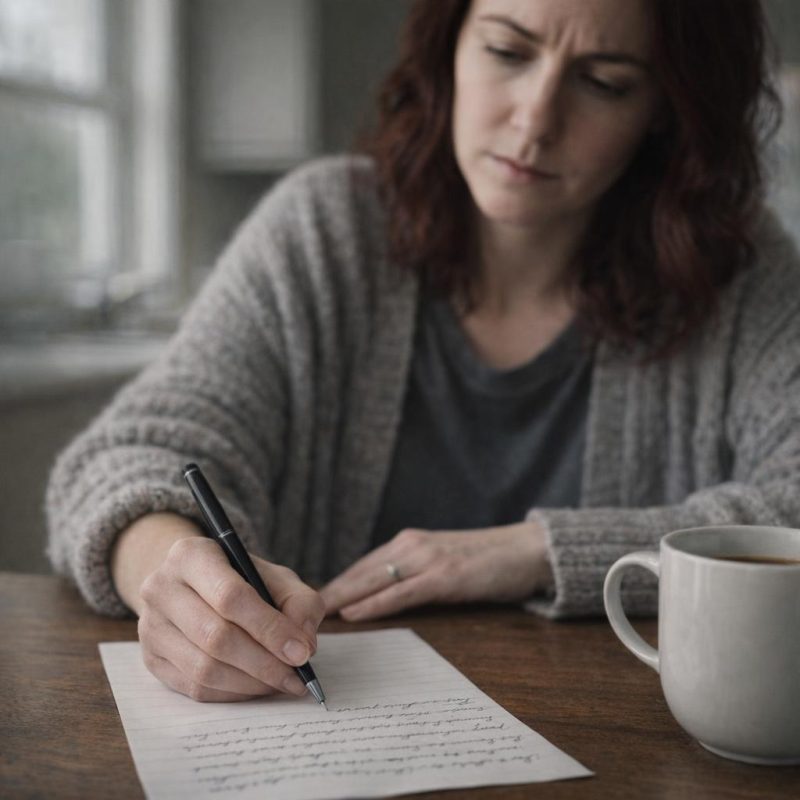 Image by RM AI
Driving to Ryan's Office
I drove to Ryan's office without calling ahead. That was deliberate. His building was downtown, one of those glass-and-steel towers that always made me feel slightly underdressed just walking through the lobby. I'd been there maybe twice in the years Ethan was alive. The receptionist recognized me — or at least recognized that I belonged somewhere in the family orbit — and waved me back without much question. Ryan's office was at the end of a short hallway. The door was open. He was at his desk, jacket on, coffee in hand, looking like a man who'd already been there for an hour. He looked up when he heard me in the doorway, and for just a second his face did the normal thing — a small, surprised smile, the beginning of a greeting. Then I stepped fully into the room and held up the envelope. I didn't say anything. I didn't need to. The smile dropped. The color in his face shifted. His eyes locked onto that envelope and something moved through his expression — not surprise, not confusion — something that looked a lot more like fear.
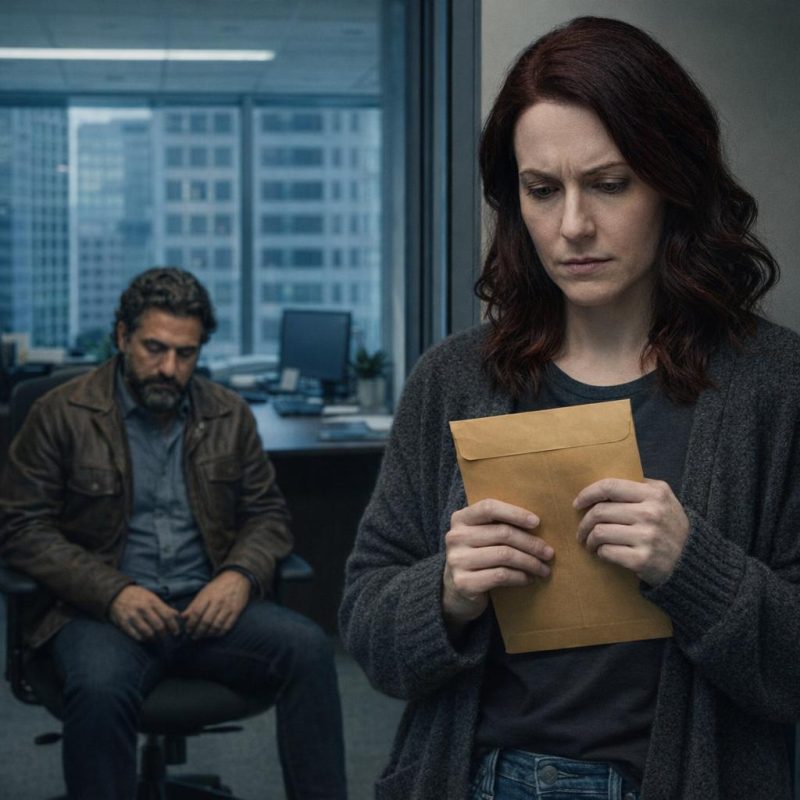 Image by RM AI
The Silence Between Words
He stood up and closed the office door behind me without saying a word. I hadn't asked him to. He just did it, quietly, like it was something he'd been expecting to do for a long time. I sat down across from his desk and slid the letter across to him. He picked it up carefully, like it was something fragile, and read it. I watched his face the whole time. His jaw tightened about halfway through. By the last page, his hands had developed a faint, barely-there tremor. He set the letter down on the desk and didn't look at me for a long moment. The office was quiet enough that I could hear the muffled sounds of the building — an elevator somewhere, a phone ringing two doors down. Neither of us spoke. I counted the seconds without meaning to. It was close to a full minute before I realized he wasn't going to say anything first. He was just sitting there, looking at the letter, his hands flat on the desk now, very still. I'd come in with a whole list of questions lined up. But sitting across from him in that silence, watching whatever was moving behind his eyes, I found I couldn't make myself speak either. The weight of what he wasn't saying filled the room more completely than any answer could have.
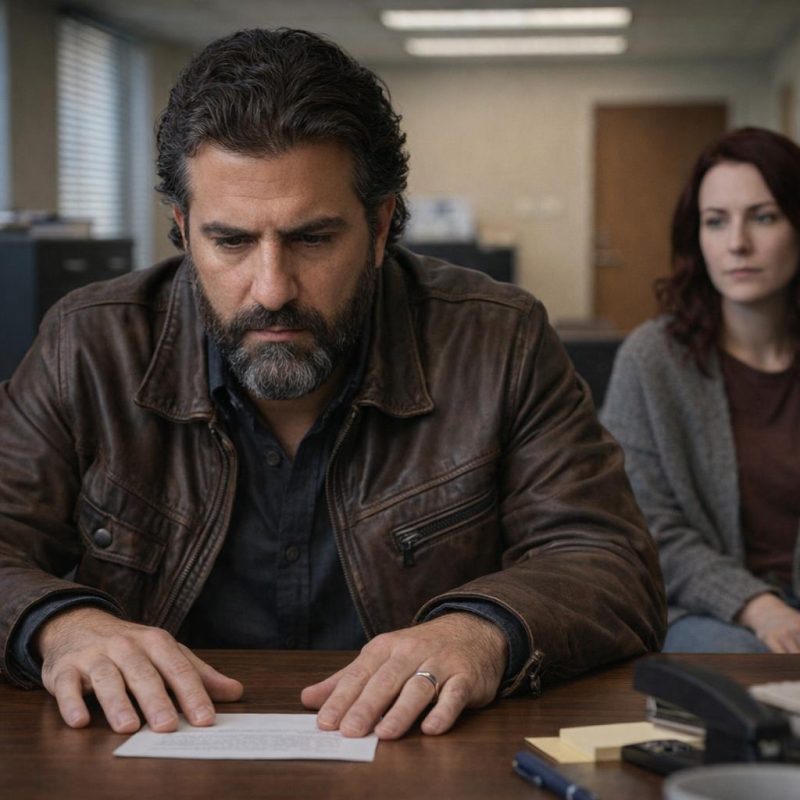 Image by RM AI
What Did Ethan Mean
I broke first. I asked him what the letter meant. Just like that, flat and direct, because I was too tired for anything else. He rubbed both hands over his face and leaned back in his chair, and for a moment he looked ten years older than when I'd walked in. He said he'd hoped this day would never come. I told him that wasn't an answer. I asked him what Ethan meant about debts. I asked him what he owed me and why. I asked him why he'd been sending me five thousand dollars every month for three years without a single explanation. He listened to all of it. He didn't interrupt. When I finished, he was quiet for another long moment, and then he said, very carefully, that he wasn't ready to explain. Not yet. I stared at him. I asked him what that meant — not ready. He said he needed more time. I told him I'd been waiting three years without even knowing I was waiting. He nodded like that was fair. He looked genuinely sorry. But he didn't say anything else. I drove home with the letter on the passenger seat and his non-answer sitting in my chest like something I couldn't swallow, and couldn't put down.
 Image by RM AI
Weeks of Evasion
I gave him a week. Then I called. He said he wasn't ready. I gave him another week and called again. Same answer, same careful, exhausted voice, same three words: not ready yet. I tried texting. I tried showing up at his office a second time — he was in a meeting, his assistant said, and I didn't believe it, but I left anyway. Three weeks in, I'd had the same conversation five times in five different ways, and every single one of them ended in the same place. I noticed things, in those calls. He always picked up. He never let it go to voicemail. He always sounded like a man who hadn't been sleeping well — voice a little rough, answers a little slow. He looked worse each time I saw him. The gray at his temples seemed to have spread. His shoulders carried something heavy and permanent. Part of me almost felt sorry for him. But then I'd think about Ethan's letter sitting in my kitchen drawer, and the sorry feeling would burn off fast. I called him on a Thursday evening, three weeks and two days after I'd walked into his office with that envelope. I asked him, again, if he was ready to talk. And he said, again, in that same worn-out voice, that he wasn't ready yet.
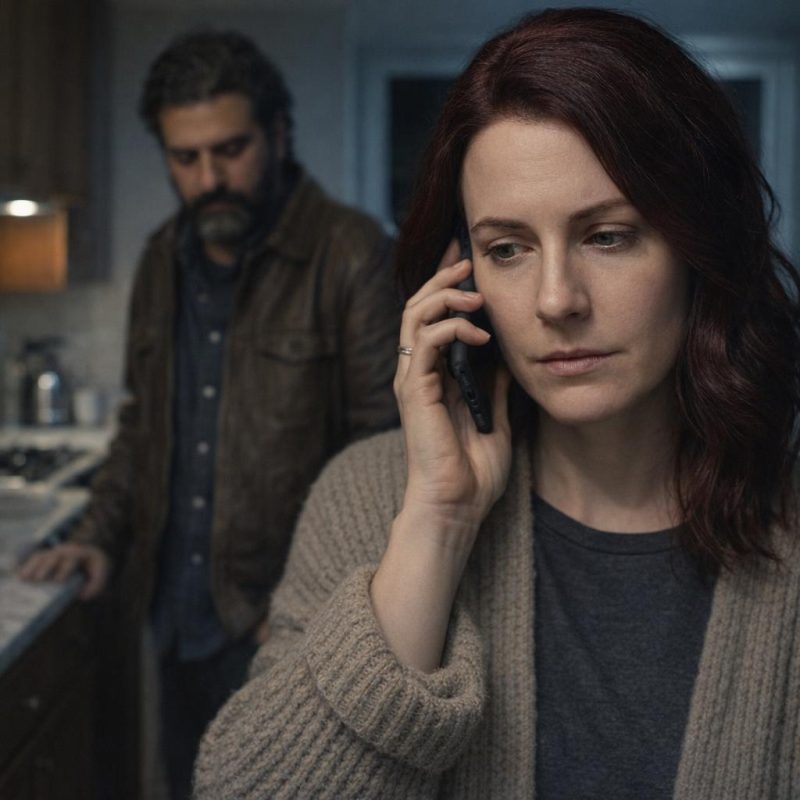 Image by RM AI
Turning Detective
If Ryan wasn't going to give me answers, I was going to find them myself. I'd been patient. I'd been reasonable. I'd given him every opportunity to just tell me. He hadn't. So on a Saturday morning, after the kids left for their weekend activities, I went to the garage and pulled out the boxes I'd been avoiding for three years. Ethan's paperwork. His files, his records, the things I'd packed up in the weeks after the funeral because I couldn't look at them and couldn't throw them away. Four banker's boxes, taped shut, stacked in the corner behind the holiday decorations. I carried them one by one to the dining room table. I found a legal pad and a pen. I told myself I was going to be systematic about this — no skipping ahead, no jumping to conclusions, just going through everything in order. I felt guilty doing it. That surprised me. He was gone, and I was grieving him, and I was also about to go through his private records looking for something he'd chosen not to tell me. Both of those things were true at the same time. I stood there for a moment with my hand on the top box. Then I pulled the tape back, folded the flaps open, and looked down at the first layer of documents inside.
 Image by RM AI
Unknown Accounts
I started with the first box the way I'd promised myself I would — methodically, one document at a time. Tax returns, mortgage statements, utility bills. Nothing surprising. I made a pile for each category and kept moving. Then I hit a section near the bottom that stopped me. Bank statements. But not from the accounts I recognized. Not from the joint checking we'd had since we got married, not from the savings account we'd opened when Lily was born. These were from a bank I'd never used, an institution I didn't even know Ethan had a relationship with. His name was on them. His social security number. His address — our address. But I had never seen a single statement come through the mail. I flipped through the pages slowly. Large numbers. Transfers in, transfers out, amounts that didn't match anything I associated with our household budget or his salary. I set them aside and kept digging. I found a second set from a different bank. Same thing — his name, our address, accounts I had never heard him mention once in fifteen years of marriage. I sat back in my chair and looked at the two stacks sitting side by side on the table. Then I found a third statement — another account in Ethan's name, at a bank I had never once heard him mention, with a balance that made my breath catch.
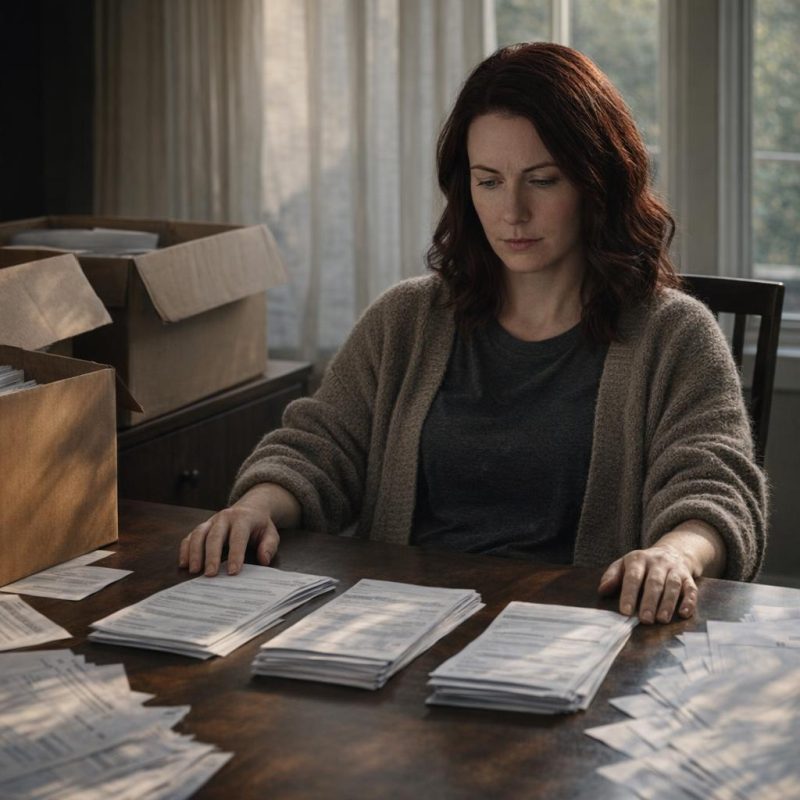 Image by RM AI
Unrecognized Documents
I moved to the second box after lunch, telling myself to stay calm and keep going. The financial documents had already shaken me, but I wasn't prepared for what was in this one. Contracts. Legal agreements. Pages and pages of them, dense with language I could barely parse, referencing company names I had never heard Ethan say out loud. Not once. I wrote them down on my legal pad — three names, then four, then six. Some of them had addresses in states we'd never lived in. One had a registered agent listed in Delaware. There were partnership agreements, operating agreements, documents with signature lines where Ethan's name appeared alongside names I didn't recognize at all. I kept writing. I kept turning pages. I found a document that referenced obligations and indemnification clauses and liability transfers, and I didn't understand most of the legal language, but I understood enough to know these weren't small things. These weren't hobby projects or side investments he'd forgotten to mention. These were serious. These were the kind of documents you sign when real money and real risk are involved. I sat there with my legal pad in my lap and looked at what I'd written. Six company names. Four unknown individuals. A list of questions that had started as a few lines and now filled an entire page.
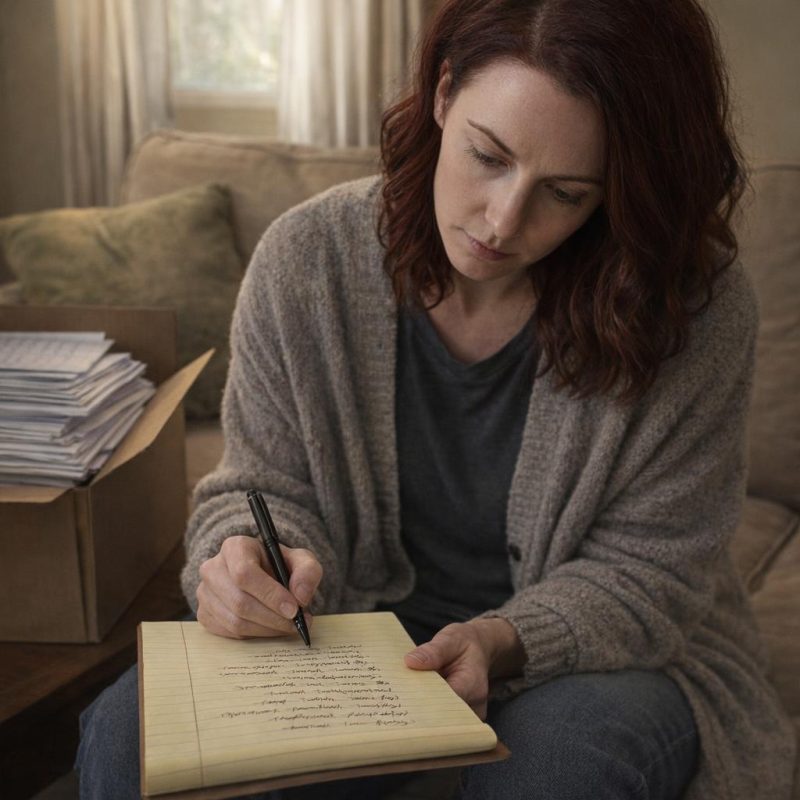 Image by RM AI
The Weight of Secrets
I put the pen down and just sat there for a while. I didn't reach for another document. I didn't add anything to my list. I just sat in the middle of all that paper and tried to breathe. Fifteen years. That's how long Ethan and I were together. Fifteen years of dinners and school pickups and arguments about whose turn it was to call the plumber and lying next to each other in the dark talking about nothing important. I thought I knew him. I thought I knew the shape of his life because it was the same shape as mine. But there were bank accounts I'd never seen. Companies I'd never heard of. Agreements he'd signed without ever saying a word to me. I wasn't angry yet — or maybe I was, and I just couldn't feel it clearly through everything else. Mostly I felt disoriented. Like I'd been looking at a photograph for years and someone had just told me there was a whole other half of the image that had been folded behind it the whole time. I thought about the way he used to reach for my hand when he was worried about something. I thought about how I always assumed, when he did that, that I knew what he was worried about. The ache of that — of loving someone and realizing the shape of them was larger and stranger than you ever got to see — settled into my chest and stayed there.
 Image by RM AI
Mysterious Meetings
After I cleared my head a little, I went and got Ethan's old laptop from the closet shelf where it had been sitting since the funeral. I'd charged it once, looked at the desktop, and put it away because I wasn't ready. I was ready now, or at least I was determined, which felt close enough. I found his email archives without much trouble. He'd never been precious about passwords — the same one he'd used since college, the one I'd always teased him about. I started searching by date, going back two years before he died, and I found messages about meetings. Meetings scheduled for Tuesday afternoons when he'd told me he was working late at the office. Meetings on Saturday mornings when I thought he was at the gym. The email recipients were names I didn't know — not colleagues I'd met at company parties, not clients whose names had come up at dinner. Just names. And when I pulled up his calendar to cross-reference, those meetings weren't there. Not a single one. The calendar showed exactly what I remembered — work, kids' activities, the occasional dinner with friends. Whatever those meetings were, he hadn't put them anywhere I could find them. I sat with the laptop open in front of me, the email thread on one side of the screen and the blank calendar on the other, and I couldn't make the two things fit together no matter how long I stared.
 Image by RM AI
Sorting Through Paperwork
I worked through the third and fourth boxes that afternoon, slower now, more tired than I wanted to admit. I made piles. Insurance documents in one stack, correspondence in another, what looked like old business receipts in a third. I was trying to be systematic but the categories kept blurring. Something that looked like a personal letter turned out to be a legal notice. Something that looked like a receipt had account numbers on the back. I kept adding things to my legal pad but the list wasn't becoming a picture — it was just becoming longer. Hours passed. The light through the dining room window shifted from afternoon to early evening and I barely noticed. I kept thinking that the next folder would be the one that made everything click, that there would be some document that sat on top of all the others and explained them. There wasn't. There were just more pieces, more names, more numbers that didn't connect to anything I recognized from our life together. At some point I got up and made coffee I didn't drink. I stood in the kitchen for a minute looking at the dining room table covered in paper and felt the full weight of what I was doing — searching through a dead man's private life, looking for something I couldn't even name, not knowing if I was getting closer or just getting lost.
 Image by RM AI
The Insurance Policy
I almost missed it. It was near the bottom of the fourth box, tucked inside a manila folder with nothing written on the tab. I'd been moving faster by then, fatigue making me sloppy, and I almost set it aside with the pile I'd labeled miscellaneous. But something made me open it. Inside was a life insurance policy. I'd known about our joint policy — the one we'd taken out together when Ben was born, the one that named me as beneficiary. This wasn't that one. This was a separate policy, taken out years earlier, with a face value that made me set down my coffee cup. Hundreds of thousands of dollars. I read through the first page carefully, then the second. The insured was Ethan. The policy was active at the time of his death. I turned to the beneficiary page, already forming the assumption in my mind — my name, or maybe the kids', some arrangement I hadn't known about but that would at least make sense. I ran my finger down the page to the designated beneficiary line. Ryan's name was printed there, not mine.
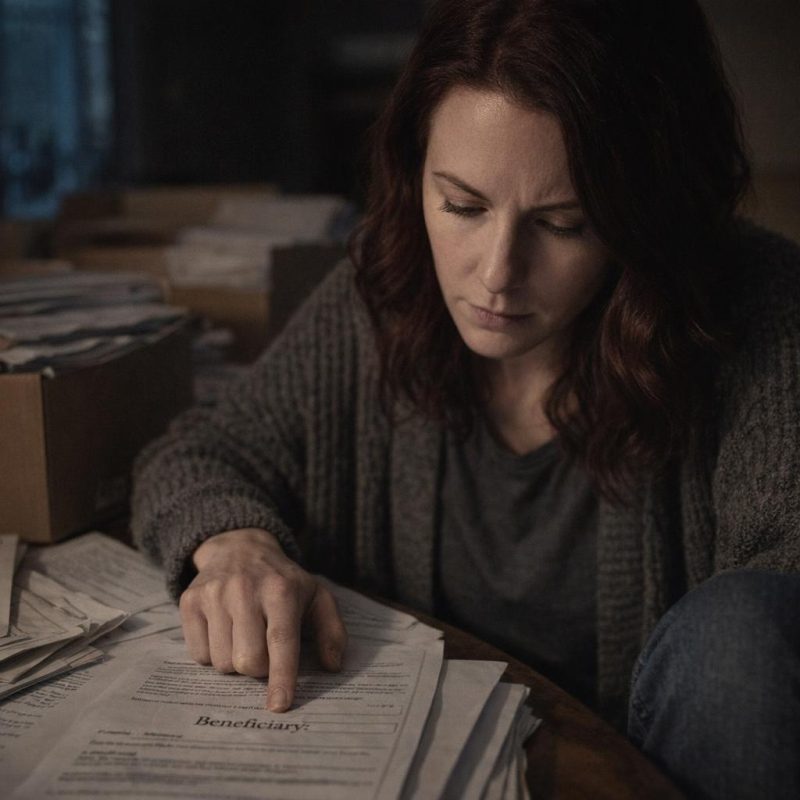 Image by RM AI
Staring at His Name
I read it three times. Then I set the policy down on the table and walked to the kitchen and stood at the sink with the water running, not doing anything with it, just needing to be somewhere else for a minute. Ryan's name. On a life insurance policy worth hundreds of thousands of dollars. A policy Ethan had taken out years before he died and never once mentioned to me. I went back to the table and read it again. I checked the date it was issued. I checked the policy number. I looked for any addendum, any rider, any page that might explain it or name additional beneficiaries. There was nothing. Just Ryan's name, clean and unambiguous, in the designated beneficiary field. I thought about Lily and Ben. I thought about the three years I'd spent stretching every dollar, the months before Ryan's payments started when I'd lain awake at night doing math in my head. Ethan had known he might die — everyone knows that, in the abstract, which is why you take out a policy in the first place. And he had looked at that form and written his brother's name instead of mine. Instead of ours. I didn't understand it. I couldn't find a version of it that didn't feel like a door closing in my face, and the hollow feeling that settled into me then was quieter and heavier than anything I'd felt all day.
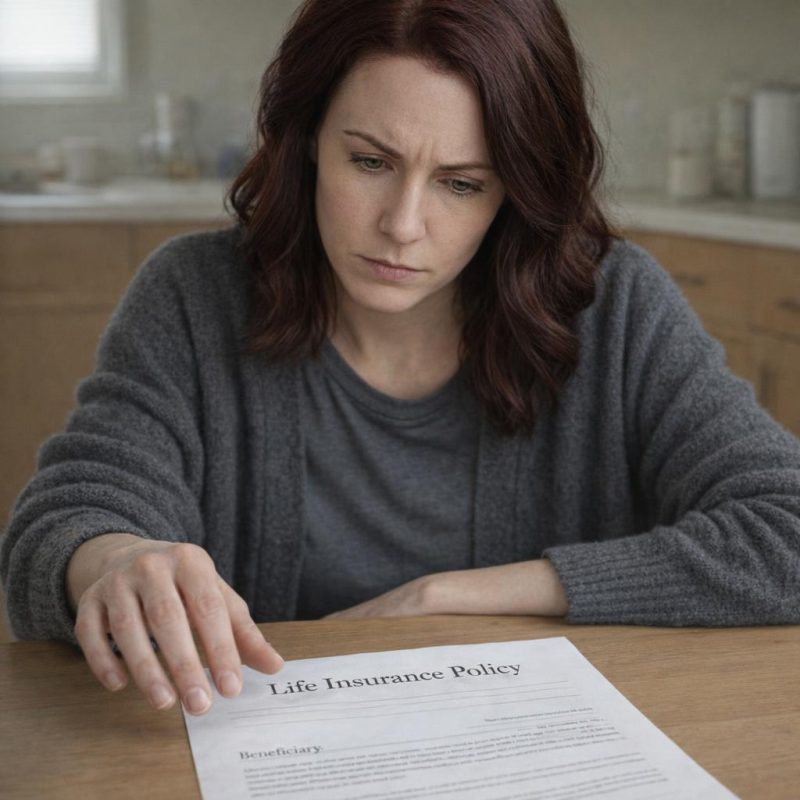 Image by RM AI
Confrontation with Evidence
I didn't call first. I knew if I called, he'd have time to prepare, and I was done giving Ryan time to prepare. I drove to his house on a Sunday morning with the insurance policy in a folder on the passenger seat. I rang the doorbell and waited. He answered in a t-shirt and jeans, coffee mug in hand, and his expression shifted the moment he saw me standing there — not surprise exactly, more like a man who had been waiting for something and wasn't sure if this was it. I held up the folder. I said, "I found it." He looked at the folder and I watched something move across his face — recognition, maybe, or the particular exhaustion of someone who has been carrying a thing for a very long time and can feel it about to leave their hands. I said, "You were the beneficiary. Not me. Not the kids. You. And I need you to tell me why." He didn't answer right away. He stepped back from the door and looked down at the floor. Then he looked up at me, and his jaw was tight, and his eyes were wet, and he said, "Come inside. I'll tell you everything." I stepped through the door. He sat down heavily on the couch, set his mug on the coffee table, and put his face in his hands.
 Image by RM AI
The Brothers' Business
He sat there for a long moment with his face still in his hands, and then he lifted his head and started talking. Not about the payments. Not about the insurance policy. He went back further than I expected — way back, before I ever knew Ethan existed. He said they started a business together in their mid-twenties. Just the two of them. He described it the way people describe things they were once proud of — carefully, like the words still mattered. They had an idea for a logistics company, something about regional freight contracts, and they pooled everything they had. Ryan said Ethan was the one with the vision. He said that like it cost him something to admit it. They worked out of a shared office space for the first two years, barely paying themselves, convinced they were building something real. Ryan's voice was steady at first, almost rehearsed, like he'd told himself this story enough times that the edges had worn smooth. He talked about the early clients, the first contracts, the way they'd stay up late going over numbers and still feel good about what they saw. I sat across from him and didn't say a word. I just let him talk. And somewhere in the middle of it, I felt the strange, heavy weight of a history I had never known existed settling over the room.
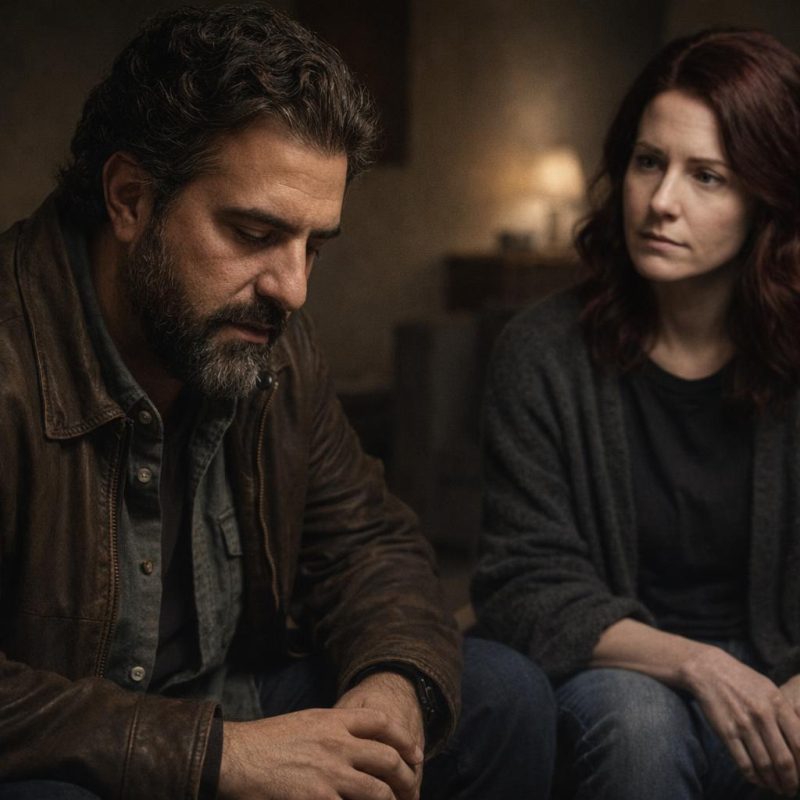 Image by RM AI
When Things Went Wrong
The good years didn't last long. Ryan said that plainly, without dressing it up. Around year three, they started chasing bigger contracts than they were ready for. They took on debt to expand the fleet, hired staff they couldn't quite afford, and signed agreements that assumed growth that never came. Ryan described one bad investment in particular — a warehouse lease in a market that collapsed six months after they signed — and the way he talked about it, I could tell it still sat in him like a stone. He said they argued. A lot. He wanted to cut their losses and walk away while they still could. Ethan kept saying they were close, that one good quarter could turn it around. Ryan's voice dropped when he got to that part. He said Ethan was always the optimist between them, always the one who believed things could be fixed if you just worked hard enough and long enough. I didn't say anything. I watched him stare at the coffee table like the numbers were still written there somewhere. The debt kept climbing. The clients started pulling back. And the two of them, who had been best friends their whole lives, were suddenly on opposite sides of every conversation. The sadness in his voice when he described those months sat in the room long after the words were gone.
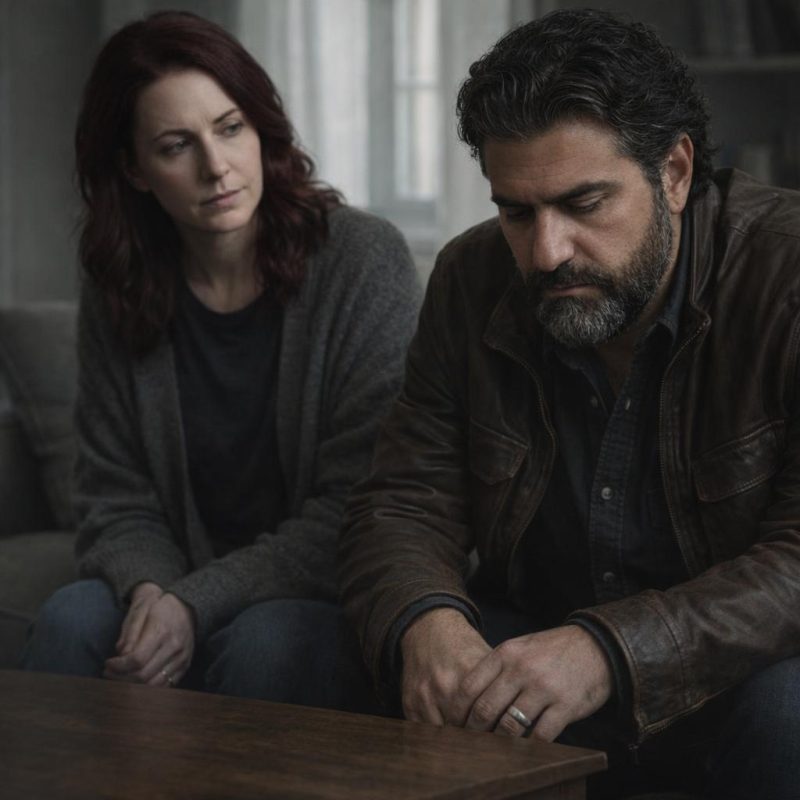 Image by RM AI
The Terrible Mistake
He stopped talking for a second and rubbed the back of his neck. Then he said there was a meeting — a creditor meeting, near the end, when it was already clear the business wasn't going to survive. He said he went alone because Ethan was sick that week, just a bad flu, nothing serious, but enough that Ryan told him to stay home and rest. There were lawyers in the room. People with folders and serious faces. Ryan said he was exhausted and scared and not thinking clearly, and when they put paperwork in front of him, he signed it. He said he didn't read it the way he should have. He thought he was signing a standard restructuring agreement. He wasn't. He said the documents had a personal guarantee clause buried in them — one that transferred the liability from the business entity to an individual. He thought he was signing for himself. He wasn't. He looked up at me then, and his voice went very quiet. He said, "I signed Ethan's name. I had his power of attorney for business matters and I used it without understanding what I was doing." He said by the time he figured out what he'd done, the paperwork was already filed. And then he said the words that stopped the air in the room entirely — "Ethan was personally liable for over three million dollars, and it was my fault."
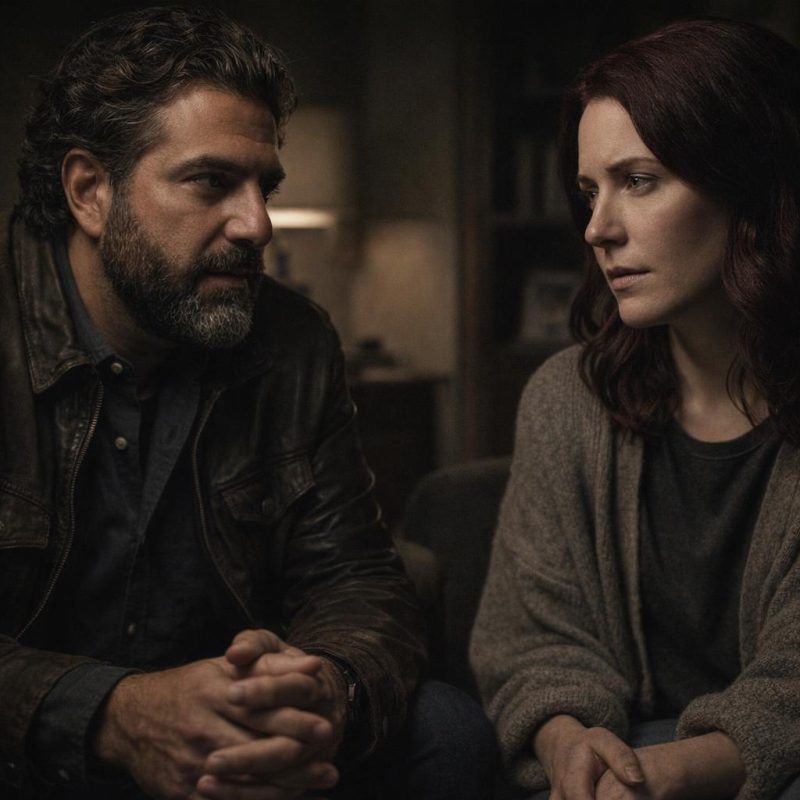 Image by RM AI
Ethan's Silent Sacrifice
Ryan didn't stop there. He kept going, and what came next was harder to sit with than anything he'd said before. He said Ethan found out within days. He said the conversation was the worst of his life. But Ethan didn't go to their parents. He didn't hire a lawyer to fight it. He didn't tell me — and by then, we'd been together almost two years. He just went quiet for a while, and then he started working. Ryan said Ethan restructured his personal finances, took on consulting work on top of his regular job, and began making payments against the liability. Year after year, quietly, without telling anyone. He protected Ryan from any legal exposure. He kept their parents from ever knowing the business had failed that badly. And he never said a word to me about any of it. Ryan's voice broke a little when he said that part. He said Ethan told him once, early on, that the only way through it was to fix it and not let it destroy anyone else. I sat there trying to hold all of it at once — the years of our marriage, the long hours Ethan worked, the times he seemed tired in a way I couldn't reach. Ryan pulled out his phone and showed me a single number: the total liability Ethan had taken on. It was three point four million dollars.
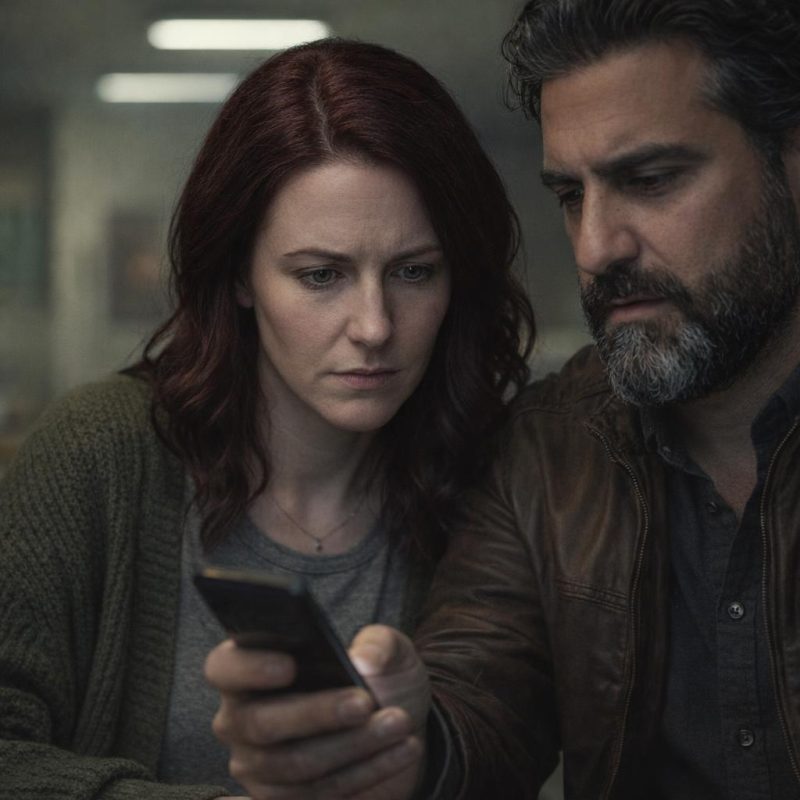 Image by RM AI
The Question That Remains
I sat with that number for what felt like a long time. Three point four million dollars. I kept turning it over, trying to make it fit inside the life I thought I knew. Ethan working late. Ethan taking on extra projects. Ethan always saying we were fine when I asked about money, always calm, always steady. I had thought that was just who he was. I hadn't known it was something he was carrying. Eventually I looked up at Ryan and I asked the question I'd come here to ask in the first place. I said, "What does any of this have to do with the payments? The five thousand dollars every month for three years — what is that?" Ryan had been holding himself together reasonably well up to that point. Not perfectly, but well enough. When I asked that question, something in him shifted. His jaw tightened. He looked down at his hands. He pressed his lips together like he was trying to hold something back. And then he looked up at me, and his eyes were full, and the first tear came down his face before he could stop it.
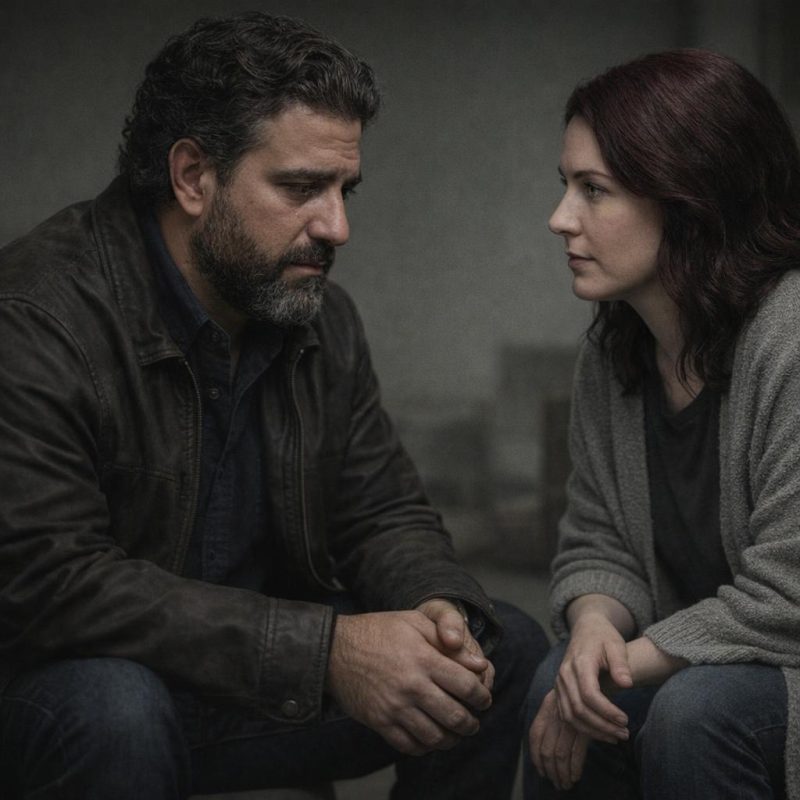 Image by RM AI
The Invitation
He wiped his face with the back of his hand and took a breath. Then another. I didn't push him. I just waited. After a moment he said, "I can't explain the rest of it just sitting here. There's too much. You need to see it." He got up and walked to the kitchen, came back with a glass of water, and sat down again. He said there were documents. A lot of them. Contracts, letters, financial records going back years. He said he'd kept everything, every piece of paper, in a filing cabinet at his house. He said he'd never shown them to anyone. Not his parents, not a lawyer, not a friend. He looked at me and said, "I think you're the only person who has the right to see them." I asked him when. He said whenever I was ready, but that it should be soon — that he'd been waiting a long time to show someone, and now that I knew this much, he didn't want me sitting with half a story. I told him I'd come the next morning. He nodded, and something in his shoulders dropped, like a small amount of weight had already begun to lift. I drove home that night with more questions than I'd arrived with, but for the first time in three years, the quiet felt like it might be leading somewhere.
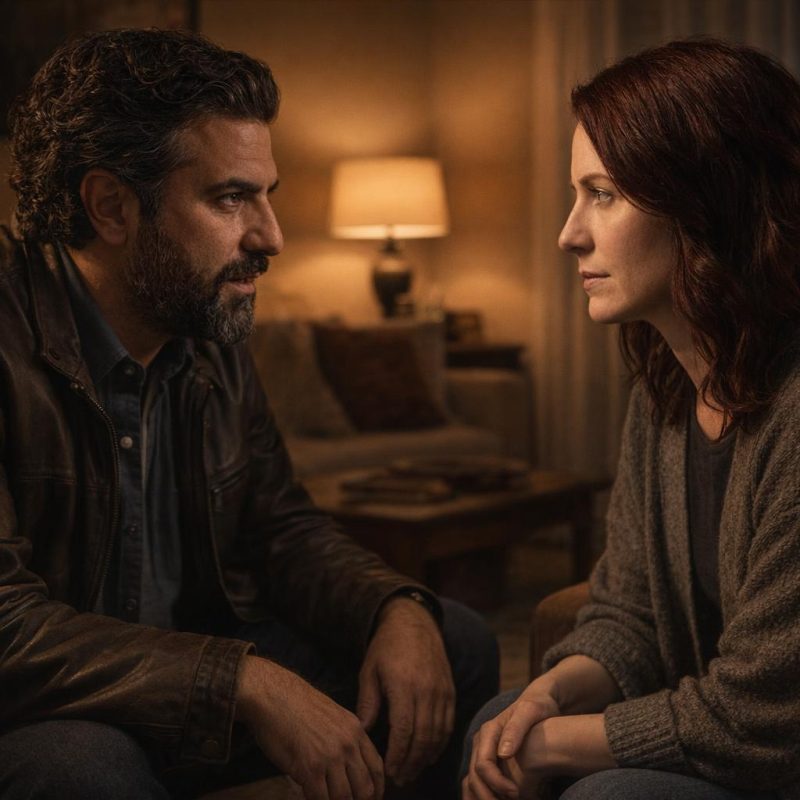 Image by RM AI
The Locked Cabinet
I pulled up to Ryan's house just after nine the next morning. He answered the door before I even knocked, like he'd been watching for my car. He led me straight through the living room and down the hall to a small home office at the back of the house — the kind of room that looked like it didn't get used for much except storage. There was a desk, a bookshelf, and in the corner, a two-drawer metal filing cabinet with a combination lock on the front. It looked old. The kind of thing you'd find in the back of an office supply store twenty years ago. Ryan stood in front of it for a moment without touching it. He said, "I moved this cabinet three times. Every time I moved, it came with me. I never opened it unless I had to add something." He said the last time he'd opened it was the week after Ethan's funeral. I didn't ask why. He crouched down, turned the dial slowly — left, right, left — and I heard the mechanism release. He pulled the drawer open. The sound of that lock clicking open was small and ordinary, and it landed in the quiet room like something that had been a long time coming.
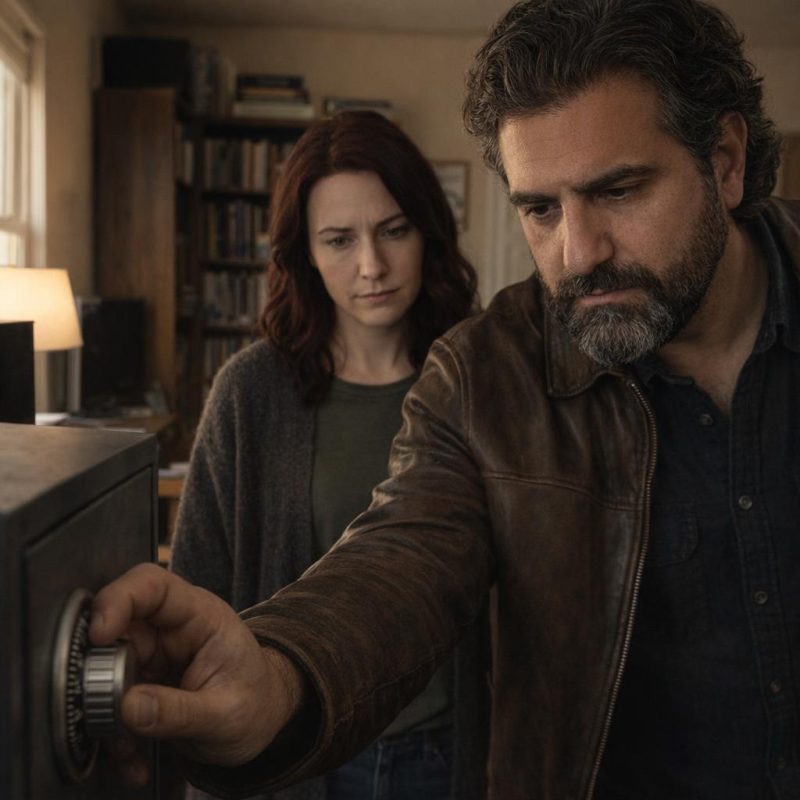 Image by RM AI
Millions in Debt
The drawer was packed. Not messy — organized, the way Ethan used to organize things, actually, which gave me a strange feeling I couldn't name. Ryan lifted out a thick stack of folders and set them on the desk. He stepped back and said, "Take your time." I started going through them. Old contracts with the business name on the letterhead. Letters from creditors. Payment confirmations. Bank statements with amounts circled in pen. Each folder covered a different period — the first year, the second, the third — and the numbers in them kept climbing. Some of the payments were modest. Others weren't. There were wire transfer records, settlement letters, legal correspondence. Page after page of Ethan quietly paying down a debt that had never been his to carry. I lost track of time. At some point Ryan brought me a cup of coffee and set it on the corner of the desk without saying anything. Near the bottom of the stack, there was a single sheet of paper — a handwritten ledger, columns of dates and amounts in Ethan's careful handwriting, with a total drawn at the bottom and underlined twice. The number written there was two million, eight hundred and forty thousand dollars.
 Image by RM AI
Years of Bailouts
I kept reading. I couldn't stop. The further back I went in that stack of folders, the further back the pattern went — and it was a pattern, unmistakably. The first bailout I found was dated more than twelve years ago. A small business loan Ryan had defaulted on. Ethan had covered it quietly, no fanfare, no paper trail beyond what was in this drawer. Then a few years later, a larger debt. Then another. Each time Ryan had stumbled, Ethan had been there. Not once, not twice — again and again, across more than a decade of Ryan's life. I looked up at some point and Ryan was standing near the window with his arms crossed tight over his chest, staring at the floor. He didn't say anything. He didn't have to. The shame coming off him was something I could almost feel from across the room. I turned back to the documents. There were years in that stack where Ethan must have been quietly stretched thin, quietly carrying weight I never saw, quietly making sure his brother didn't go under. I had shared a bed with that man for fifteen years and I hadn't known. The rescue stretched back further than our marriage did.
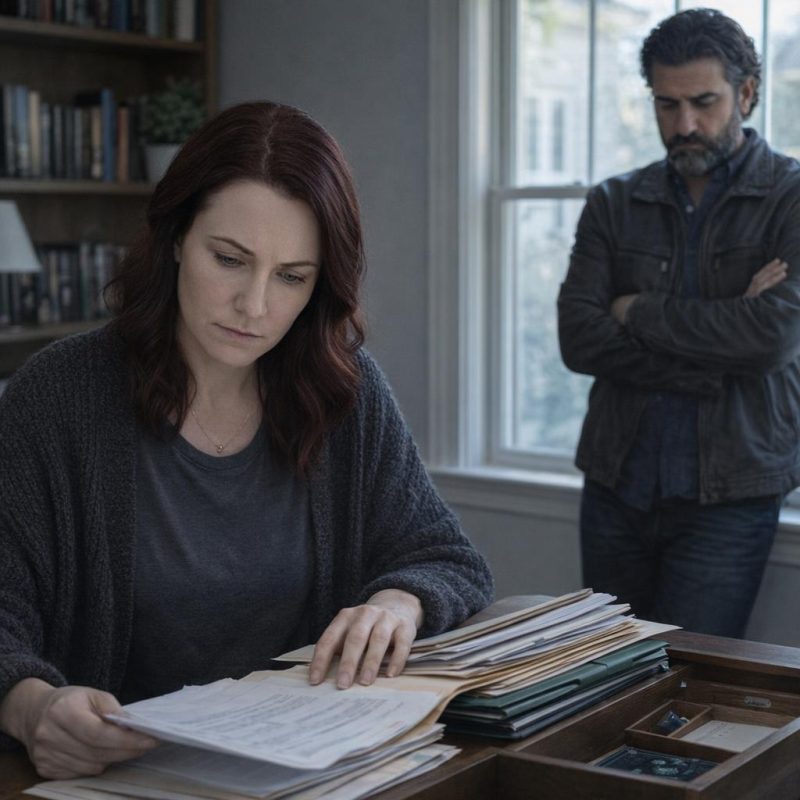 Image by RM AI
Never Told Anyone
I finally set the last folder down and just sat there. Ryan hadn't moved from the window. After a long moment I asked him why Ethan had never told me. He let out a slow breath and turned around. He said Ethan had made him promise. From the very first time, Ethan had been clear — their parents couldn't know, because it would have broken their mother's heart to see Ryan struggling. And I couldn't know, because Ethan didn't want me to worry, and he didn't want me to think less of Ryan. He wanted to protect everyone from the truth of it. Ryan's voice was quiet when he said that. He said he'd argued with Ethan about it more than once, told him it wasn't fair to keep me in the dark. But Ethan wouldn't budge. He said it was between brothers and it would stay that way. Ryan looked at me then, really looked at me, and said, "He was protecting all of us. Even from each other." I didn't have an answer for that. I thought about Ethan going to work every day, managing all of it alone, never once letting it show on his face when he came home. The weight of that kind of silence settled over me and stayed.
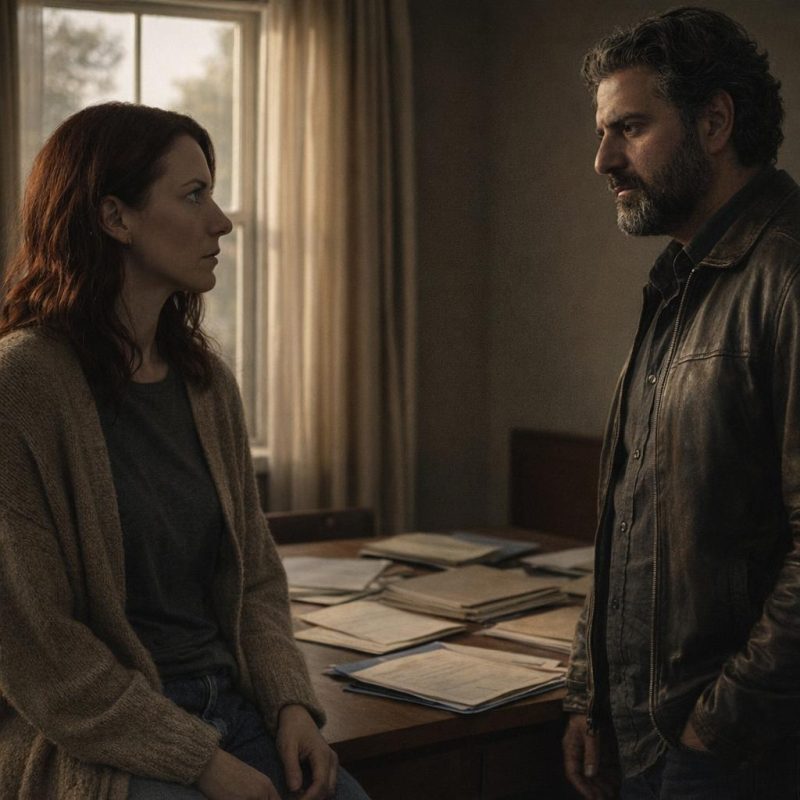 Image by RM AI
The Private Agreement
Ryan was quiet for a moment after that. Then he crossed to the cabinet and crouched down, reaching toward the very back of the bottom shelf. He pulled out a slim manila envelope, the kind with a metal clasp, and held it for a second before setting it on the desk in front of me. He said, "There's one more thing you need to see." Inside was a single document, two pages, printed on plain paper and signed at the bottom by both of them. It was dated about eight years back. I read through it slowly. The language was formal but not complicated — it laid out the total amount Ethan had covered over the years up to that point, acknowledged Ryan's obligation, and included a clause that said if anything happened to Ethan before the debt was settled, Ryan was responsible for repaying the full outstanding balance directly to Ethan's family. It named me. It named the children. Ryan had signed it. Ethan had signed it. There were two witnesses I didn't recognize. I turned to the second page and found the specific repayment clause, the one that spelled out exactly what Ryan owed us if Ethan was gone — and I read it twice to make sure I understood what I was looking at.
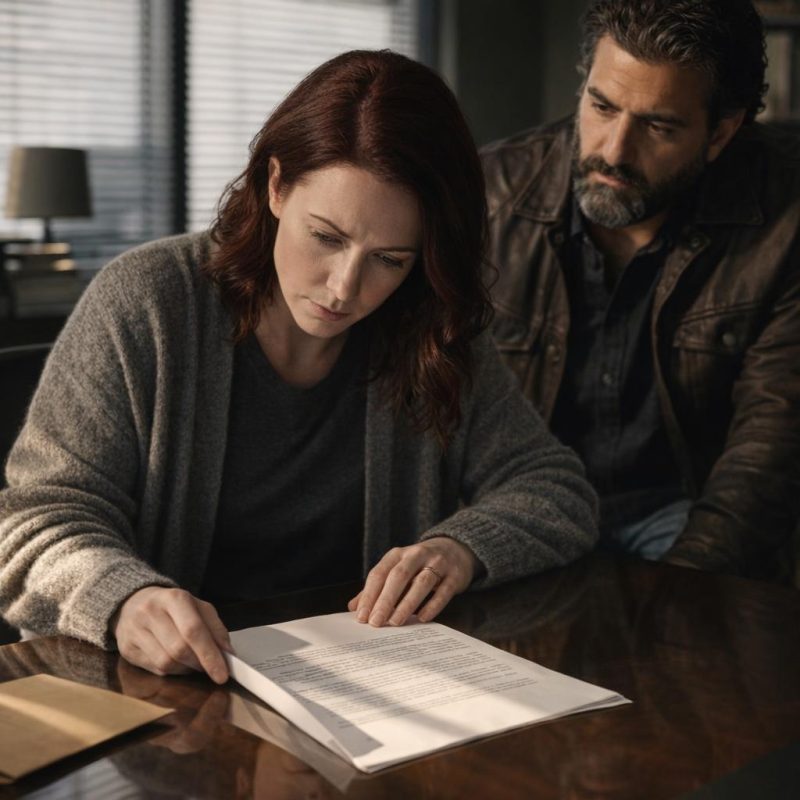 Image by RM AI
Debt Repayment
I set the document down on the desk and sat back. Something in my chest had gone very still. The monthly deposits. Five thousand dollars, every single month for three years. I had spent so long trying to understand where that money was coming from and why, and now I was sitting in Ryan's home office holding the answer in my hands. It wasn't charity. It wasn't guilt money, not exactly. It was a debt. A formal, documented, signed obligation that Ryan had made to his brother years before Ethan ever got sick. When Ethan died, the clause had activated. Ryan had simply done what he'd promised to do. I looked over at Ryan and he was watching me with that same careful, exhausted expression he'd worn all evening. I said, "So the payments — that's what this is. You're honoring the agreement." He nodded once, slowly. "I made him a promise," he said. "I wasn't going to break it." I looked back down at the document. The signatures at the bottom. Ethan's handwriting on the witness line, neat and deliberate as always. I thought I finally had the whole picture — every piece of it accounted for, every question answered, the shape of it finally clear.
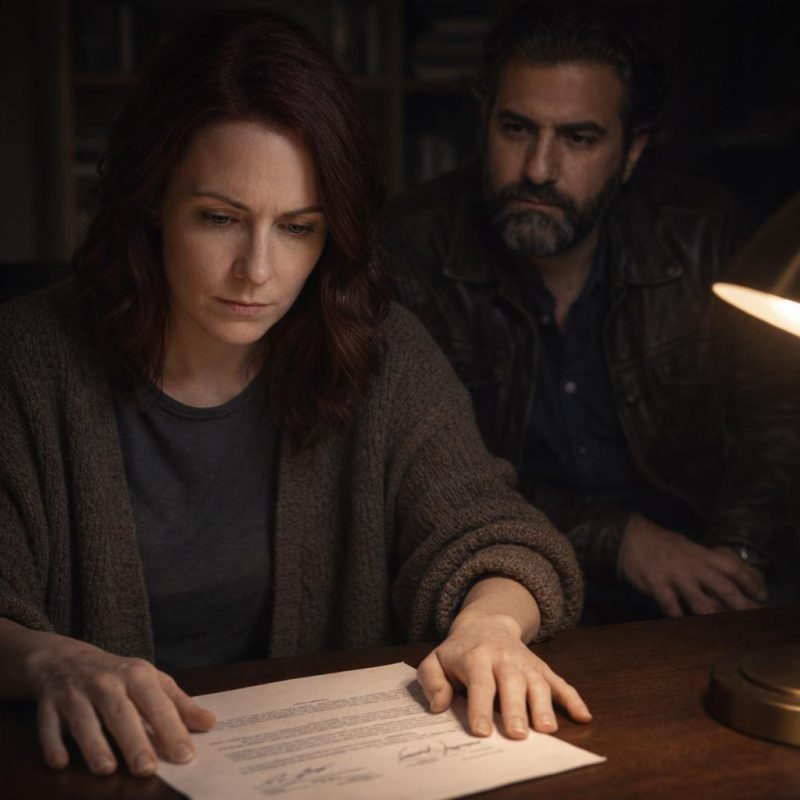 Image by RM AI
Already Repaid
I was about to close the manila envelope when I noticed it. A second envelope, smaller, tucked flat against the back panel of the cabinet drawer — I'd missed it the first time through. It was sealed, and Ryan's name was written on the front in handwriting I recognized immediately. My hands went still. Ryan saw me reach for it and said, "Jessica, wait —" but I'd already broken the seal. Inside was a single folded sheet of paper. Ethan's handwriting, unmistakably. I unfolded it and started reading. It was undated but the paper had that slightly yellowed look of something that had been sitting for a while. Ethan wrote that he was proud of Ryan. That Ryan had worked harder than anyone knew. That the debt between them was gone — settled, finished, done — and that Ryan needed to stop carrying it. He wrote that Ryan had paid back every dollar years ago and that Ethan had never wanted the agreement to become a chain around his brother's neck. He told Ryan to let it go. To stop punishing himself. I read it twice. Then I looked up at Ryan, who had gone completely white, and I said, "He wrote this before he died. Ryan — he says you already paid him back. Years ago."
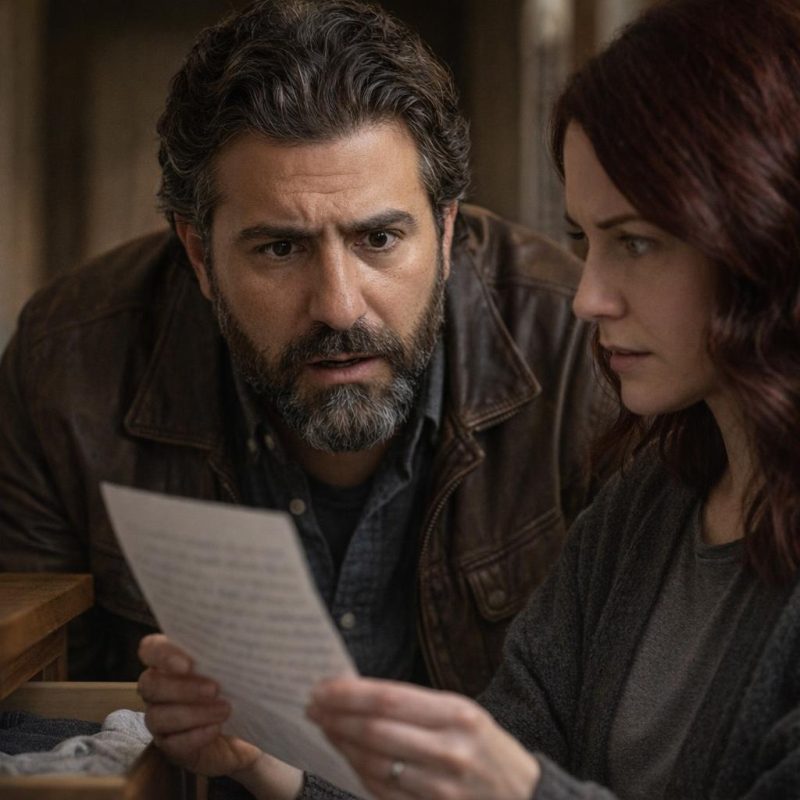 Image by RM AI
Ryan Breaks
Ryan didn't say anything at first. I held the letter out to him and he took it with both hands, the way you'd take something fragile. He stood there reading it and I watched his face change. The careful, controlled expression he'd worn all evening just — fell apart. His jaw tightened first, then his chin dropped, and then his shoulders started shaking. He pressed one hand over his mouth. He turned away from me and stood facing the window, and the sounds that came out of him weren't quiet. They were the kind of sobs that come from somewhere deep and old, the kind that have been waiting a long time to get out. I hadn't heard anyone cry like that since the funeral. I stood there not knowing what to do with my hands. I thought about all the months of those deposits landing in my account, all the times I'd wondered what Ryan was carrying, all the ways I'd misread the weight on him. He'd been paying a debt that Ethan had already forgiven. He'd been punishing himself for three years with money Ethan had told him he didn't owe. The letter was still in his hands, shaking with him, and his sobs filled every corner of that quiet room.
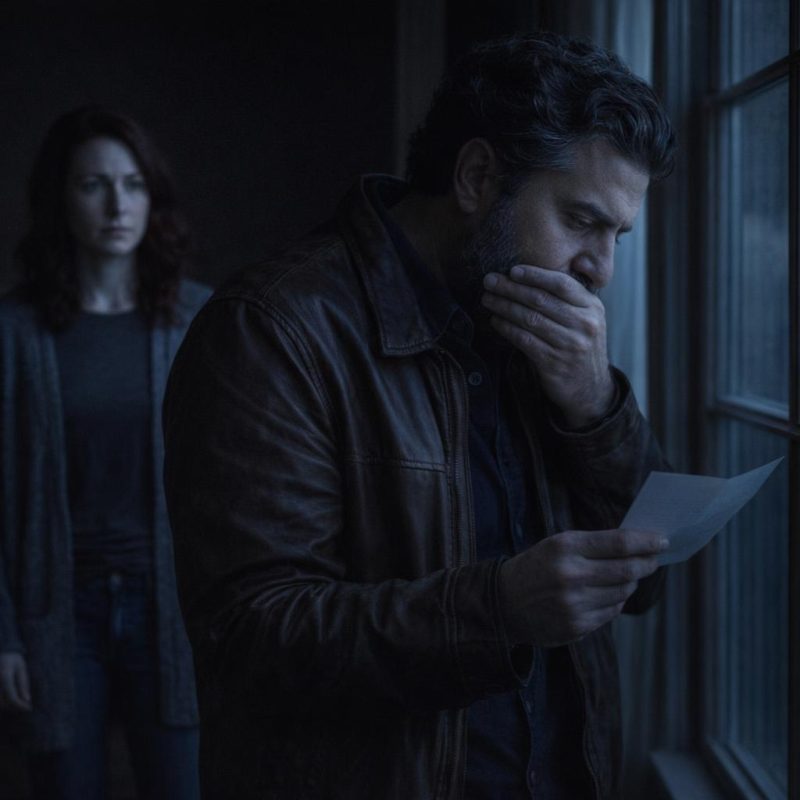 Image by RM AI
The Weight of Forgiveness
I sat down on the edge of the desk chair and waited. There wasn't anything to say, not yet. Ryan eventually turned back around and sank into the chair across from me, the letter still in his hands. His face was wrecked. I asked if I could read it again and he passed it over without a word. I went through it slowly this time, every sentence. Ethan had written it carefully, the way he did everything — no wasted words, nothing dramatic, just plain and direct. He told Ryan the debt was gone. He told him he was proud of him. He said he didn't want Ryan spending the rest of his life looking back. There was a line near the end that I had to read three times: "You were always worth more than what you owed me. I need you to believe that." I folded the letter along its original creases and set it on the desk between us. Ryan was staring at the floor, breathing slowly, trying to pull himself back together. I thought about Ethan writing those words, sealing that envelope, tucking it somewhere he knew Ryan would eventually find it. He had tried to hand his brother a way out of the guilt before he was even gone. That was the kind of man he had been.
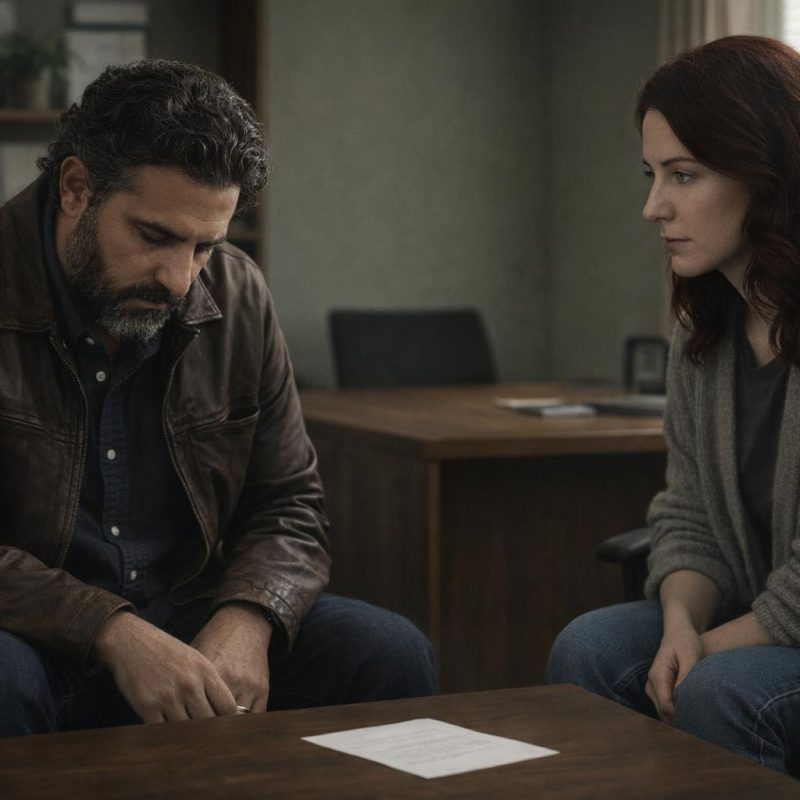 Image by RM AI
Payments Never Required
We sat in that office for a long time without talking. At some point I picked up the formal agreement again and looked at the date, then thought about what Ryan had told me — that he'd paid back every dollar years before Ethan got sick. The agreement had been fulfilled. The clause about repaying Ethan's family had never actually applied, because there was no remaining debt when Ethan died. Ryan had sent me five thousand dollars a month for three years with no legal obligation, no contractual requirement, nothing binding him to it at all. He had done it entirely on his own. Not because he owed it. Not because a document said he had to. Because he couldn't forgive himself for the years Ethan had spent quietly covering for him, and the money was the only language he had left for that feeling. I set the agreement back down on the desk. The whole shape of it was different now — not a debt being repaid, not a promise being honored, just a man trying to carry something that his brother had already tried to put down for him. The truth of it sat in the room around us, quiet and complete.
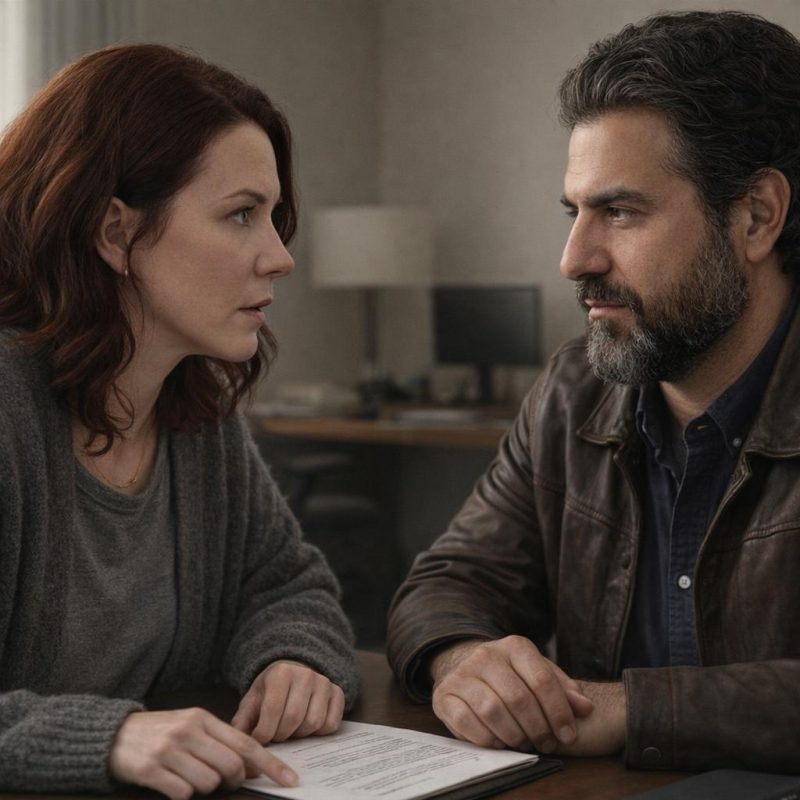 Image by RM AI
Why He Couldn't Stop
Ryan sat quietly for a moment, hands folded on the desk like he was trying to hold himself together. Then he started talking. He said the guilt had been there from the beginning — from the first time Ethan had quietly absorbed one of his mistakes without saying a word to anyone. But when Ethan got sick, something shifted in Ryan. He said he kept thinking that the stress had to have taken something out of Ethan. That years of carrying Ryan's failures quietly, of rerouting money and smoothing things over, had worn him down in ways that didn't show up on any scan. He knew that wasn't how cancer worked. He knew that. But knowing something and feeling it are two completely different things, and what he felt was that he had used up the best of his brother. He said he remembered exactly where he was when he got the call. He'd been sitting in his car outside a grocery store, engine running, about to go in for something ordinary — milk, maybe, or bread. His phone rang. And then he described the moment he heard the words, his voice dropping so low I had to lean forward to catch them, and I felt the air go out of the room.
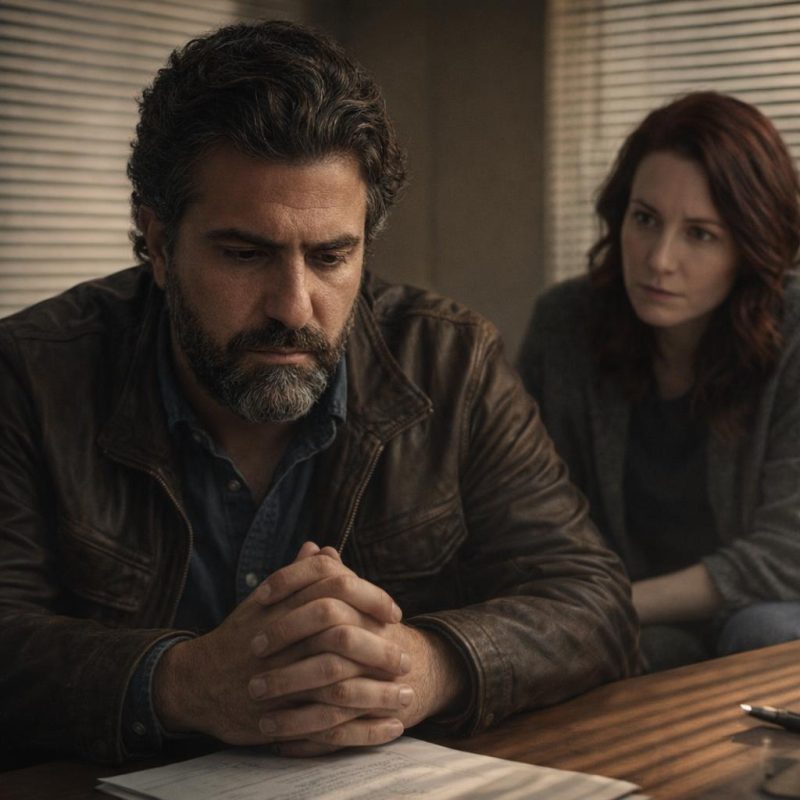 Image by RM AI
Survivor's Guilt
He said he sat in that parking lot for two hours. Didn't go into the store. Didn't call anyone back. Just sat there with the engine running until the gas light came on. He told me that in the weeks after the funeral, he kept waking up at three in the morning with this feeling he couldn't name — not grief exactly, but something heavier. Like he'd been handed a life that wasn't supposed to be his. Ethan had been the careful one, the steady one, the one who cleaned up messes without making them. And Ryan had been the one who made them. He said it felt wrong that he was still here, still breathing, still making decisions about ordinary things like what to eat for breakfast, while Ethan was gone. He told me he didn't know how to carry that. He said the payments weren't really about money — they never had been. They were the only way he could think of to keep showing up for a brother who could no longer see him do it. He looked at his hands when he said it. His shoulders carried the full weight of a man who had never once stopped blaming himself for being the one who survived.
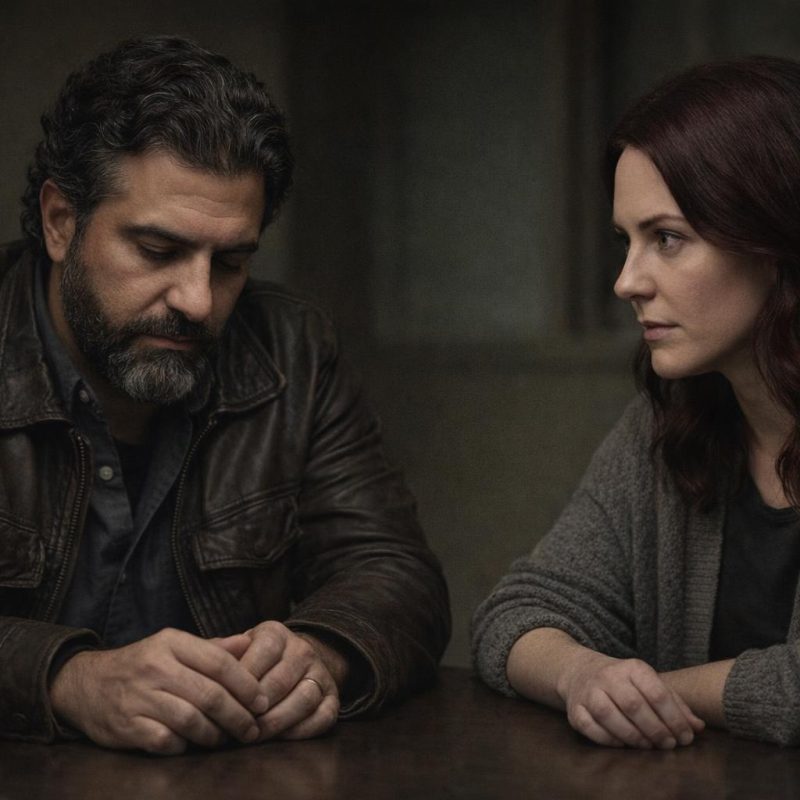 Image by RM AI
Three Years of Guilt
I sat with that for a long time. Three years. Thirty-six payments. Each one arriving on the first of the month like clockwork, like a penance schedule Ryan had set for himself and never once considered canceling. I thought about all the times I'd stared at those deposits and tried to make sense of them — the suspicion, the confusion, the late nights wondering what I was missing. And the whole time, on the other side of it, Ryan had been sitting with something so much heavier than a financial arrangement. He hadn't been paying a debt. He'd been trying to pay for being alive. I looked at him across the desk — this man with gray at his temples and tired eyes and shoulders that hadn't straightened in years — and I felt something crack open in my chest that had nothing to do with money or secrets or legal agreements. He had spent three years punishing himself for something Ethan had already forgiven. He had carried it alone, quietly, the same way Ethan had carried everything. The two of them, each trying to protect the other, each suffering in silence, and neither one of them knowing how to put it down. The ache of that sat in me like something with weight.
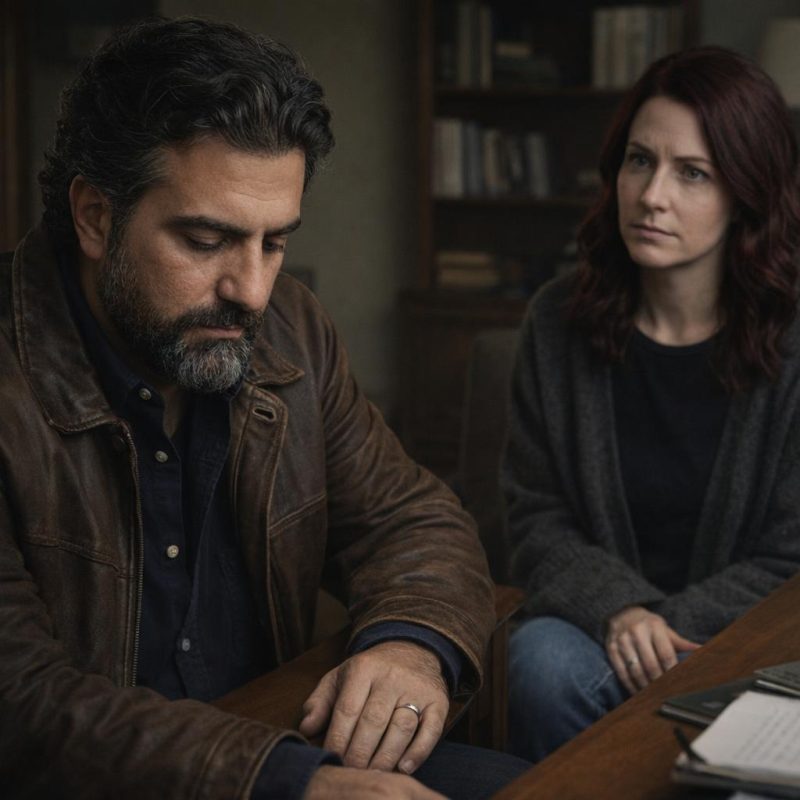 Image by RM AI
Not About Money
And then something shifted in me — quietly, the way understanding sometimes arrives not with a crash but with a slow settling. I thought about Ethan's letter. The one written in his careful handwriting, the one I'd read so many times the paper had gone soft at the folds. I had spent months thinking it was about the money. About explaining the payments, about making sure I wasn't frightened by deposits I didn't understand. But sitting there across from Ryan, watching him carry three years of guilt like a stone he couldn't set down, I finally understood what Ethan had actually been trying to do. The letter wasn't a financial disclosure. It wasn't a confession. It was a message — written to me, yes, but meant for Ryan. Ethan had known Ryan would never stop on his own. He'd known that guilt like Ryan's doesn't respond to logic or time or even love, not without something to hold onto. So he'd written it down. He'd tried to build Ryan a door out of the only material he had left — words on paper, in his own hand, delivered through the one person Ryan would still have to face. Ethan's final act toward his brother wasn't an explanation. It was an act of release. The room felt different once I understood that.
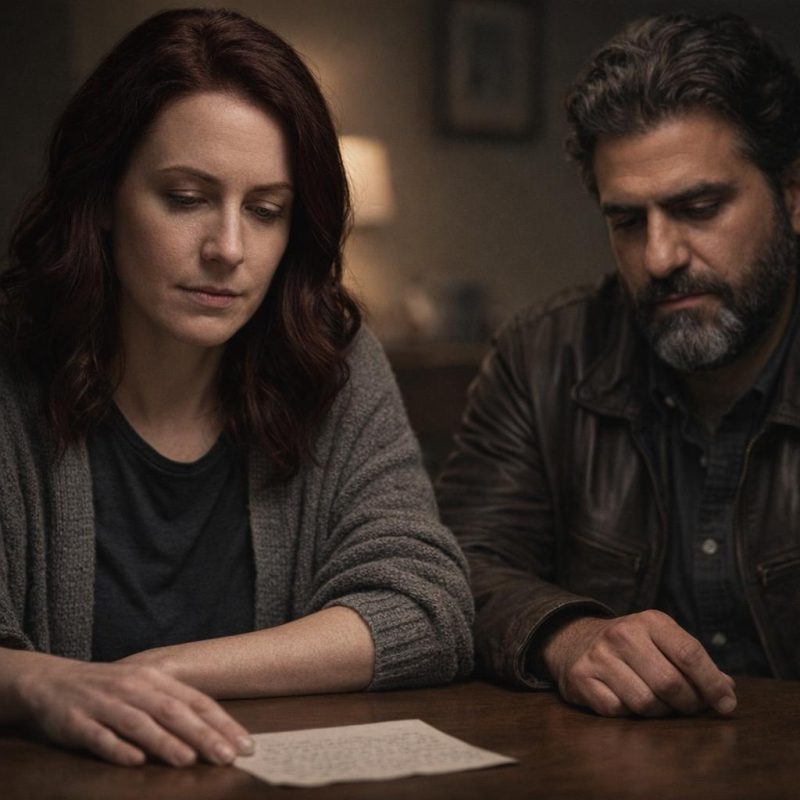 Image by RM AI
Ethan's Final Gift
I picked up both letters and held them together — the one Ethan had written to me and the shorter note Ryan had shown me earlier. I read them side by side, slowly, the way you read something when you're finally ready to understand it instead of just looking for answers. Ethan had known he was running out of time. He'd known Ryan would keep paying long after any reasonable person would have stopped, because Ryan wasn't operating on reason — he was operating on guilt. So Ethan had tried to give him a way out. He'd tried to hand his brother permission to stop, to breathe, to live without the weight of it. He'd written it carefully, the way he did everything, making sure the words were clear and the meaning was unmistakable. And Ryan had read it. Ryan had held it in his hands, just like I was holding it now. And he still hadn't been able to accept it. Not because he didn't believe Ethan meant it. But because some part of him had decided he didn't deserve to. Ethan had offered his brother the most generous thing he had left to give, and Ryan had held it at arm's length for three years. The gift had been there all along, waiting to be received.
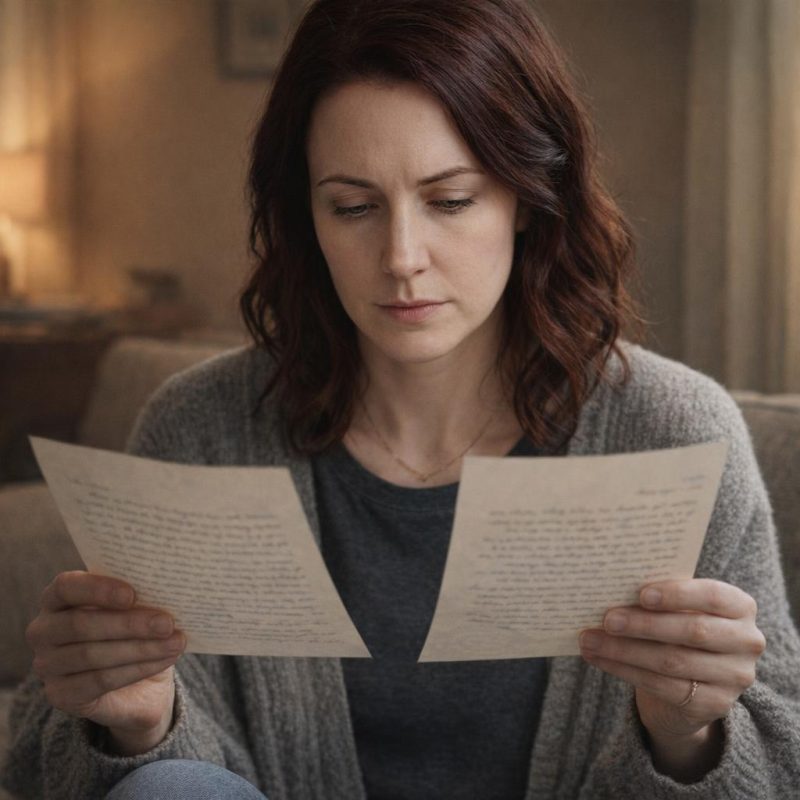 Image by RM AI
Ryan Had Already Been Forgiven
I set the letters down and looked at Ryan directly. I told him I understood now — not just the payments, not just the agreement, but all of it. I told him that Ethan hadn't written that letter to explain a mystery. He'd written it because he knew Ryan would need someone to say it out loud, in person, in a room where he couldn't walk away from it. I told him that Ethan had forgiven him. Not at the end, not as some deathbed gesture — but years before, probably around the time the debt was paid off and Ethan had looked at his brother and decided the whole thing was done and they were moving forward. I told him the forgiveness wasn't conditional on the payments stopping, or on Ryan suffering the right amount, or on anything Ryan still had left to do. It was already finished. Ethan had closed the account a long time ago, and he'd spent his last months trying to make sure Ryan knew it. I said it as plainly as I could, because I thought that was what Ethan would have wanted — no softening, no hedging, just the truth delivered straight. Then I stopped talking and watched Ryan's face as the words reached him.
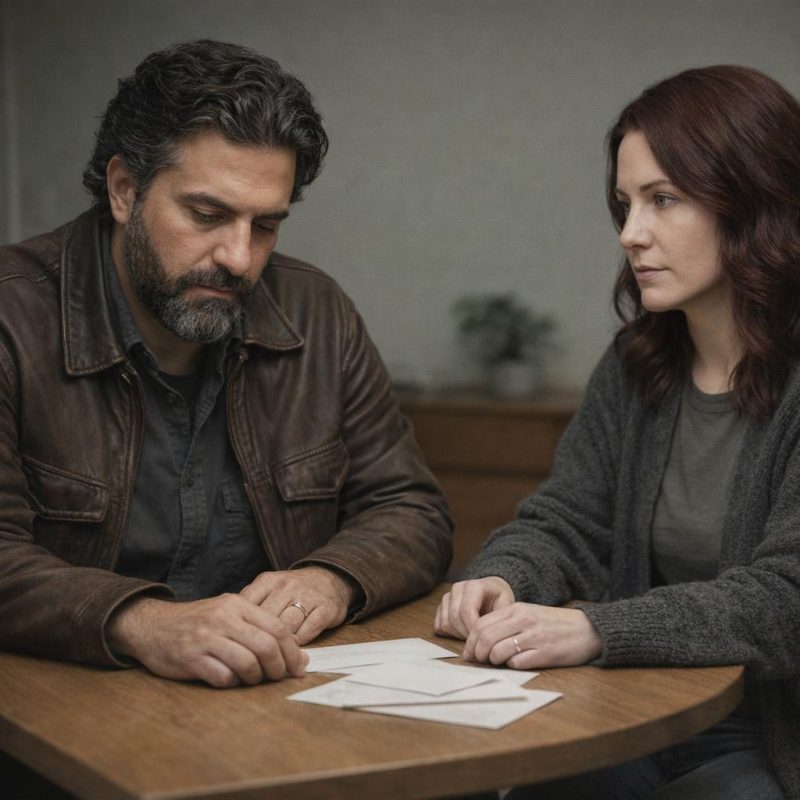 Image by RM AI
Understanding Both Brothers
I don't know exactly when I started crying. It crept up on me the way grief sometimes does — not a wave but a slow pressure, building behind my eyes until it wasn't possible to hold anymore. By the time Ryan's face crumpled across the desk from me, I was already gone. I cried harder than I had since the funeral. Harder than the night I'd sat in Ethan's closet with one of his shirts pressed to my face. Harder than the morning I'd had to explain to my daughter Lily and my son Ben that their father wasn't coming home. Because this was a different kind of grief — not the sharp, sudden kind, but the kind that comes from finally understanding the full shape of something you've been living inside of without knowing it. I understood Ethan now in a way I hadn't before. The quiet loyalty, the way he absorbed things without complaint, the way he loved people by carrying their weight without ever asking them to notice. And I understood Ryan — the guilt, the payments, the gray at his temples and the hunched shoulders and the eyes that never quite met mine. Two brothers who had spent years protecting each other in silence. The tears came from somewhere deep, and they didn't stop for a long time.
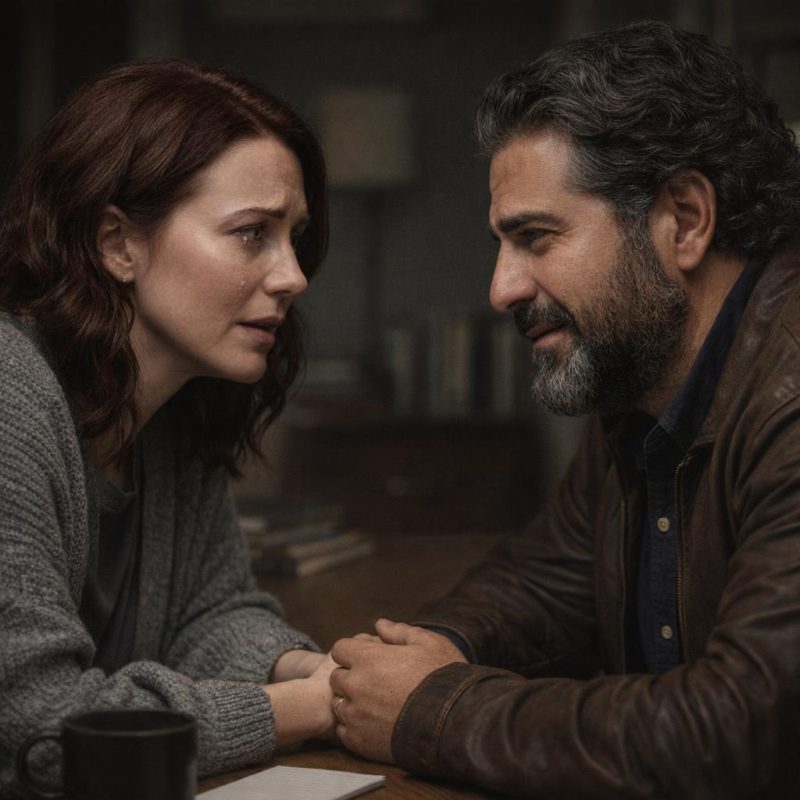 Image by RM AI
Why Neither Spoke
When I could finally breathe again, I thought about the silence. Not with anger — I was past that. I thought about it the way you think about something once you understand it. Ethan had never told me about Ryan's business failures, about the bailouts, about the years of quietly rerouting money to keep his brother afloat. He hadn't told me because Ryan had asked him not to, and because Ethan had understood that some kinds of help only work if they stay invisible. Telling me would have changed how I looked at Ryan. It would have changed how Ryan looked at himself around me. Ethan had known that, and he'd kept it. And Ryan had never spoken about it because Ethan had asked him not to, and because Ryan had spent years trying to be worthy of a silence he felt he didn't deserve. Each of them had been protecting the other. Ethan protecting Ryan's dignity. Ryan protecting Ethan's memory. Neither of them talking, both of them carrying it, and the whole structure of it held together by nothing but love and the decision to keep showing up. I sat there and saw it clearly for the first time — two brothers who had spent their whole lives building a shelter out of silence, each one holding up the other's side of the roof.
 Image by RM AI
Guilt Disguised as Generosity
I looked at Ryan for a long moment before I said it. He was sitting across from me with his hands folded on the table, waiting, like he'd been waiting for three years to be told what he already knew. So I said it plainly. I told him the payments were never really about me or the kids. They were about him. About the guilt he'd been carrying since the day Ethan died, and the only way he knew how to put it down was to write a check every month and tell himself he was doing something useful. I said, 'Ryan, you weren't paying a debt. You were trying to buy your way out of grief.' He didn't argue. He just looked at the table. I told him I understood why — I did, genuinely — but that what he'd been sending wasn't generosity. It was guilt with a routing number. He let out a breath that sounded like it had been held for years. I wasn't angry when I said it. I wasn't trying to wound him. I just needed it named, out loud, between us, so we could both stop pretending otherwise. He looked up at me finally, eyes red, and said, 'Yeah. I know.' And that was the first time either of us had said it out loud.
 Image by RM AI
The Next Payment
The payment came through on a Tuesday morning, same as always — five thousand dollars, same account, same memo line left blank. I stared at it for maybe thirty seconds. Then I picked up my phone and called Ryan. He answered on the second ring, which told me he'd been expecting it. I didn't ease into it. I told him it had to stop. He went quiet for a moment, then said he wanted to keep helping, that it wasn't a burden, that Ethan would have wanted it. I told him Ethan would have wanted him to stop punishing himself, and that every month that money showed up in my account was another month he was still in the same place he'd been standing the day of the funeral. He said, 'Jessica, I just — I need to do something.' I told him I understood that. I told him needing to do something was real and I wasn't dismissing it. But I said the something couldn't be this anymore. Not like this. Not money dropped into silence with no conversation around it. He went quiet again, longer this time. I waited. Outside, a car passed slowly down the street. When I finally spoke again to fill the silence, I was surprised by how steady my own voice sounded.
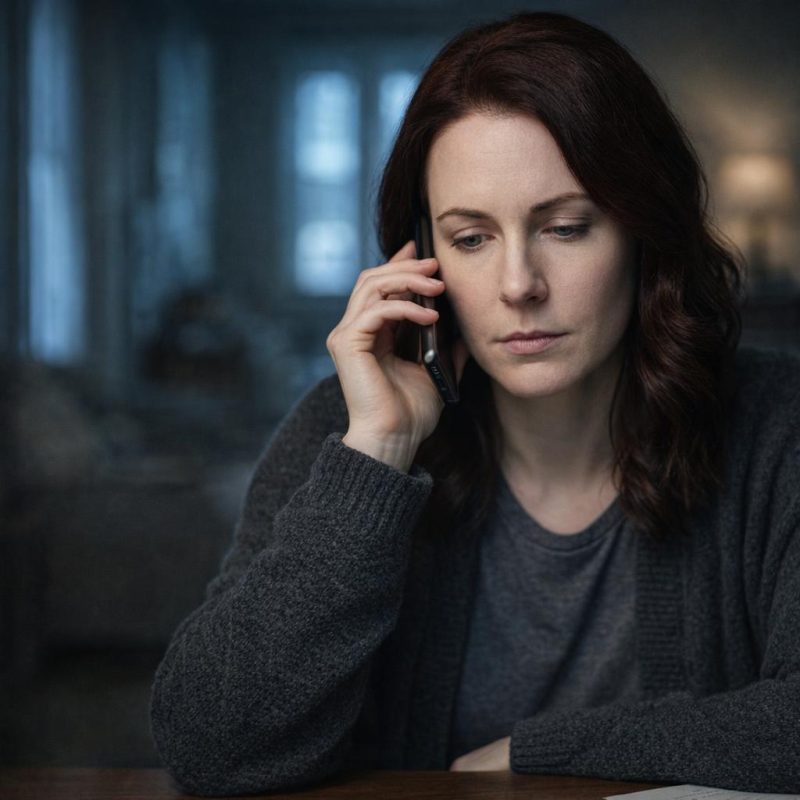 Image by RM AI
The Compromise
We talked for almost an hour. It wasn't a clean conversation — there were long pauses, a few moments where one of us started a sentence and didn't finish it, and at least twice where I thought we'd hit a wall we couldn't get past. Ryan kept coming back to the idea that he owed something. I kept coming back to the idea that debt wasn't the right frame anymore. We went around it a few times before I said, almost without planning to, 'What if it went to the kids? Not to me — to their education funds. Something Ethan would have set up himself if he'd had more time.' The line went quiet. Then Ryan said, 'Yeah.' Just that. One word, but I could hear something release in it. We worked out the details slowly — a smaller amount, deposited directly into accounts for Lily and Ben, with Ryan's name on the contribution so they'd know one day where it came from. It wasn't charity. It wasn't guilt money. It was their uncle, honoring their father, in the only language Ryan had ever really known. By the time we hung up, I felt something I hadn't expected to feel. The arrangement sat between us like something Ethan himself might have quietly approved.
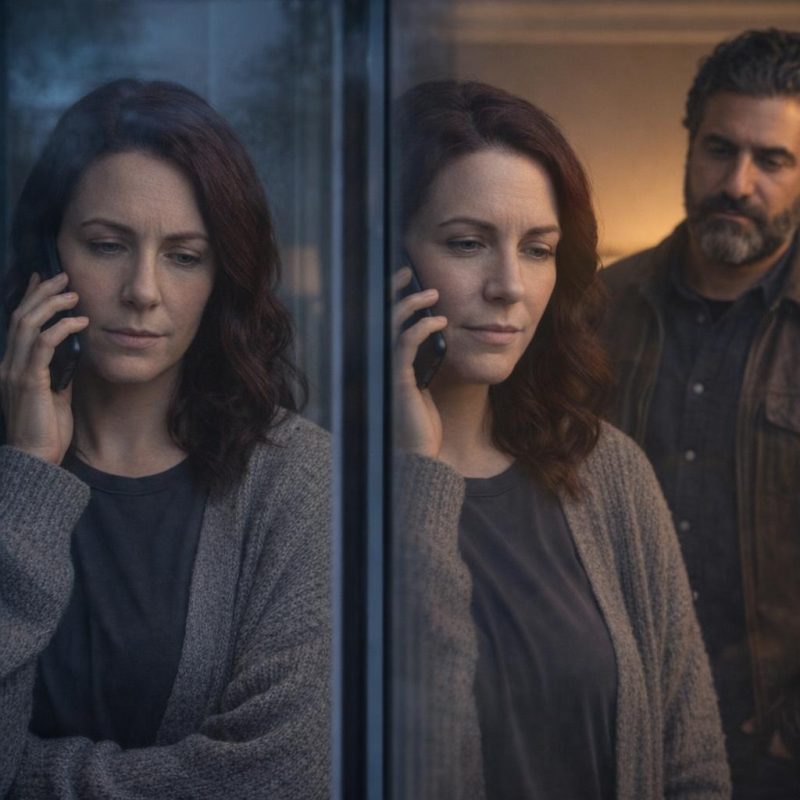 Image by RM AI
The Truth About Forgiveness
I sat with the letter for a long time that evening. Not reading it — I had it memorized by then. Just holding it. Three years of questions, and the answer had been there in Ethan's handwriting the whole time, waiting for me to be ready to see it clearly. The money was never the point. Ryan's guilt was never the point. What Ethan had set in motion — the payments, the letter, the slow unraveling of a secret he'd kept for years — all of it had been aimed at one thing. He wanted Ryan to be forgiven. Not by me, not by the kids, but by himself. Ethan had known his brother well enough to understand that Ryan would never let himself off the hook without being forced to stand in front of someone and have it named. The letter was the mechanism. The payments were the reason I'd eventually ask. The asking was the path to the conversation. And the conversation was the only thing that could ever actually reach Ryan where he was stuck. Ethan had built the whole thing like a man who knew he was running out of time. I set the letter down on the table, smoothed the fold with my thumb, and understood for the first time what my husband had really left behind — not money, not mystery, but a final act of love aimed entirely at his brother.
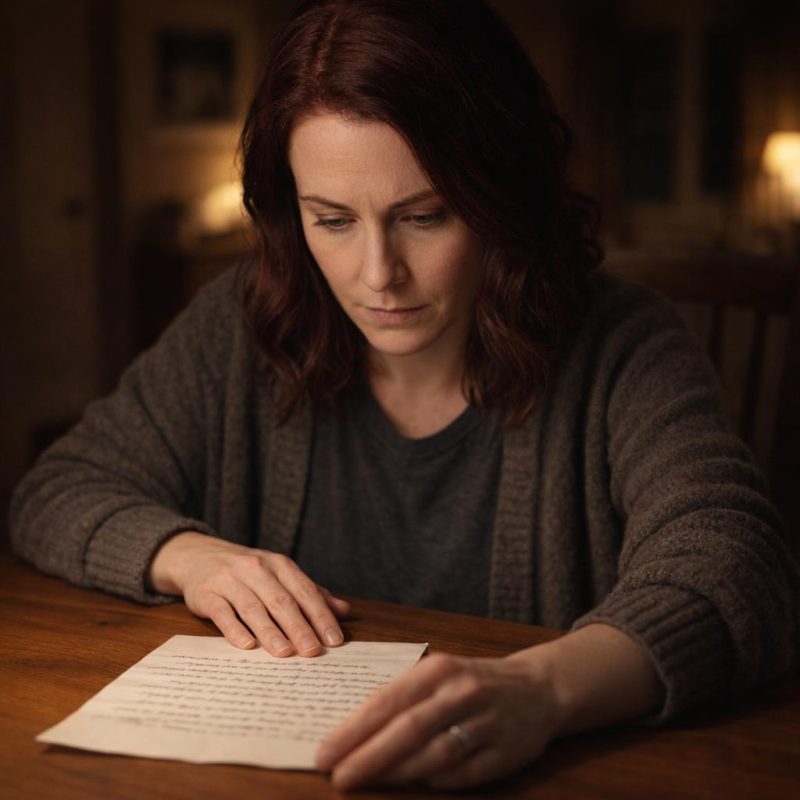 Image by RM AI