

Two Babies In The Household
If you're bringing a newborn home, first of all, congratulations! It's a huge moment in any parent's life. However, this is definitely a major household change, and if you've got furry friends waiting at home, your pet will notice immediately. With a little structure and patience, you can help your pet adjust while keeping everyone safe and calm. Here are five effective strategies to consider when introducing your pet to your new baby.
 Jennifer Kalenberg on Unsplash
1. Prepare Your Pet Before the Baby Arrives
Before bringing the baby home, make sure you give your pet a quick refresher on simple commands like “sit,” “stay,” and “leave it.” These instructions will become especially useful in tight, busy moments. Furthermore, if you plan to change routines (walk times, feeding schedule, room access), start shifting them gradually ahead of time so your pet can grow accustomed to the new schedule.

2. Bring Home Baby Scents and Sounds First
Before the first face-to-face introduction, it can be helpful to let your pet become familiar with the baby’s scent using a clean blanket or clothing item from the hospital. Doing this simple action can make your pet feel more relaxed instead of alert when the time comes. It's not just scent though; if your home is quiet now, begin introducing common baby sounds at low volume so they are less surprising later. Keep sessions short and end them while your pet is still relaxed.
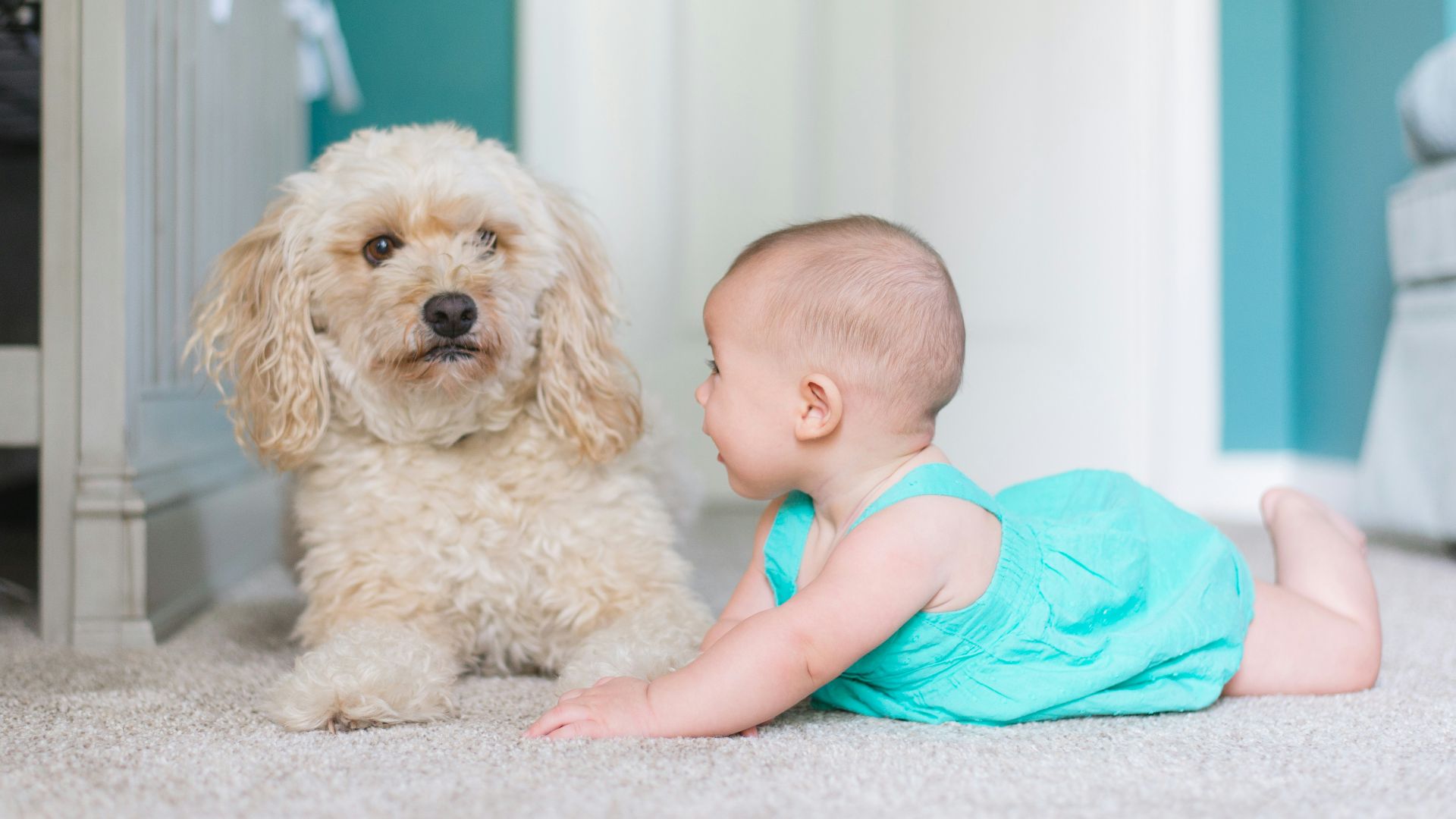
3. Control the First Introduction Carefully
When the big day finally comes, make sure the introduction is made in a controlled manner. Pick a calm moment when your pet has already had exercise, food, and a chance to settle. Have one parent focus on the pet while the other holds the baby, keeping a safe distance and a steady posture. Allow your pet to observe without crowding, and reward calm behavior while gently redirect jumping or intense staring. If your pet shows any signs of stress, end the introduction and try again later.

4. Set Clear Boundaries and Keep Them Consistent
Bringing home a new baby comes with a lot of early prep. Establish safe zones for both the baby and pet beforehand, making sure to enforce those rules of safety and peace in the same way every time. Use physical barriers like baby gates to reduce confusion and prevent accidental contact. Consistency reduces testing behavior and helps your pet relax into predictable expectations.

5. Maintain Your Pet’s Needs While Building Positive Associations
Just because you've got a new baby to care for doesn't mean you can neglect your pet! Show your furry friend they're still on your mind by keeping their daily essentials steady: exercise, feeding, play, and one-on-one attention, even if the duration changes. Continue to also monitor your pet’s stress signals—pacing, whining, avoidance, or overexcitement—and adjust the environment as needed.