I Watched My Niece Every Sunday for a Year So My Sister Could Work Overtime—Then I Found Out the Truth About Her 'Job'
I Watched My Niece Every Sunday for a Year So My Sister Could Work Overtime—Then I Found Out the Truth About Her 'Job'
The Safety Net
My sister Elena showed up on a Tuesday night with Maya on her hip and tears already running down her face before I even got the door fully open. I hadn't seen her cry like that since our dad's funeral, so I pulled her inside without asking questions. She sat at my kitchen table and explained everything in that breathless way she has when she's genuinely scared — a logistics company downtown had offered her a weekend supervisor position, twelve-hour Sunday shifts, real money, the kind of opportunity she'd been waiting years for. The problem was childcare. She had nobody. Her usual babysitter had moved away, and daycare centers didn't cover Sundays. Maya was three, too young to be left with just anyone. I looked over at my niece, who was already half-asleep against Elena's shoulder, her dark curls pressed flat on one side, smelling faintly of lavender soap. I didn't even let Elena finish her sentence before I said yes. Of course I'd watch Maya. Every Sunday. Whatever she needed. Elena grabbed my hand across the table and held it tight, and when she finally whispered that I was saving her life, I believed her completely, and the warmth of that felt like exactly the right thing.
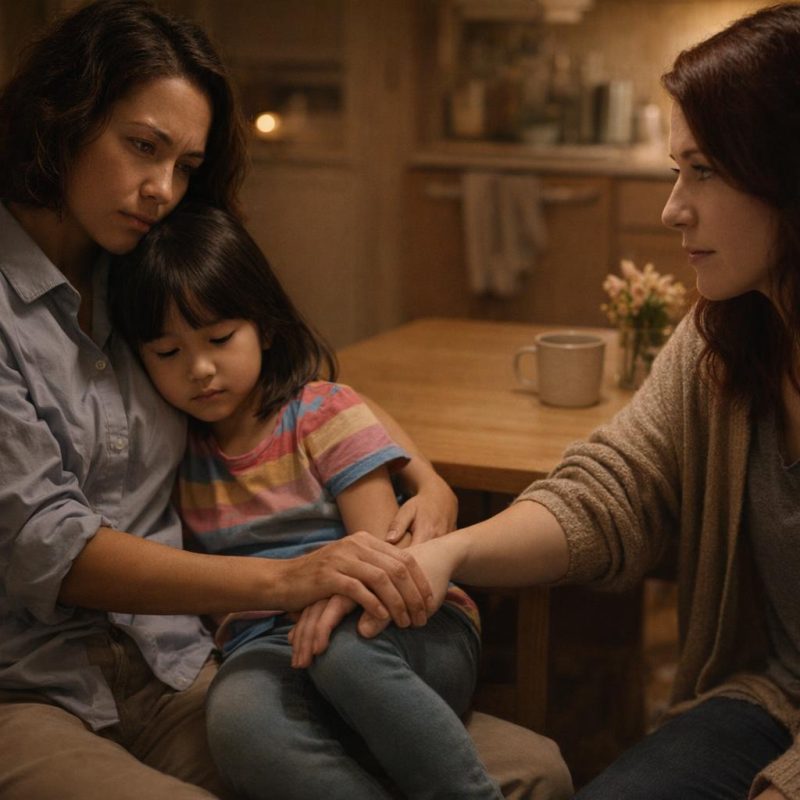 Image by RM AI
The First Sunday
The alarm went off at six that first Sunday and I was already half-awake, nervous in the way you get before something new. Elena's beat-up sedan pulled into the driveway at exactly 6:30, headlights still cutting through the gray morning dark. She came to the door in sensible slacks and a company polo shirt, a large coffee in one hand and Maya bundled against her chest in a fleece blanket, still mostly asleep. She smelled of lavender soap and something warm and sleepy that I couldn't name. David appeared in the hallway in his pajamas, gave Elena a quiet nod, and then drifted toward the kitchen to start breakfast. He made eggs and toast and left a plate for me before retreating to the garage with his coffee, giving us space. I carried Maya to the couch and let her wake up slowly while I made blueberry pancakes, and by the time they were on the table she was sitting up straight and pointing at them with both hands. We ate together and watched cartoons and I started to feel the shape of what Sundays could be. Elena came back at 7:30 that evening looking wrung out and grateful, and I handed Maya over feeling something I hadn't expected — a little reluctant to let go. I was almost asleep when I remembered the moment during naptime when Maya's tiny hand had reached out and found mine.
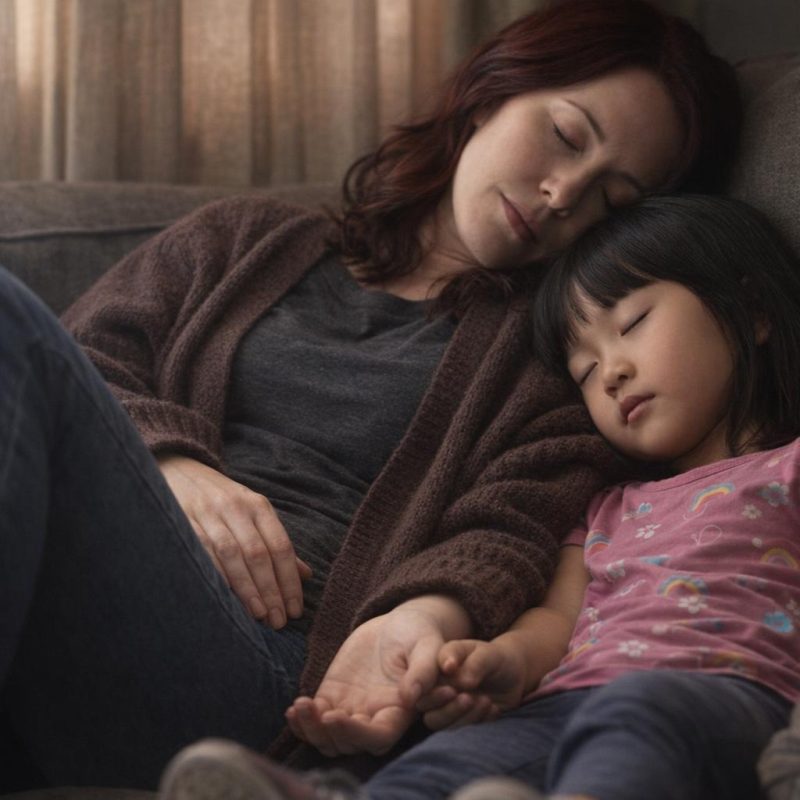 Image by RM AI
Finding Our Rhythm
The second Sunday felt different from the first in the best possible way. I was up before the alarm, the kitchen already warm, pancake batter ready in the bowl. The handoff with Elena at the door was quicker this time — less explaining, less apologizing, just a quick squeeze of my arm and she was gone. Maya came inside without hesitation, pulling off her little shoes at the door the way I'd shown her the week before. We ate breakfast and settled into cartoons, and I noticed she'd started reaching for the same spot on the couch, her spot, like she already knew where she belonged. David spent most of the morning out in the garage working on something, checking in once to refill his coffee and ruffle Maya's hair before disappearing again. He was kind about it, just quieter than usual. After lunch I read Maya three picture books in a row — a bear one, a counting one, and one about a little girl who grew a garden. By the third book her breathing had slowed and her head was heavy against my arm. I kept reading anyway, my voice dropping lower with each page, and somewhere in the middle of the garden story the two of us just settled into a quiet that felt entirely natural, like we'd been doing this for years.
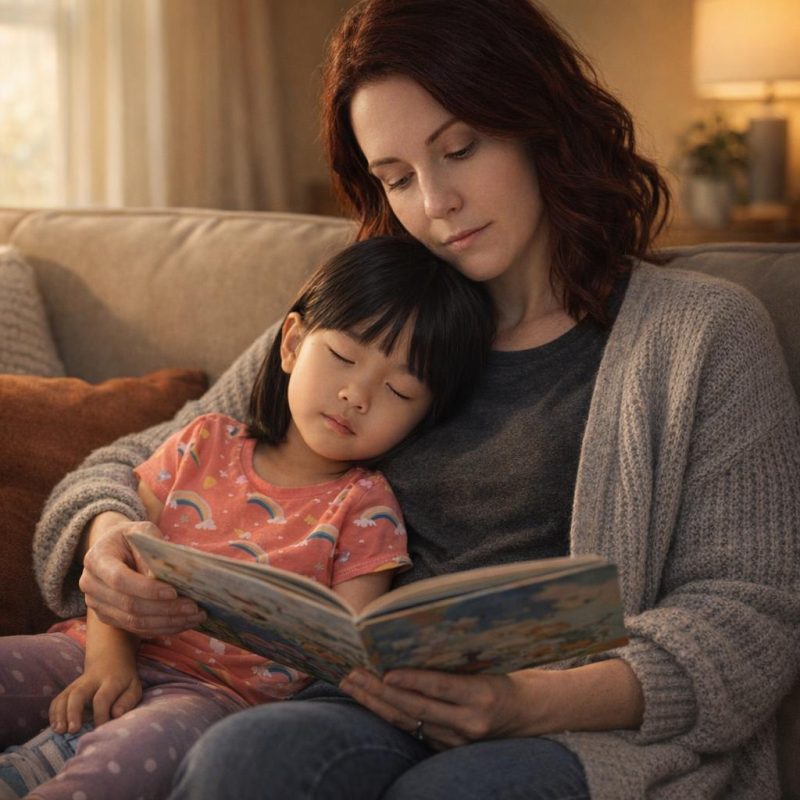 Image by RM AI
The First Sacrifice
The text came in on a Saturday night — a group message from my college friends, a brunch reservation at that place downtown with the good eggs Benedict and the bottomless mimosas. Sunday at eleven. I stared at it for longer than I should have. I hadn't seen most of them in months, and I could already picture the table, the noise, the easy laughter. Then I typed out my reply, something about family obligations, and put my phone face-down on the nightstand. David was reading beside me and I could feel him notice the exchange without looking up from his book. He didn't say anything. I didn't explain. In the morning I got Maya set up with her colored blocks on the living room floor and we spent a good hour sorting them by color, then by size, then by some system only she fully understood. She was very serious about it, her little brow furrowed, and I found myself laughing more than once at her concentration. Outside, somewhere across the neighborhood, I could hear the distant sound of a Sunday that belonged to other people. But Maya handed me a yellow block with great ceremony, and I took it, and the afternoon moved forward the way it needed to. By the time I put her down for her nap, the brunch felt far away, and Sundays felt like something that had quietly shifted into a different shape — one that no longer had room for what they used to hold.
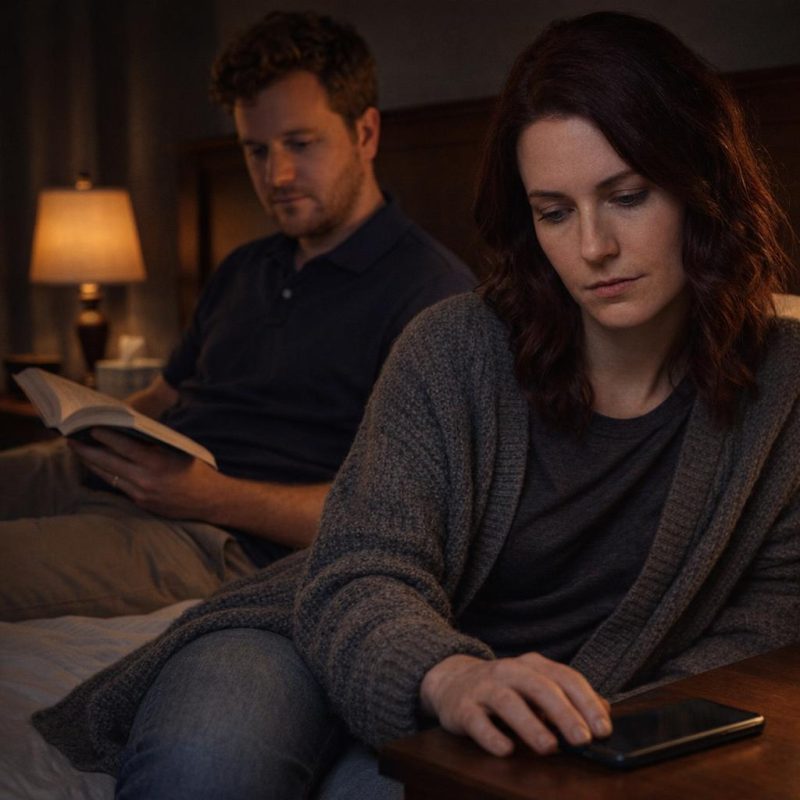 Image by RM AI
Stories from the Warehouse
Elena was in a talkative mood at pickup that evening, which wasn't always the case. Usually she came in tired and efficient — scoop up Maya, quick thank-you, out the door. But that Sunday she leaned against the doorframe with her coat half-on and started telling me about her day in more detail than she ever had before. She described a whole afternoon of inventory discrepancies, a spreadsheet system that kept crashing, a warehouse floor that apparently ran on a combination of outdated software and sheer stubbornness. She used words like 'manifest reconciliation' and 'inbound logistics cycle' with the easy confidence of someone who'd been doing it for months. I stood there nodding, genuinely impressed. This was the Elena I'd always hoped would show up — focused, capable, talking about her work like it actually mattered to her. She mentioned that the overtime was brutal but the pay was worth it, and that she was finally starting to feel like she had a foothold. I told her I was proud of her and I meant it. Maya was tugging at Elena's sleeve, ready to go, and Elena was laughing and scooping her up when she mentioned, almost as an aside, the name of her direct supervisor — and something about the way she said it, so casually, so specifically, made it land in my memory in a way I hadn't expected.
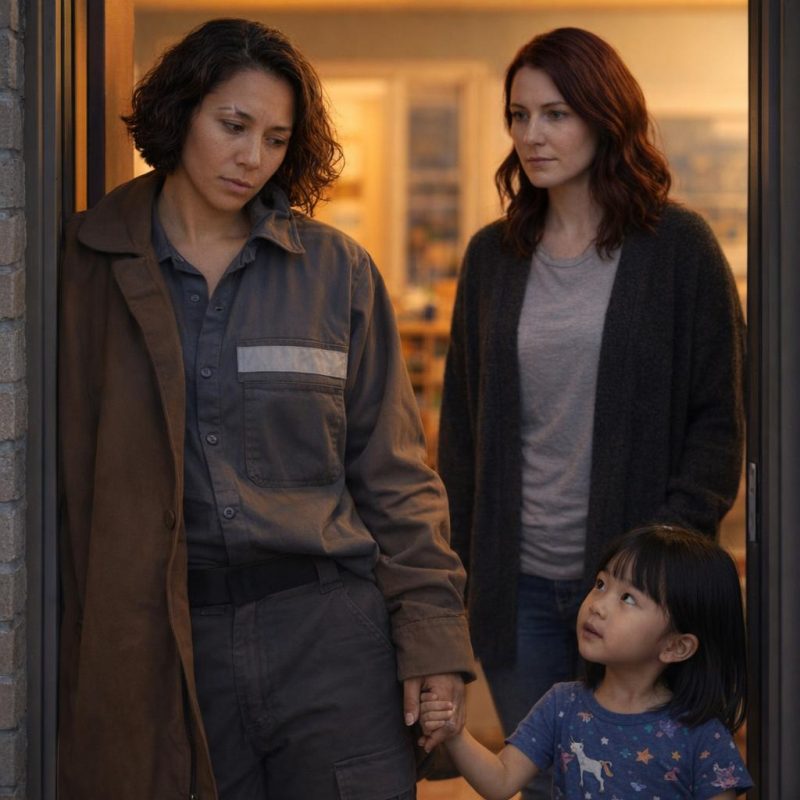 Image by RM AI
Marigolds and Trust
It was Maya's idea, sort of. She'd been following me around the backyard one Sunday morning, asking what everything was, pointing at the bare patch of dirt along the fence where I'd been meaning to plant something for two years. I told her we could fix that together, and her face went serious with the weight of the responsibility. I dug out a small garden bed while she watched, then handed her the packet of marigold seeds and let her do the important work of dropping them in. She was meticulous about it, placing each seed with two fingers like it was something precious. I showed her how deep to press them, how far apart, and she repeated my instructions back to me in her small voice to make sure she had it right. We watered them together with the little green can I'd found in the garage, and she insisted on doing two full passes to be sure. Afterward we sat on the back step with dirt on our hands and knees, and she leaned against my side and asked if the flowers would be orange. I told her they would. She seemed satisfied with that. The afternoon had gone golden and quiet around us when she looked up at me with those big dark eyes and said, clear as anything, 'Auntie Claire, will you water them when I'm not here?' and I felt something shift in my chest that I hadn't been prepared for.
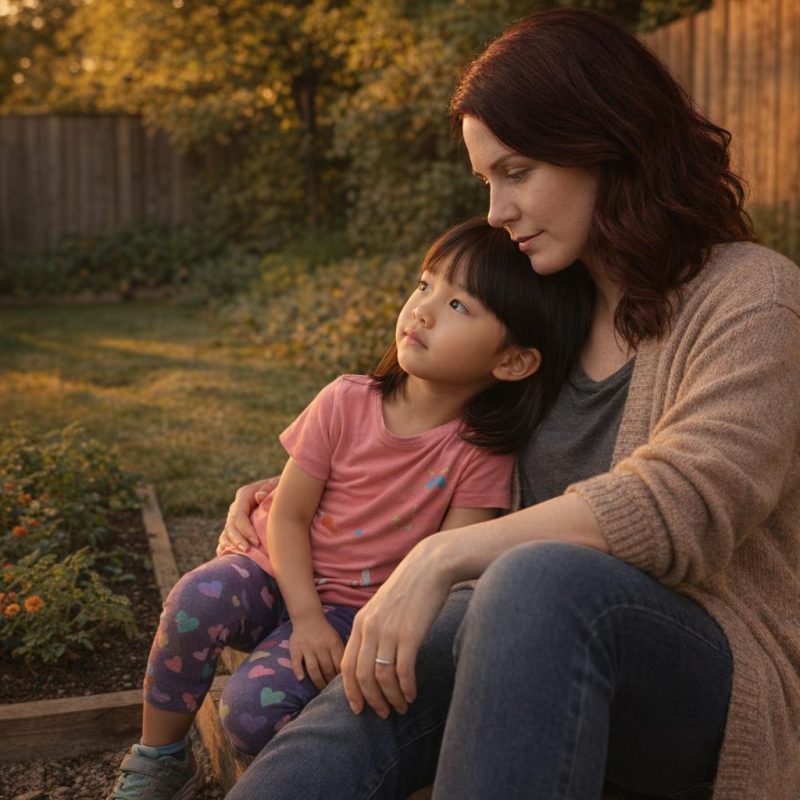 Image by RM AI
David's First Question
Maya had been down for her nap for maybe ten minutes when David came into the kitchen and poured himself a glass of water and didn't immediately leave, which meant he had something on his mind. I was wiping down the counter and I waited. He asked, carefully, how long I thought the Sunday arrangement was going to go on. I told him Elena was making real progress — the job was going well, she was building savings, it wouldn't be forever. He nodded slowly, the way he does when he's not quite agreeing but doesn't want to push. He said I seemed tired every Sunday evening, which was true, and I told him that tired wasn't the same as unhappy. He said he knew that. He said he just wanted to make sure I was thinking about it clearly, that I wasn't running on obligation alone. I told him Elena needed this, that Maya needed the stability, and that I was fine. He looked at me for a moment with that steady, patient expression that I both love and find slightly maddening, and then he set his glass down on the counter and asked, quietly, whether I was really sure this was temporary.
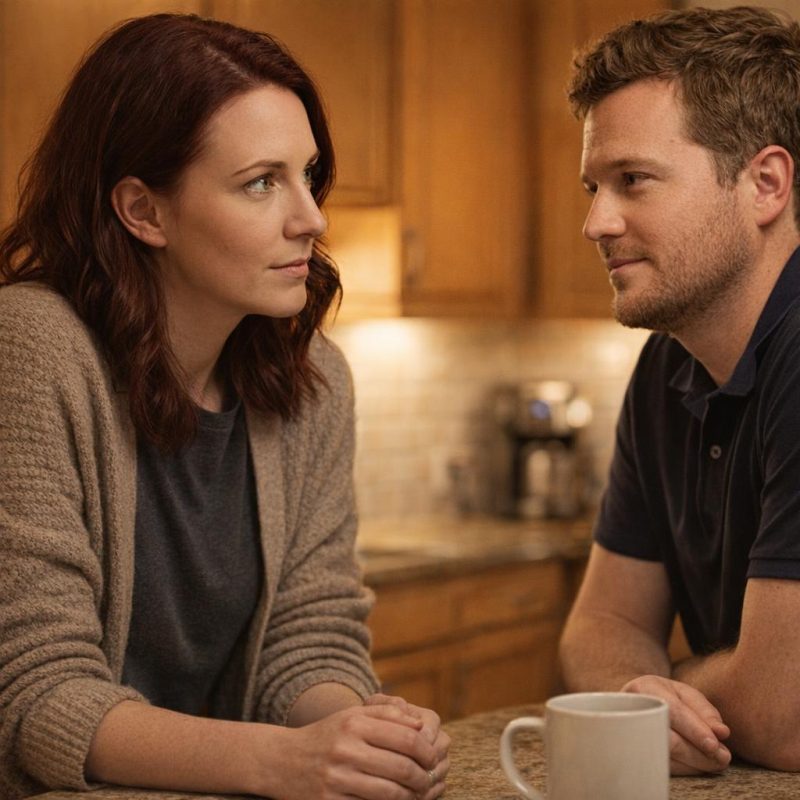 Image by RM AI
Three Months In
Somewhere around the third month I started keeping a loose count in my head without meaning to. Twelve Sundays. Twelve early alarms, twelve batches of blueberry pancakes, twelve afternoons of blocks and books and backyard watering. I wasn't complaining — I want to be clear about that. Maya had grown so comfortable with the routine that she sometimes fell asleep in the car on the way over, already trusting that Sunday meant my house and her spot on the couch. That part felt good. What surprised me was Elena. She looked different lately. Her hair was done in a way it hadn't been at the start — styled, not just pulled back — and her clothes had quietly upgraded from the harried work-polo look to something noticeably put-together. She seemed lighter, somehow. Less frantic. I told myself that was the whole point, that this was what stability looked like when it finally arrived. I was tired, genuinely tired in a way that had started to feel like a permanent low hum, but I kept framing it as worthwhile. I'd chosen this. I was holding up my end. It was only when I sat down that evening and actually counted — laid out all twelve Sundays in a row in my mind — that I understood I hadn't had a single one to myself since the arrangement began.
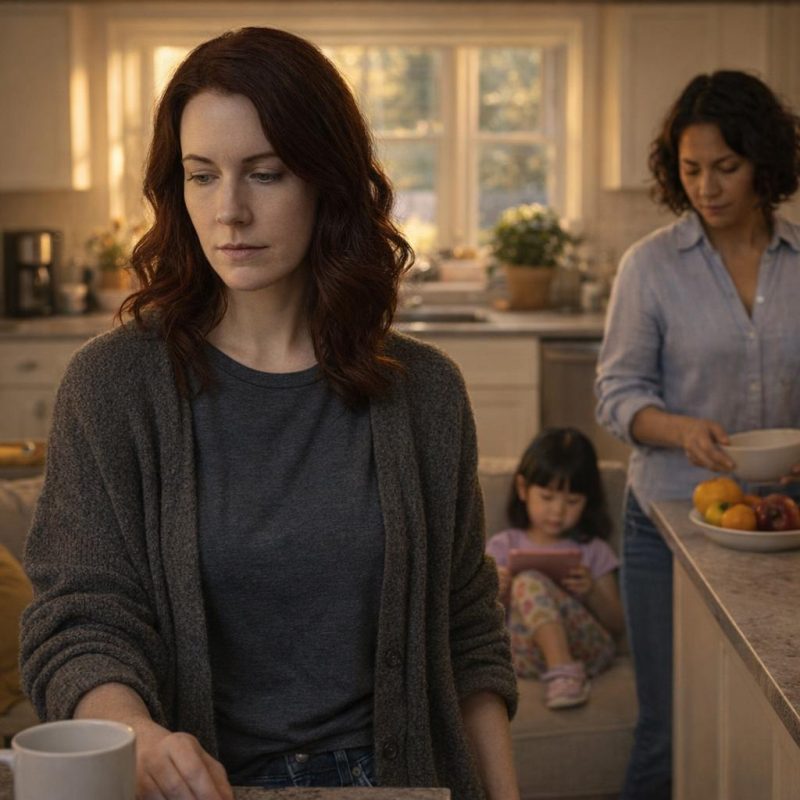 Image by RM AI
The Yoga Workshop
The reminder popped up on my phone on a Thursday — the yoga workshop I'd registered for back in January, the one I'd circled on the calendar and told myself was non-negotiable self-care. Two full days of restorative practice with an instructor I'd been following online for years. I'd paid the deposit months ago and genuinely counted down to it. Then I looked at the date. Sunday. Of course it was Sunday. I sat there for a minute just holding my phone, doing the math I already knew the answer to. Maya was coming at eight. Elena had her shift. I typed out the decline message and refund request before I could talk myself out of it, kept it short and polite, and hit send. By the time Maya arrived with her little backpack and her gap-toothed smile, I had already tucked the whole thing away somewhere quiet. We made pancakes. We watered the marigolds. She fell asleep on my shoulder during story time, her breath warm and even against my neck. I told myself Elena needed this more than I needed yoga, and I meant it. But after I laid Maya down for her nap and finally sat still, the quiet in the house felt different than it usually did — heavier, somehow, like something had been set down in it that I hadn't quite put a name to yet.
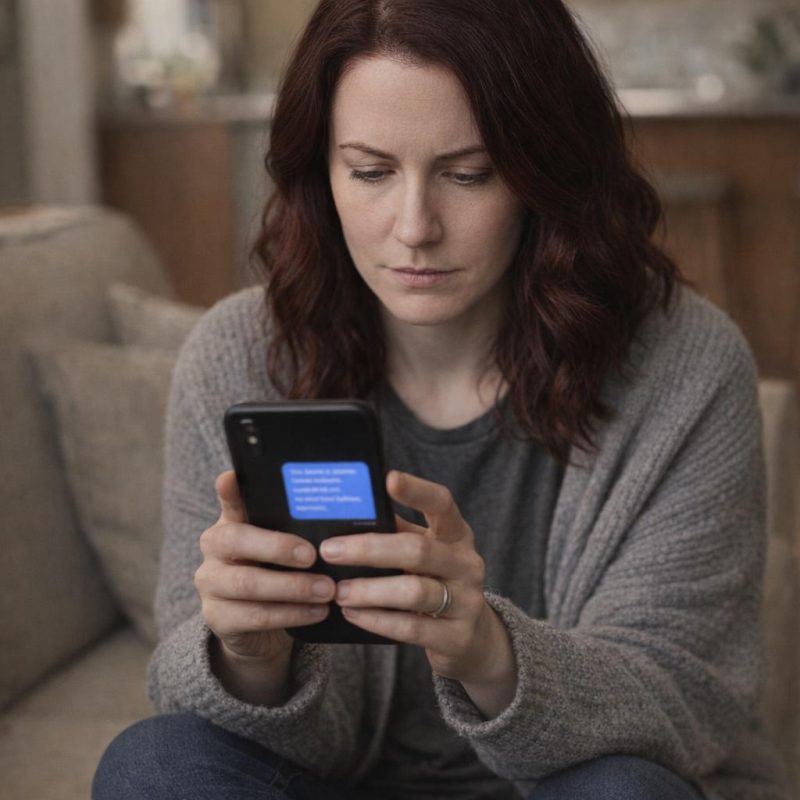 Image by RM AI
The Difficult Boss
Elena was forty minutes late that Sunday evening, which wasn't unusual enough to worry me, but she looked genuinely wrung out when she finally came through the door. Not just tired — the kind of tired that sits behind your eyes. Maya ran to her immediately, and Elena scooped her up and held on a beat longer than normal. Once Maya was settled with her juice box in front of the TV, Elena dropped onto my couch and just exhaled. She said her supervisor had changed the inventory count requirements at two in the afternoon — after they'd already finished the first pass. They had to redo the entire section from scratch. She described it in enough detail that I could picture it: the warehouse floor, the handheld scanners, the fluorescent lights, the supervisor hovering and second-guessing every entry. She said she felt invisible there, like no matter how much she got right, it was never the thing they noticed. I told her she was doing better than she thought. I told her the fact that she kept showing up said everything. She looked at me with this expression I can only describe as grateful and exhausted in equal measure, and said I was the only thing keeping her going some weeks. I believed her. The weariness in her voice when she said it sounded too real to be anything else.
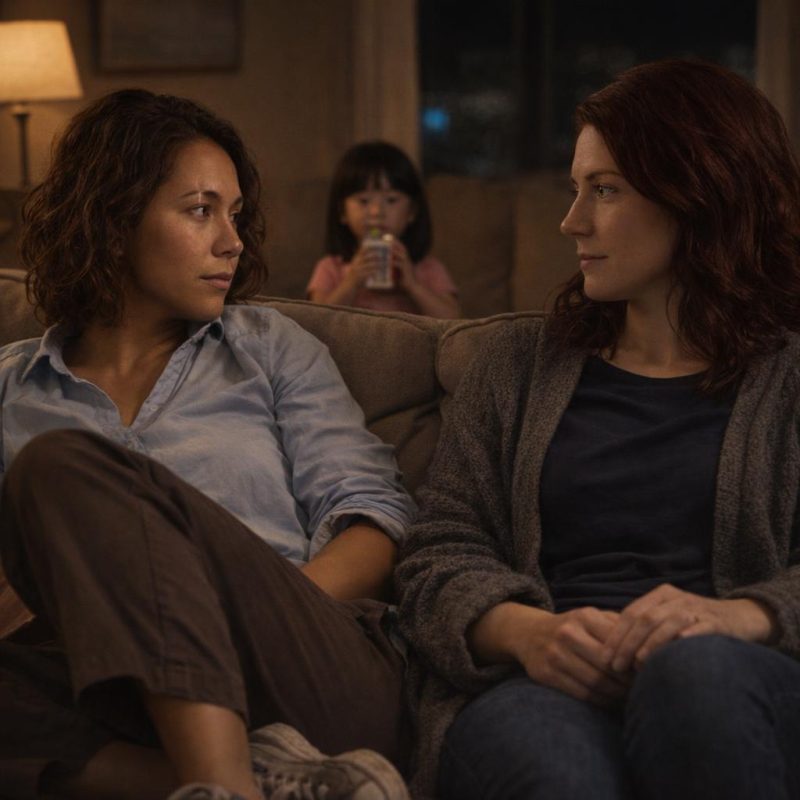 Image by RM AI
Sunday Rituals
By month four, our Sundays had their own quiet grammar. Maya knew it before I did — she'd walk in, drop her bag by the door, and head straight to the cabinet where I kept the mixing bowl, because pancakes came first, always. She'd started helping set the table too, carrying the plastic plates with both hands and the focused expression of someone performing a very important task. After breakfast we checked on the marigolds, which had grown tall enough that Maya could touch the blooms without standing on her toes, and she'd narrate the whole inspection like a tiny botanist. We had a song now — something I'd made up one afternoon about a caterpillar who couldn't find her mittens — and she requested it every single week, correcting me if I changed a word. The books were always the same three, in the same order, and she'd mouth along to the parts she had memorized. By the time the afternoon light went golden and she was drowsy on the couch, her curls pressed flat against the cushion, I'd look at her and feel something I didn't have a clean word for — not quite pride, not quite love, though it was both of those things. It was more like the particular peace of being exactly where you were supposed to be.
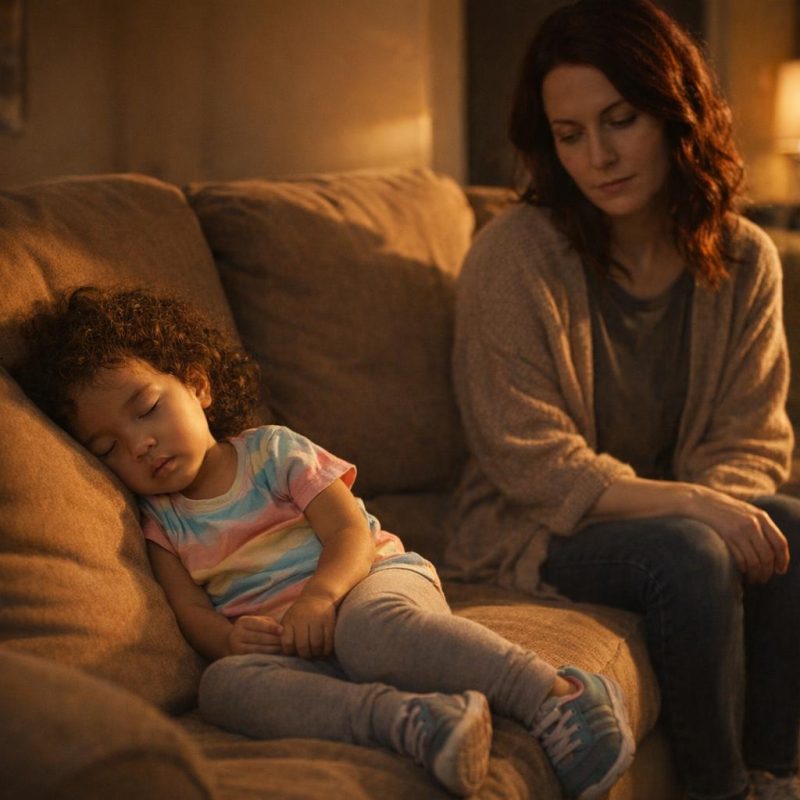 Image by RM AI
Rent Paid On Time
Elena seemed lighter than usual when she came to pick up Maya that evening — almost buoyant, which was a change from the warehouse-exhaustion version of her I'd gotten used to. She was barely through the door before she mentioned it, almost casually, like she was sharing a funny story: she'd paid her rent three days early. I asked her to repeat it because I wasn't sure I'd heard right. She laughed and said her landlord had actually called her to confirm it wasn't a mistake. I asked if the job was paying as well as she'd hoped, and she said yes, finally, that she was starting to feel like she was getting ahead instead of just treading water. Something loosened in my chest when she said that. All those early alarms, all those Sundays I'd handed over — I could feel them adding up to something real in that moment. I told her I was proud of her, and I meant it in a way that went all the way down. She hugged me at the door, Maya balanced on her hip, and said she couldn't have done any of it without me. Then, as she was buckling Maya into her seat, she called back that her landlord had been shocked she'd paid early — that in two years, it had never happened before.
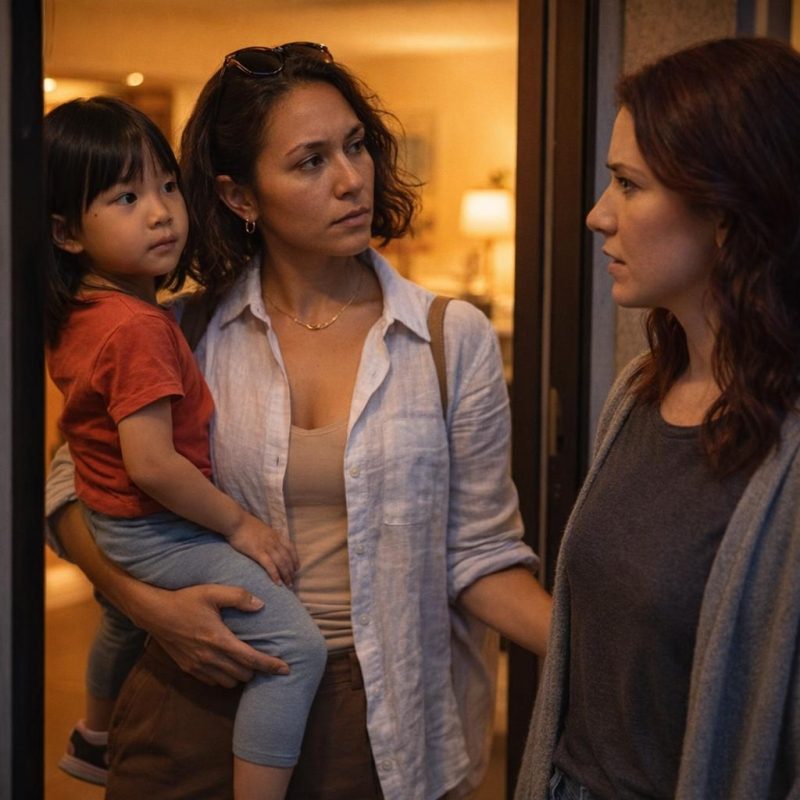 Image by RM AI
The Newer Car
I was in the kitchen when I heard a car pull into the driveway that Sunday morning, and something about the sound was slightly off — quieter, smoother than Elena's old sedan, which had a particular rattle I'd learned to recognize from half a block away. I looked out the window and saw a different car entirely: a few years newer, dark blue, no visible rust along the wheel wells. Elena got out looking pleased with herself, Maya already unbuckled and scrambling toward the front door. I met them on the porch and asked about the car before I could even say good morning. Elena explained she'd traded in the old one — said the sedan had started making a noise that scared her on the highway, and with the commute she was putting in, she needed something she could actually count on. It made complete sense. A reliable car wasn't a luxury when you were driving to work five days a week; it was just practical. David was in the backyard when they arrived and came around the side of the house, glanced at the car once, and didn't say anything. I watched Elena get Maya's bag from the back seat, moving easily, unhurried, and I felt a quiet kind of satisfaction settle over me — the particular feeling of watching someone you love start to build something solid.
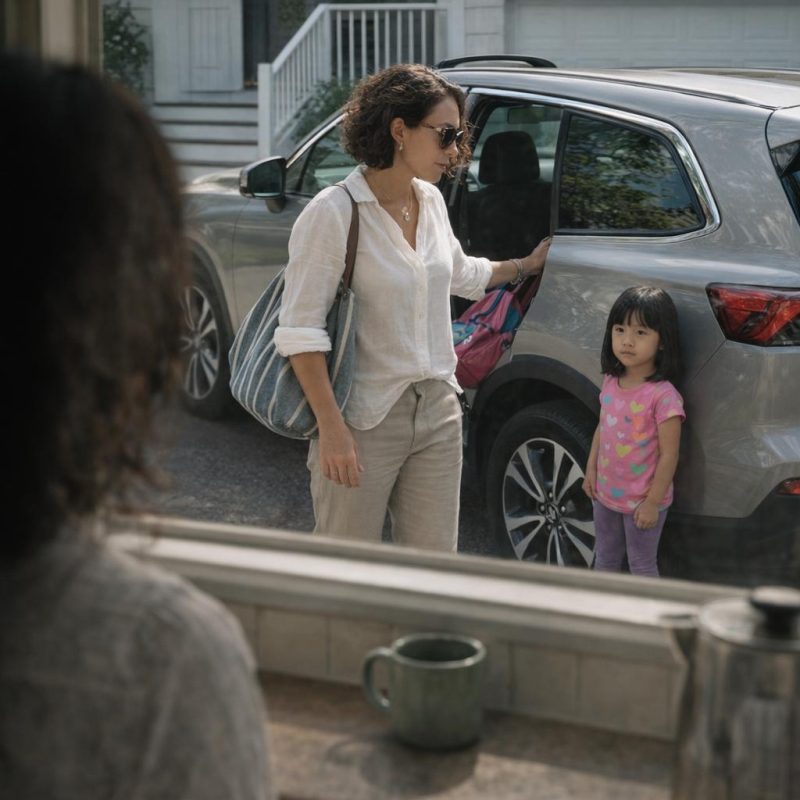 Image by RM AI
Pointing to Progress
David brought it up over dinner on a Tuesday, which meant he'd been sitting with it for a few days. He wasn't unkind about it — he never was — but he asked, in that careful way he had, whether I'd thought about talking to Elena about finding some weekend childcare options. Something more sustainable long-term. I set down my fork and walked him through it: the rent paid early, the new car, the way Elena had described finally getting ahead. I told him these weren't small things. These were the exact outcomes we'd hoped for when we agreed to help. He listened, nodded slowly, and then said — still carefully — that he wasn't sure all of it could be traced directly back to the overtime hours. I asked him what he meant by that. He said he didn't know exactly, just that things seemed to be improving faster than a warehouse job would typically explain. I told him that was the point of working hard, that sometimes things compound. He didn't push further. He just picked up his fork and let it go, and I could tell he wasn't fully convinced, but I also wasn't interested in second-guessing something that was clearly working. The firmness in my own voice when I'd listed Elena's progress surprised me a little — I hadn't expected to feel quite so certain.
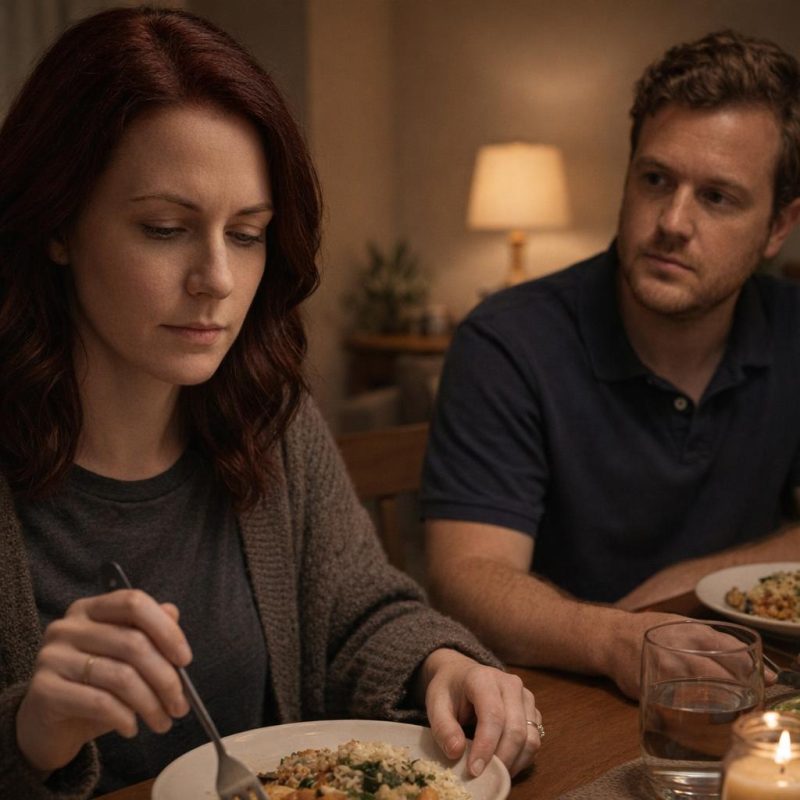 Image by RM AI
Six Months
I counted them on a Sunday morning while the pancake batter was resting — twenty-six. Twenty-six consecutive Sundays, not one skipped, not one traded out. Six months of early alarms and packed diaper bags and someone else's child falling asleep on my shoulder. I stood at the kitchen counter and let that number sit for a minute. I was tired in a way that had become so familiar I'd stopped noticing it the way you stop noticing a sound that's always there. But I was also proud, in a quiet, private way that didn't need an audience. Maya came padding in from the living room in her socks, asking about the pancakes, and I lifted her up onto the counter beside the bowl and let her stir, which she took very seriously. I opened Elena's message while Maya was occupied with her stirring. It was longer than Elena's usual messages, and it named things: the stability, the breathing room, the way Maya had started sleeping through the night again. I was still holding the phone when Maya looked up at me with batter on her chin, and I had to blink a few times. Then my phone buzzed again — Elena, a follow-up: *Twenty-six Sundays. You literally saved my life. Both of our lives.*
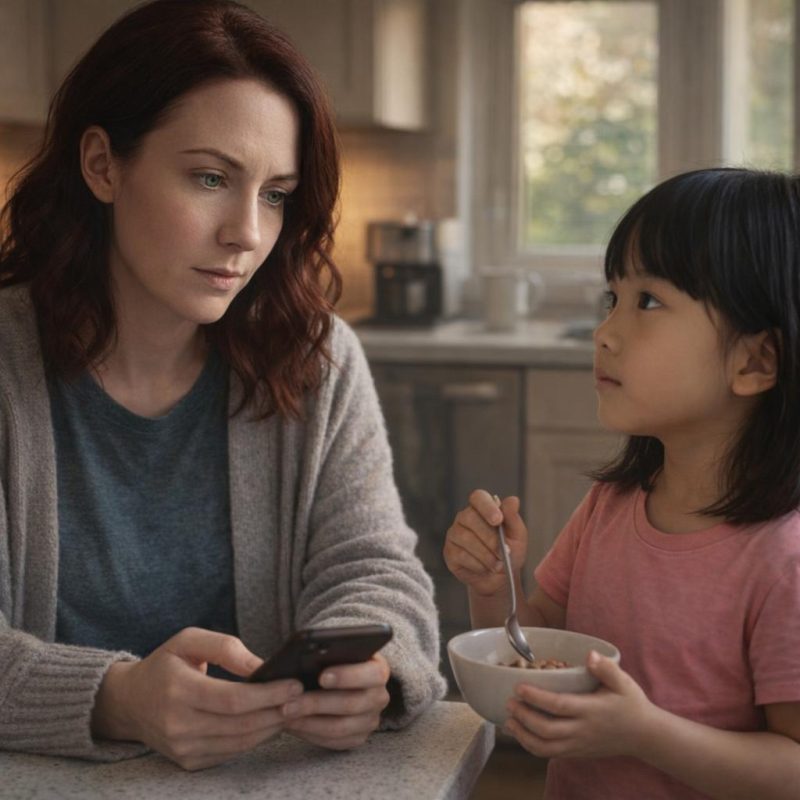 Image by RM AI
Corporate Jargon
It started a few weeks after the six-month mark. Elena would come to pick up Maya and stay for a cup of tea, and somewhere in the conversation she'd drop a phrase that made me look up from whatever I was doing. The first time it was 'deliverables' — she used it so naturally, mid-sentence, talking about a project her team was behind on. Then it was 'KPIs,' and she explained what they stood for without me asking, like she'd been saying it for years. One evening she talked for ten minutes about optimizing the intake workflow on her floor, the inefficiencies they'd identified in the quarterly review cycle, the metrics her supervisor tracked week over week. I found myself genuinely impressed. This was not the Elena who used to call me in a panic because she'd missed a bill. This was someone who had a vocabulary for her work, who understood the systems she was operating inside. I told her she sounded like a completely different person, and she laughed and said the job had forced her to level up fast. I believed it. I'd seen the rent payment, the car, the steadiness. This just felt like the next layer of it. Then she set down her mug, mentioned something about a logistics backlog, and said they needed to find a way to synergize their logistics pipeline before the next quarter closed.
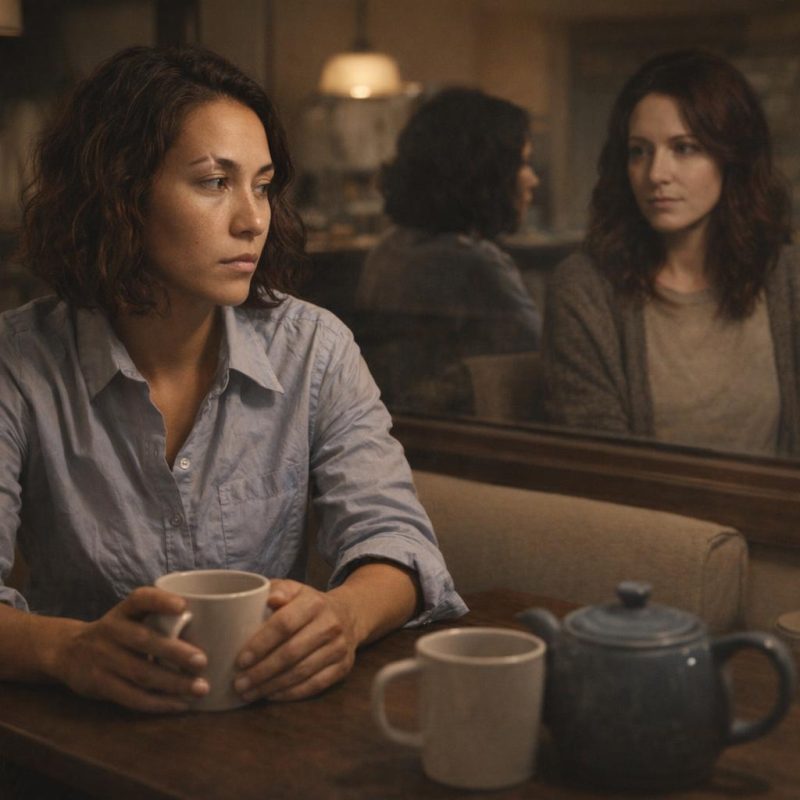 Image by RM AI
The Promotion Track
David was home that Sunday, which was rare enough that it felt like a small gift. He sat at the kitchen table with his coffee while Elena and I talked, and he mostly stayed quiet, the way he does when he's listening more than he's letting on. Elena had dropped Maya off and then lingered, which she'd been doing more often lately, and somewhere between her second cup of tea and Maya dragging her stuffed rabbit across the floor, she mentioned the regional manager. Apparently he'd come through her facility two weeks ago for a performance review, and Elena's numbers had stood out. She said it carefully, like she didn't want to jinx it, but there was a brightness in her face that she couldn't quite contain. Her supervisor had pulled her aside afterward and told her she was being considered for a supervisor track — a real step up, with more responsibility and a different schedule. I asked what kind of schedule, and she shrugged like it was still uncertain, but then she said the supervisor role ran Monday through Friday, which would mean no more Sundays. I looked at David across the table, and he raised his eyebrows just slightly. I turned back to Elena and told her she absolutely deserved it — and then it hit me that this whole arrangement might actually have an end date.
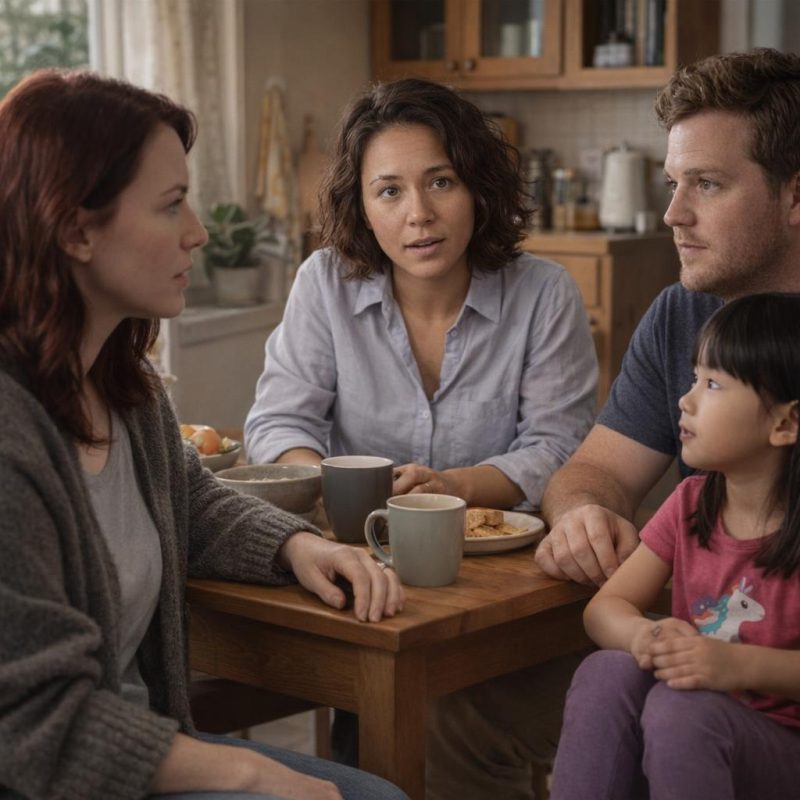 Image by RM AI
David's Retreat
David left before Elena even arrived that morning. He came into the kitchen while I was still in my robe, poured his coffee into a travel mug, and said he was heading to his brother's place for the day. He said it the way you say something you've already decided — not unkind, just settled. I told him to have fun, and he kissed me on the forehead and was gone before seven-thirty. Maya arrived twenty minutes later in her little corduroy overalls, and the day folded into its usual shape — pancakes, the garden, the picture books she'd memorized well enough to correct me when I skipped a page. She was easy company, genuinely. But somewhere around mid-afternoon, when she was napping on the couch with her rabbit tucked under her chin, I stood in the kitchen and noticed how quiet the house was. Not peaceful quiet. Just empty. I thought about David at his brother's place, probably watching football, probably relieved to have a Sunday that felt like his own. I told myself he understood. I told myself it was temporary, that Elena's promotion would change things, that we'd get our Sundays back soon enough. Maya made a small sound in her sleep and shifted, and I went back to folding laundry. The house held its silence around me like it had been doing this for a long time.
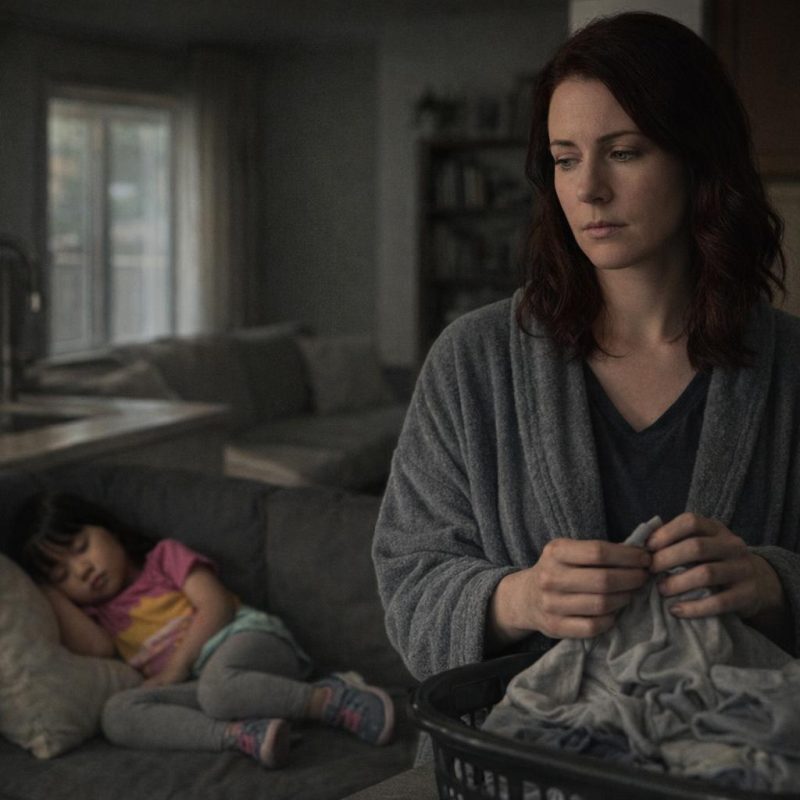 Image by RM AI
Regional Manager Praise
Elena came in that Sunday practically vibrating. She set Maya down, handed me a bag of clementines she'd brought for no reason, and before I could even say hello she was already talking. The regional manager had come back through — a follow-up visit, apparently — and he'd stopped specifically at Elena's station. She quoted him directly, the way you do when something lands hard enough to memorize: 'Your dedication is exactly what this company needs.' She said he'd reviewed her performance metrics on a tablet right in front of her, scrolling through numbers she'd helped generate, and he'd asked whether she'd be open to taking on additional responsibilities as the supervisor role developed. She described the whole thing in careful detail — the way he'd looked up from the screen, the exact phrasing he'd used, the fact that her direct supervisor had been standing right there nodding along. I sat across from her with my hands wrapped around my mug and felt something warm and full open up in my chest. This was my little sister. The one who used to call me crying over overdraft fees. And here she was, being singled out by a regional manager for her work ethic. She reached across the table and squeezed my hand and said none of it would have been possible without me. I didn't argue. I just sat with the weight of her words, and they felt entirely true.
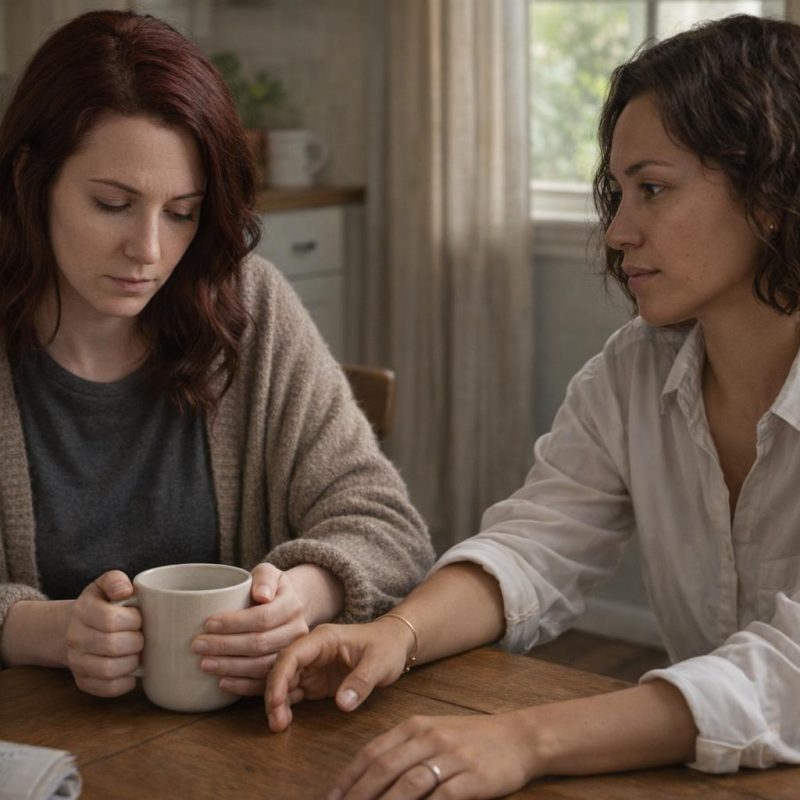 Image by RM AI
The Best Sister
It was a slow Sunday, the kind where the light comes in at a low angle and everything feels a little golden and unhurried. Maya and I made a fort out of couch cushions and read inside it for almost an hour, her curled against my side with her thumb hovering near her mouth the way it did when she was getting sleepy. I kept thinking about Elena — about the regional manager, the promotion track, the version of my sister who now used words like 'metrics' and 'deliverables' without blinking. Seven months. That's how long we'd been doing this. Seven months of Sundays, of pancakes and marigolds and picture books and nap-time negotiations. I thought about the woman Elena had been when this started — stressed, behind on everything, barely holding it together — and I thought about who she was becoming. And I thought about my part in that. Not in a self-congratulatory way, just in a quiet, factual way. I had shown up. Every single week, I had shown up. Maya patted my arm and asked me to read the duck book again, and I pulled it off the cushion pile and opened it, and somewhere in the middle of the second reading I thought: this is what family means. Not the easy parts. The showing-up parts. The parts that cost you something.
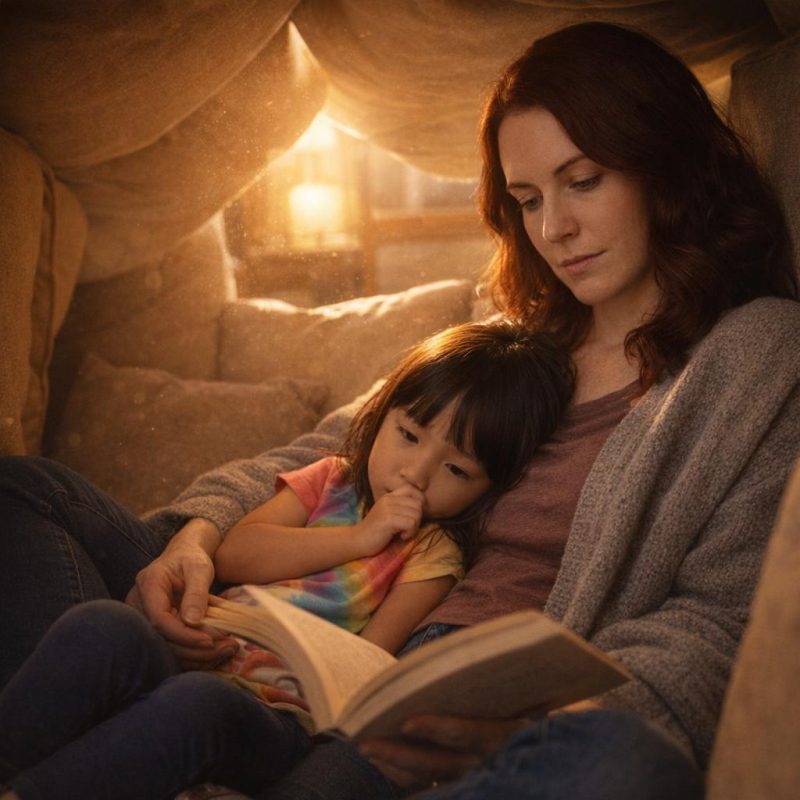 Image by RM AI
Another Sunday Passes
Elena dropped Maya off at eight-fifteen, same as always, in her dark work trousers and the sensible flats she'd started wearing a few months back. She looked tired around the eyes but she smiled and kissed Maya's curls and said she'd be back by seven-thirty. Maya waved from the doorway like she'd done it a hundred times, because she had. We made blueberry pancakes — Maya's job was pouring the blueberries in, which she took very seriously — and then we went out to check the marigolds, and then we came back inside and she asked for the duck book, and then the one about the bear, and then the duck book again. I knew every page. I knew which illustrations made her point and which ones she'd try to turn past too fast. I knew she'd want apple slices at lunch and that she'd negotiate hard for one more story before her nap. By the time Elena came back at seven-twenty-eight, Maya was drowsy and soft-limbed and smelled like lavender soap and grass. Elena scooped her up and mouthed 'thank you' over her daughter's head, and I watched them walk to the car. I closed the door and stood in the hallway for a moment. The house was quiet, the dishes were done, and the week would begin again tomorrow. The rhythm of it had settled into my bones so completely I barely noticed it anymore.
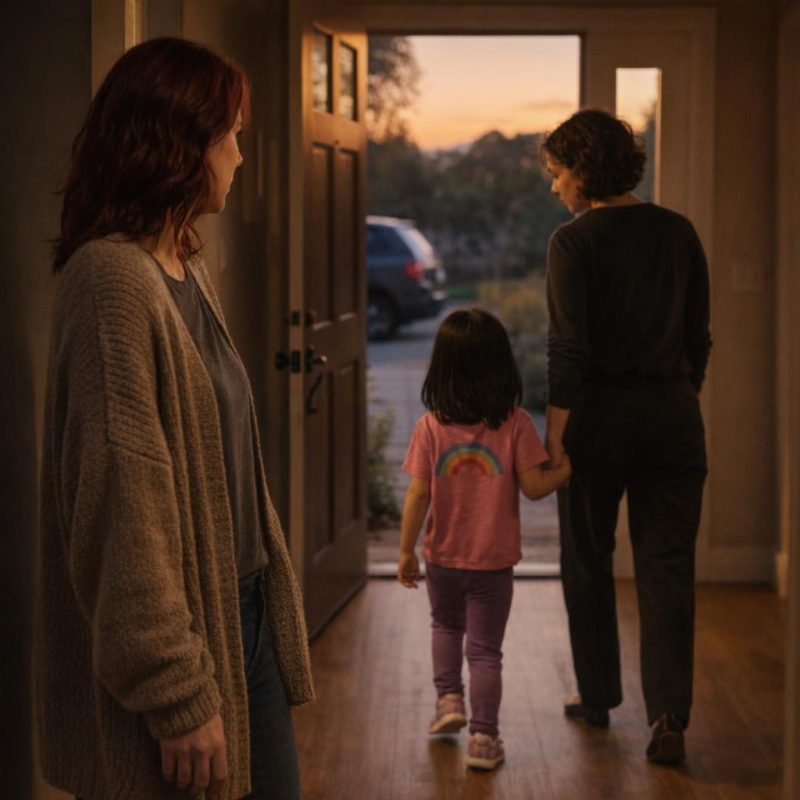 Image by RM AI
The Narrowing
I got an email that Tuesday from the yoga studio — a reminder about the weekend workshop I'd signed up for back in January and never attended. I'd forgotten I was even on their list. I sat with my phone for a second, trying to remember what I'd been thinking when I registered, what version of my Sunday I'd imagined having. It felt like a long time ago. I scrolled back through my calendar and it was striking, in a quiet way, how completely everything had reorganized itself. Birthdays I'd meant to celebrate in person. A college friend's housewarming I'd sent a gift to instead of showing up for. A standing brunch with two women I'd known since sophomore year that had quietly dissolved sometime around month four. I hadn't ended any of it deliberately — it had just contracted, the way things do when you fill your time with something consistent and necessary. That afternoon Maya and I painted with watercolors at the kitchen table, and she made something abstract and magnificent and asked me to hang it on the fridge, which I did. I watched her study it with her hands on her hips, deeply satisfied, and I felt genuinely glad to be there. But later, after she'd gone down for her nap, I sat at that same table and tried to think of the last thing I'd done that was purely for me. The answer didn't come.
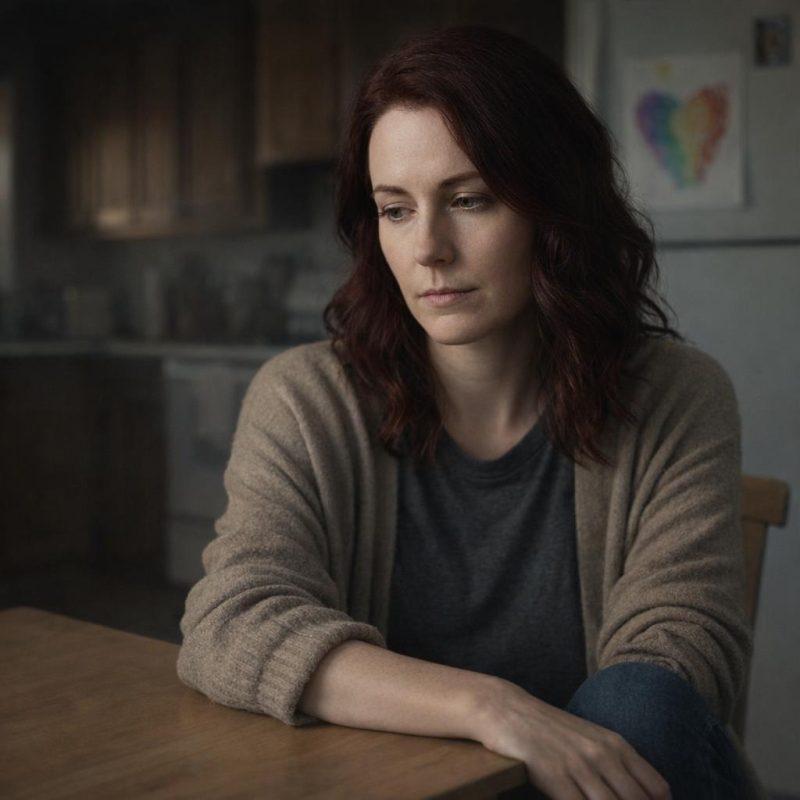 Image by RM AI
The Garden Grows
The marigolds had gone from scraggly little seedlings to something genuinely impressive — a full row of bright orange blooms that caught the morning light and held it. Maya saw them from the back door and actually gasped, which made me laugh out loud. We went out in our socks, which we probably shouldn't have, and crouched down together to count them. She remembered planting the seeds. She told me so very seriously, pointing at the soil like she was giving testimony. I showed her how to pinch off the spent blooms so the plant would keep flowering, and she did it with enormous concentration, her little tongue pressed to her lip. We counted fourteen good blooms and she announced this was 'a lot.' I told her she was right. The garden had become one of my favorite parts of our Sundays — something we'd built together from nothing, something that kept growing even when we weren't watching. Maya straightened up and looked at the row of flowers for a long moment, and then she reached down and carefully, deliberately, chose one perfect bloom and held it up to show me. She said she wanted to give it to her mommy.
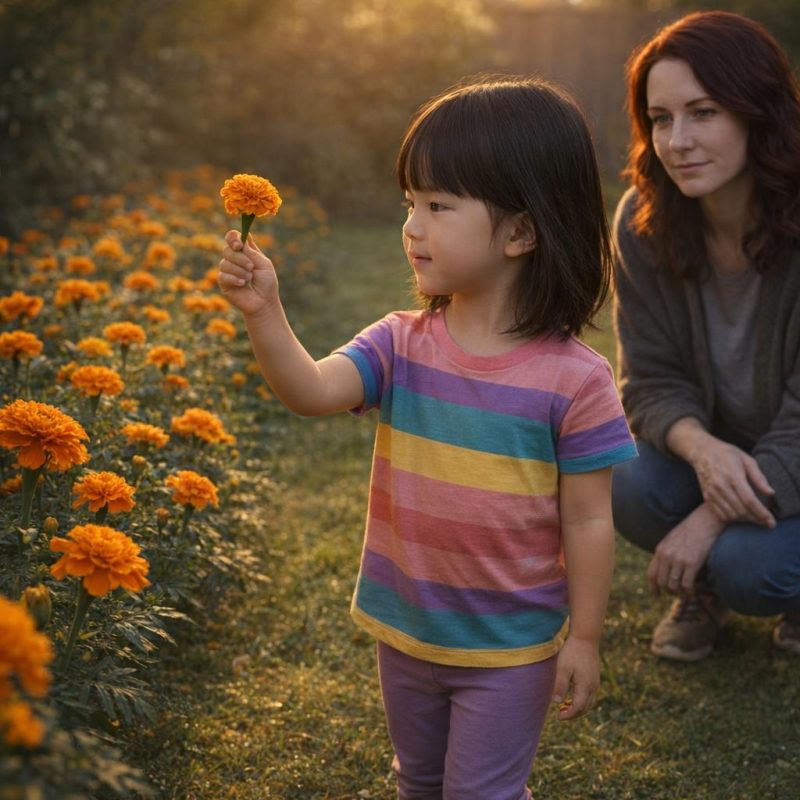 Image by RM AI
Elena Seems Legitimately Tired
Elena was late by about fifteen minutes that evening, which wasn't unusual, but when she finally came to the door I noticed it right away. She looked worn through. Not just tired — the kind of tired that sits in your face and doesn't lift when you smile. There were dark circles under her eyes that her concealer hadn't fully covered, and her shoulders were carrying something heavy even before she stepped inside. She moved slowly, like her feet hurt. Maya ran to her and Elena caught her and held on for a second longer than usual. She said the warehouse had been brutal — a big shipment, short-staffed, on her feet for most of it. She pressed two fingers to her temple and closed her eyes briefly, and I found myself reaching for the kettle without thinking. I told her to sit down. She did, gratefully, and rubbed the back of her neck while Maya climbed into her lap. I thought about the promotion, about the regional manager, about all those Sundays Elena had spent on her feet while I was here with Maya in the garden. Whatever doubts David had quietly carried, whatever small questions had flickered at the edges of my own mind, they felt thin and ungenerous standing next to the pale exhaustion on Elena's face.
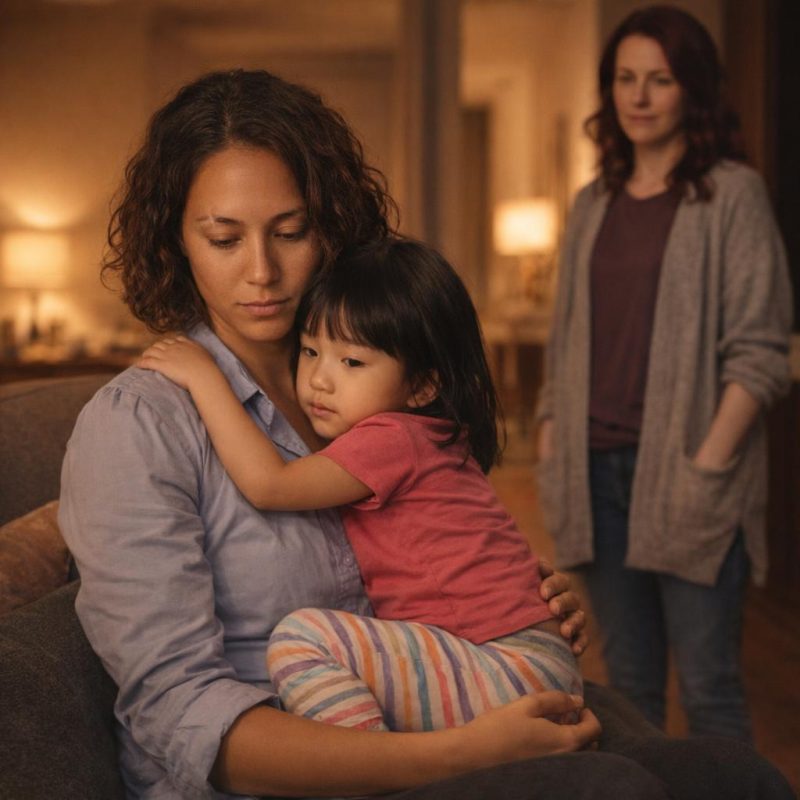 Image by RM AI
Defending Elena to David
It was a quiet Tuesday evening, the kind where David and I actually had time to sit together after dinner without either of us falling asleep mid-sentence. He brought it up gently — he always does — asking how things were going with the Sunday arrangement. I told him they were going fine, great even, and I meant it. But then he leaned forward a little and said he'd been thinking, that maybe the arrangement had gone on long enough, that maybe Elena had enough footing now to figure out her own childcare. I felt something tighten in my chest. I told him about the rent she was finally keeping current, the car she'd managed to hold onto, the way she'd talked about the promotion like it was actually within reach. I said she was building something real and that pulling the rug out now would set her back months. David listened. He didn't argue. He just nodded slowly in that way he does when he's choosing his words carefully. And then he said it — quietly, without any edge to it — that he wasn't worried about Elena at all. He said he was worried about me, and that he was starting to wonder if I was being taken advantage of.
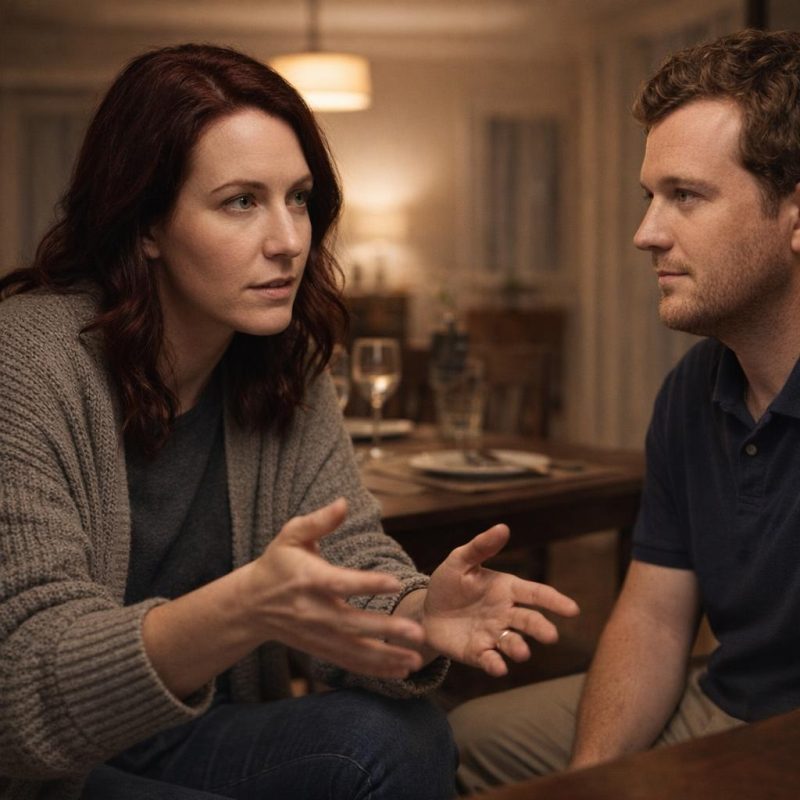 Image by RM AI
Elena Arrives Slightly Late
By seven-thirty I had Maya in her pajamas, her little bag packed by the door, her stuffed rabbit tucked under her arm. Elena was supposed to be there at seven-fifteen. Maya asked me twice where her mommy was, and I told her she was on her way, that traffic could be tricky on a Sunday evening. I checked my phone. Nothing. By seven-forty I was starting to feel that low-grade irritation that I always tried to talk myself out of — the kind that felt petty the moment Elena actually walked through the door. Her headlights swept across the front window at seven-forty-five, and she was apologizing before she even reached the porch. There'd been an accident on the highway near the warehouse, she said, a bad one, backed everything up for miles. She looked genuinely frazzled, her hair a little windswept, her keys still in her hand. Maya launched herself at Elena's knees and Elena laughed and scooped her up, and just like that the tight feeling in my chest loosened. I helped gather Maya's things and walked them to the car, and by the time I came back inside, the irritation had already gone quiet, like it had never really been there at all.
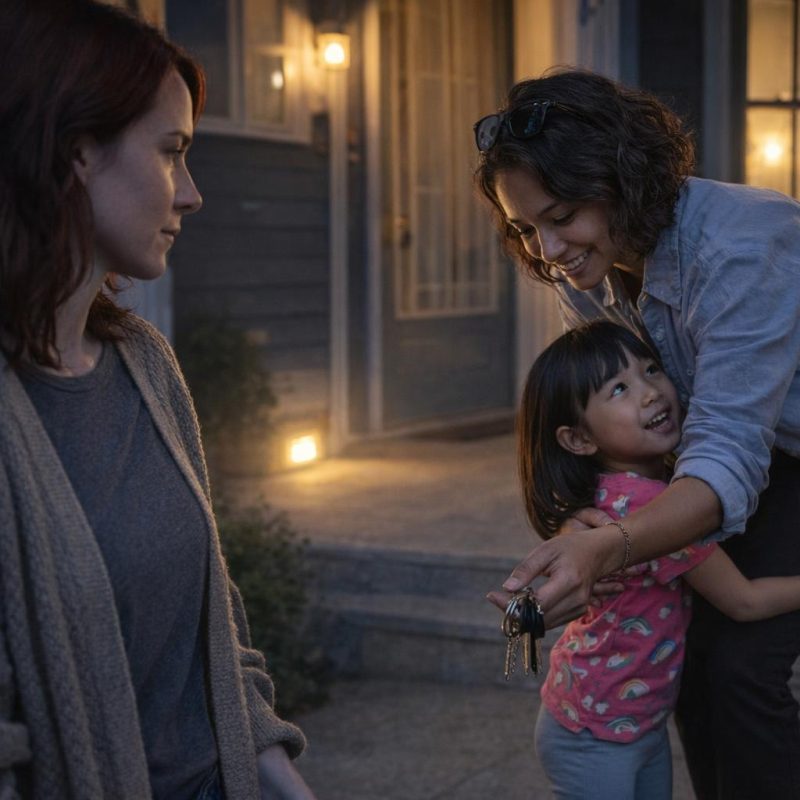 Image by RM AI
The Phone Always Off
It happened more than once — I'd try to reach Elena during the day to ask something small, whether Maya had eaten her lunch, whether she wanted me to pick up more of those fruit pouches she liked, and the call would go straight to voicemail every single time. Not a ring, not even a pause. Just voicemail. I mentioned it one evening when Elena came to pick up Maya, keeping my voice light so it didn't sound like a complaint. Elena didn't miss a beat. She said the warehouse was basically a dead zone — metal frame, concrete walls, the whole structure just swallowed signals. She said half the workers had the same problem and they'd all learned to check their phones on breaks outside. It made sense. I'd been in buildings like that before, places where your phone just gave up entirely. She said texting was more reliable because it would queue and send the moment she stepped outside. I told her I'd remember that. Maya was already pulling at Elena's sleeve, ready to go, and the conversation moved on the way conversations do. I made a mental note to text instead of call, and that was the end of it — the question answered, the small worry folded away.
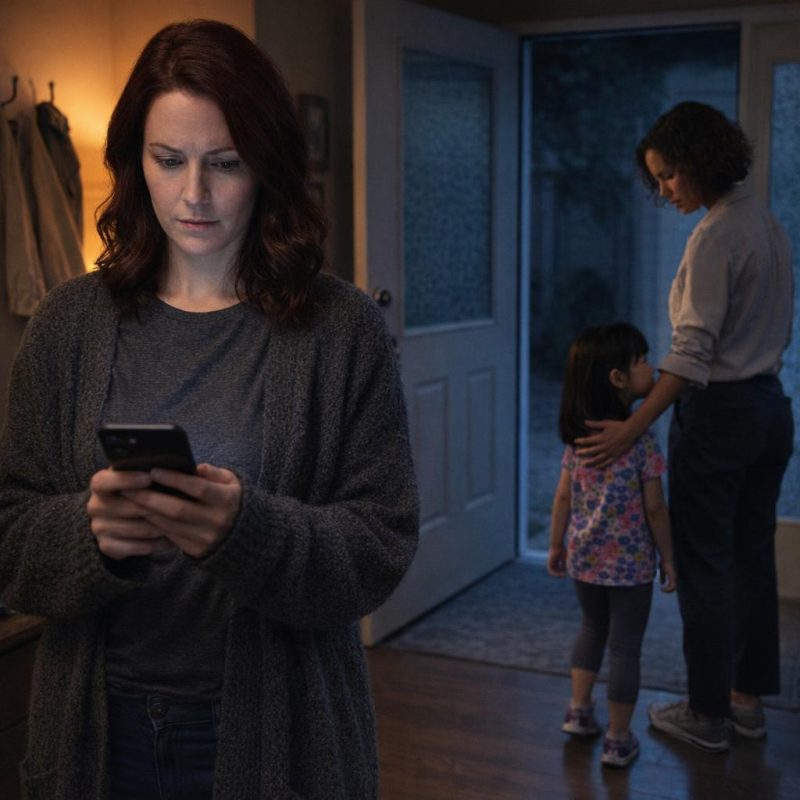 Image by RM AI
Work Frustrations
Elena didn't leave right away that evening. She stood in the doorway with Maya on her hip and started talking, and I could tell she needed to get something out. There was a woman at the warehouse named Jennifer — a senior picker who'd apparently decided Elena was a threat to her informal authority over the newer staff. Elena described how Jennifer had gone to their shift supervisor and claimed Elena's count numbers were off, which Elena said was completely false and easily disproved, but the whole thing had taken up two hours of her afternoon and left her feeling humiliated. Then, on top of that, a deadline for a bulk order had been moved up by a full day without any notice, which meant everyone scrambled and nobody got their scheduled break. Elena's voice had that particular exhausted frustration in it — not dramatic, just worn. I told her she was handling it better than most people would, that proving herself in a place like that took time and Jennifer probably felt threatened by how quickly Elena had picked things up. Elena laughed a little at that, a tired but genuine laugh. She thanked me for listening, said I was the only person she could really talk to about this stuff. And then she mentioned Jennifer again — said the woman had actually gone back a second time that same afternoon and filed a formal complaint.
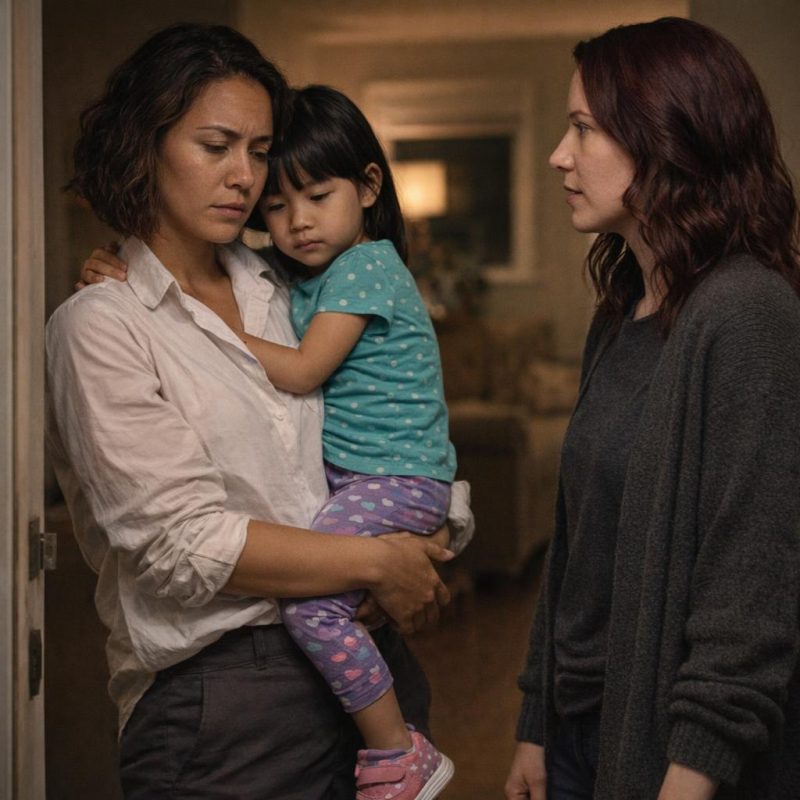 Image by RM AI
Nine Months of Sundays
I counted them one afternoon while Maya napped — actually sat down with my phone calendar and counted backward, Sunday by Sunday, all the way to the beginning. Thirty-nine. Thirty-nine consecutive Sundays without a single gap. I sat with that number for a while. It was bigger than I'd expected it to feel, though I'm not sure why it surprised me. Nine months is nine months whether you count it in weeks or not. I thought about what those Sundays used to look like — slow mornings with David, the farmers market we used to walk through, the yoga class I'd eventually stopped even trying to reschedule. I didn't feel sorry for myself exactly. It was more like I was taking stock, the way you do when you've been moving so steadily in one direction that you forget to check how far you've come. Maya stirred in the other room and made a small sound but didn't wake. I looked toward the hallway and thought about her face when she laughed, the way she said my name now with full confidence, like I was a fixed point in her world. That mattered. It still mattered. I told myself it was working, that Elena was steadier than she'd been in years, and I meant it. Thirty-nine Sundays, and I hadn't missed one.
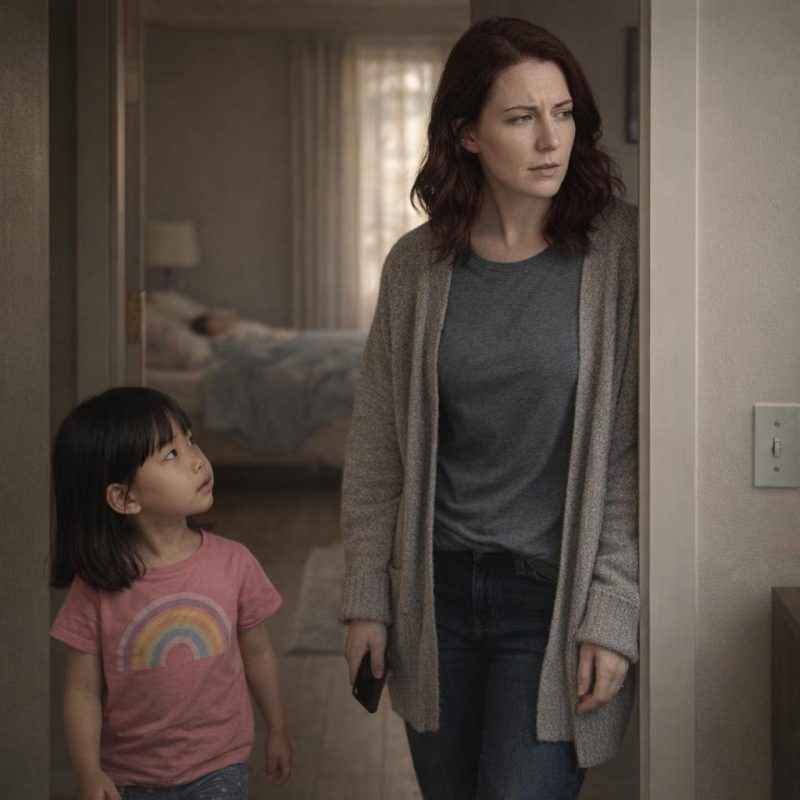 Image by RM AI
The Yoga Workshop Again
The email came on a Thursday morning while Maya was stacking blocks on the living room rug. The yoga studio had rescheduled the workshop — same instructor, new date, a Sunday in late July. I read the subject line, opened the message, scrolled to the bottom, and clicked decline. That was it. No pause, no moment of weighing it, no small pang of wishing things were different. I set my phone face-down on the coffee table and went back to watching Maya line up her blocks in a very specific order that apparently only made sense to her. A few months ago, getting that email would have stung a little — a reminder of something I'd quietly given up. But somewhere between then and now, the wanting had just stopped. Sundays belonged to Maya, and that felt less like a sacrifice and more like a simple fact about my life, the way some things just settle into place and stop requiring a decision. Maya knocked her tower over on purpose and shrieked with delight, and I laughed with her. The email was already gone from my mind. I hadn't even hesitated.
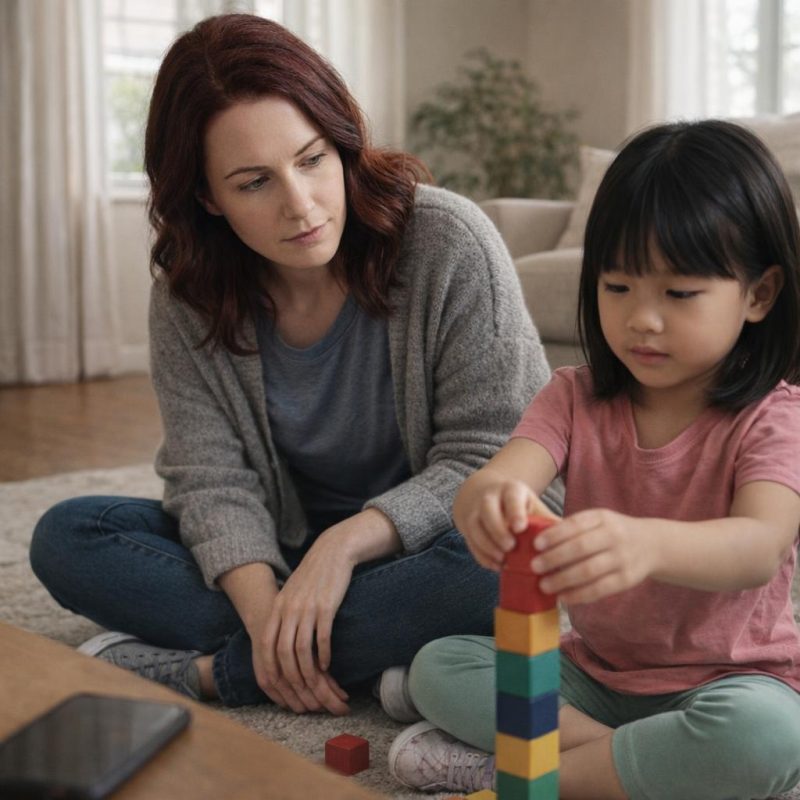 Image by RM AI
The Deep Tan
It was a warm evening in early June when I first noticed it. Elena came to the door in a sleeveless top — one of those thin-strapped ones she'd started wearing more often — and when she leaned past me to grab Maya's diaper bag from the hook by the door, her shoulders came into full view. The tan stopped me for just a second. It was deep and even, the kind that doesn't come from a few afternoons in the backyard — a real, settled-in tan that ran from her shoulders down her upper arms in a smooth, unbroken line. Not patchy, not the kind you get through a car window. The kind that takes sustained, direct sun over time. I didn't say anything. Elena was already talking to Maya, crouching down to zip up her little jacket, and the moment passed the way small moments do. But I found myself looking again as they walked to the car — the even color across her shoulders, the way it caught the evening light. It was only early June. I couldn't quite place where that kind of tan came from, and the thought sat with me quietly long after their taillights disappeared down the street.
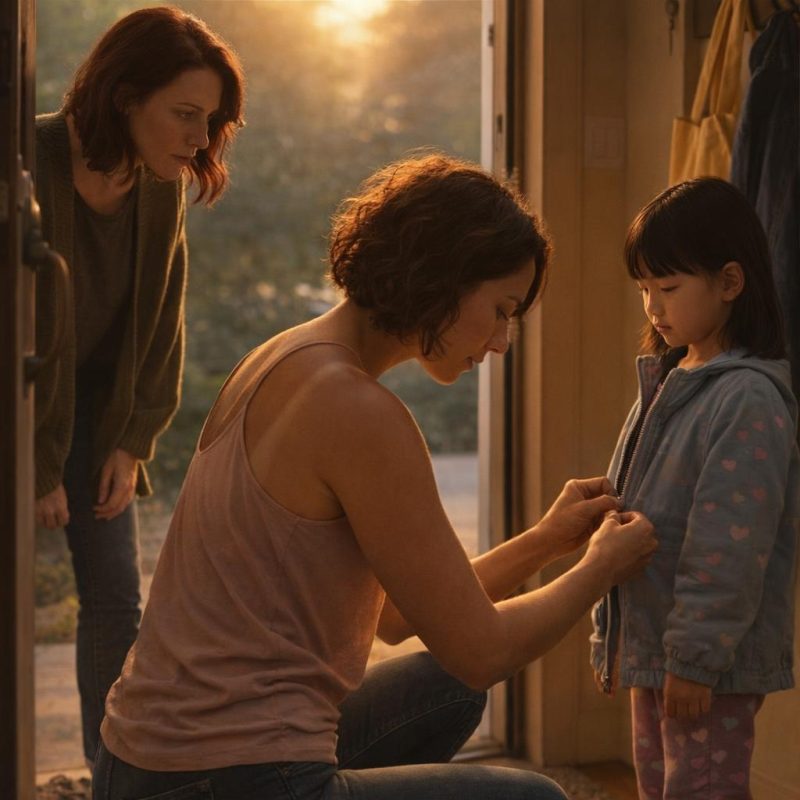 Image by RM AI
The Glass Ceiling Story
I brought it up the following Sunday, keeping my voice easy, almost offhand — I mentioned that I'd noticed she'd gotten some color and asked if she'd been spending time outside. Elena laughed, a bright and immediate laugh, and said she wished it were from something fun. She said the warehouse had a glass ceiling — a long stretch of it running down the center of the building — and that in summer it turned the whole place into a greenhouse. She described how the light came through in the afternoon and just baked everything underneath it, how the workers had started calling it the sunroof as a joke, how half of them had complained to management and nothing had changed. She said she'd started wearing SPF under her work shirt but it clearly wasn't doing much. It was the kind of explanation that came with details — the nickname, the complaints, the SPF — and it landed easily, the way true things tend to. I told her she should push management harder about it, that working in that kind of heat wasn't safe. She shrugged and said that was just how it was for now. Maya climbed into Elena's arms and the conversation drifted, and I let it go. What stayed with me afterward wasn't the tan or the explanation — it was how quickly and lightly Elena had answered, like the question hadn't cost her anything at all.
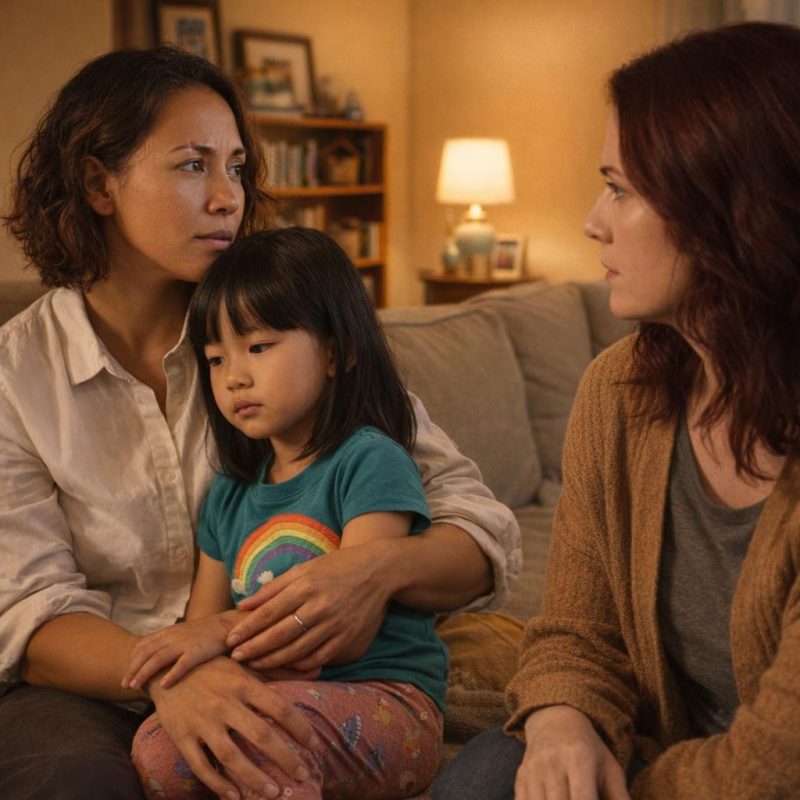 Image by RM AI
Feeling Guilty for Questioning
I drove home that Sunday with Maya asleep in the backseat and the radio turned low, and I kept coming back to the same thought: what kind of person questions their sister's sunburn? Elena was working overtime every single week. She was doing it alone, without a partner, without a safety net, and she'd never once complained to me about how hard it was. I thought about the way she looked when she picked Maya up — the tired eyes, the slightly rumpled work clothes, the way she'd sometimes lean against the doorframe like she needed a second before she could move again. That wasn't performance. That was exhaustion. And here I was, noticing her tan and letting it sit in the back of my mind like some kind of clue. I felt genuinely ashamed of myself. Maya made a small sound in her sleep and I glanced at her in the rearview mirror, that little face completely peaceful, and I thought about how lucky she was to have a mother who was grinding this hard for her. I was supposed to be the person supporting that. Not the person quietly keeping score. The voice in my head was sharp and clear: you should be ashamed of yourself for doubting her.
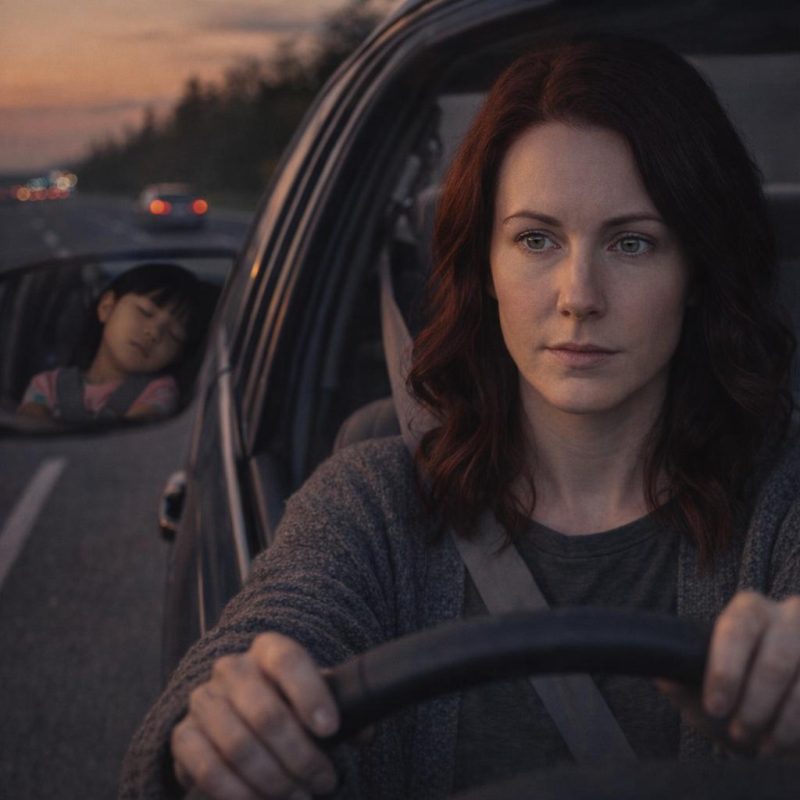 Image by RM AI
More Small Inconsistencies
The following Sunday, Elena arrived a few minutes early, which was unusual. She was in a good mood — chatty, easy, scooping Maya up and spinning her around while Maya shrieked with delight. When she was ready to leave, she reached for Maya's overnight bag, and our hands brushed in the handoff. I noticed it then, just for a second. Her hands were smooth. Not just clean — smooth, the nails neatly shaped, no rough edges, no dry patches along the knuckles. I'd worked a summer job at a packaging facility in college and I remembered what that kind of work did to your hands by August — the small cuts, the calluses, the skin that never quite recovered. I told myself she probably wore gloves. Of course she wore gloves. Most warehouse jobs required them, and Elena had always been careful about her appearance anyway. It wasn't strange. I was doing it again — picking up some small, meaningless detail and turning it over like it meant something. Elena kissed Maya on the cheek, said she'd see us next week, and headed down the front walk without looking back. I stood in the doorway watching her go. Her hands, when she'd taken the bag, had been soft as someone who'd spent the week nowhere near a warehouse.
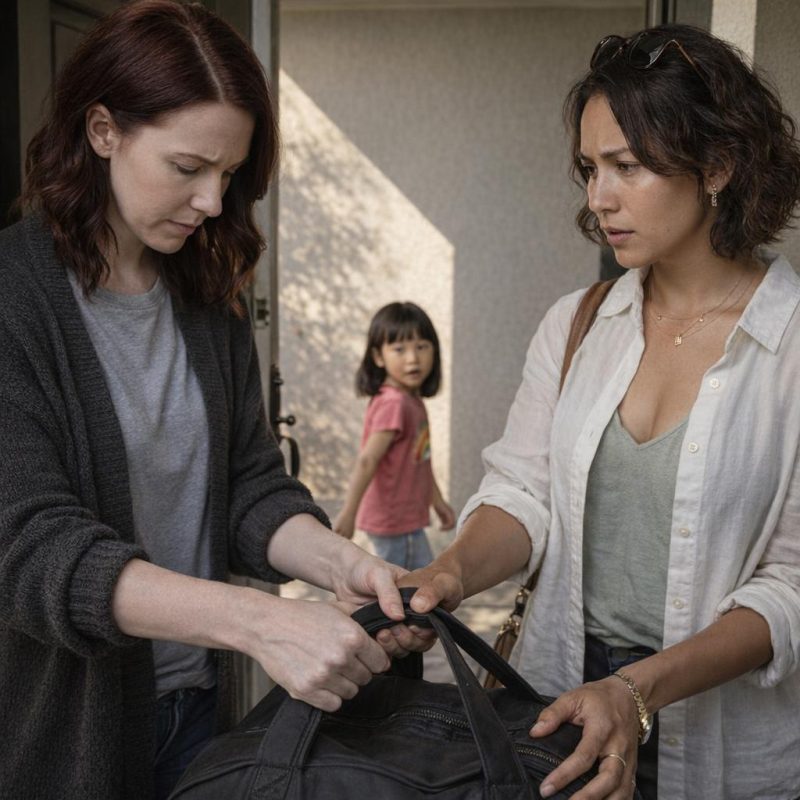 Image by RM AI
Elena Seems Stable and Happy
A few weeks later I noticed something that made me feel better about all of it. Elena arrived that Sunday looking different — not just rested, but genuinely light. There was something in the way she moved, easy and unhurried, like a tension she'd been carrying for years had finally started to loosen. She sat at my kitchen table while Maya played on the floor, and she talked about her week with actual enthusiasm. She mentioned a new system they'd rolled out at work that made her shift run smoother, said she felt like she was finally getting the hang of things, that she was starting to feel more like herself again. I watched her and felt something warm settle in my chest. This was what I'd hoped for when I said yes to all those Sundays. Not just the extra money for her, but this — my sister sitting across from me with her shoulders down and her eyes bright, talking about her life like it was something she was building rather than surviving. Whatever small doubts had been flickering at the edges of my mind felt petty in the face of it. Her voice, when she talked about her week, came out easy and unhurried — lighter than I'd heard it in years.
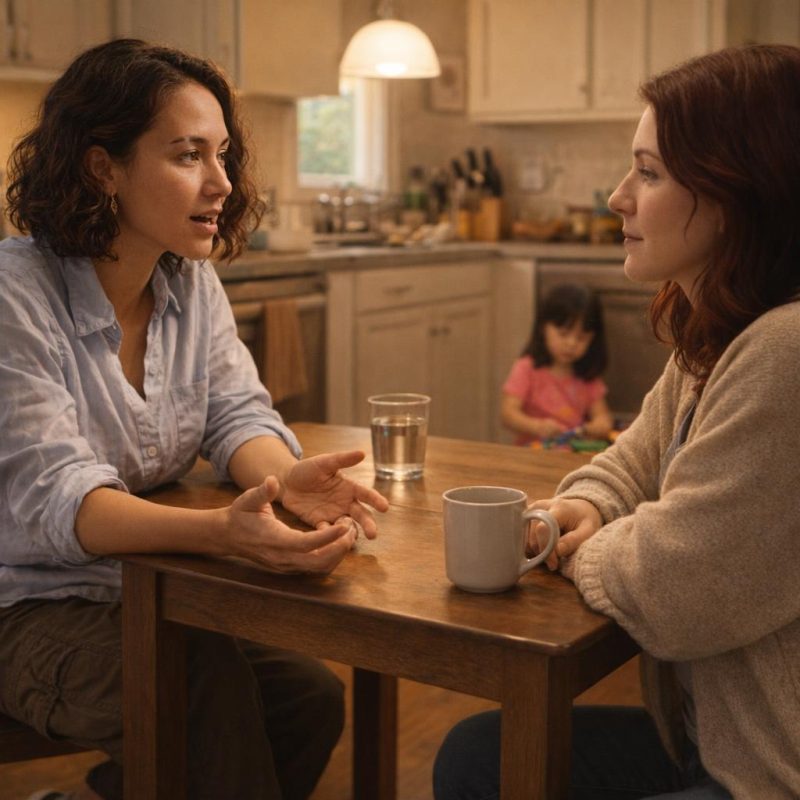 Image by RM AI
The Receipt
It was a regular Sunday afternoon, maybe three weeks after that. Elena had just left and Maya was standing at the door still waving, even though Elena's car was already gone. I crouched down to help her out of her little jacket — the yellow one with the duck buttons that Elena had bought her — and as I pulled it off, something fluttered out of the pocket and landed on the floor between us. I thought it was a gum wrapper at first. I picked it up. It was a receipt, small and slightly crumpled, from somewhere called Seaside Treasures. The name meant nothing to me. But the date did. It was from two Sundays ago — a Sunday Elena had been at work. And below the store name, in small print, was the location: a coastal town I recognized, the kind of place people drove to for the weekend, about two hours from here. Maya had already wandered off toward her toy basket, completely unbothered. I stayed crouched on the floor for a moment, the receipt held between two fingers, reading it again. The date. The town. The name of the shop. I stood up slowly and set it on the counter, and I didn't move for a long time, the small slip of paper sitting there in the quiet of the kitchen.
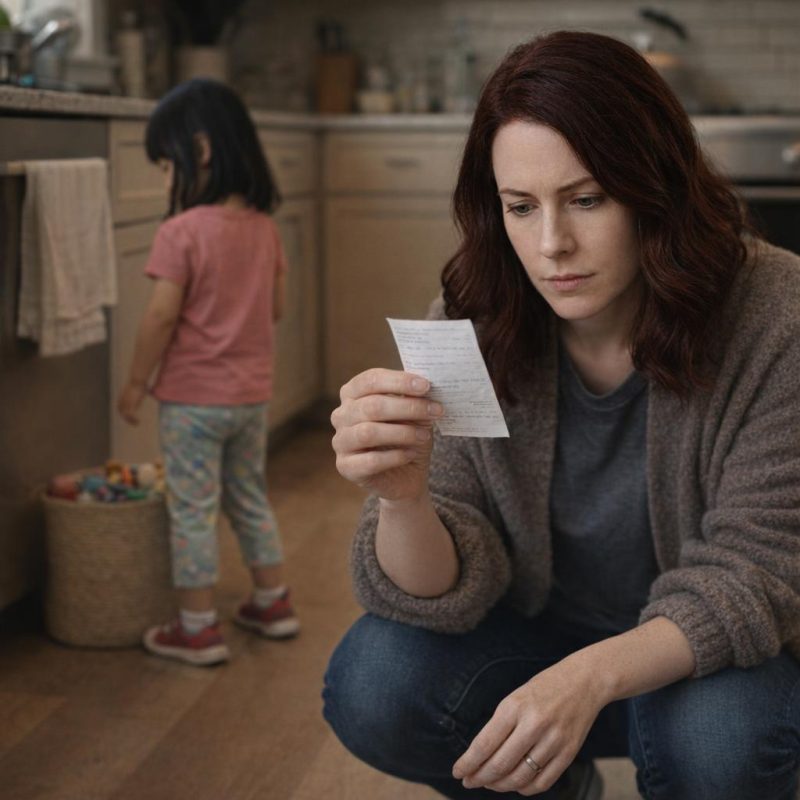 Image by RM AI
The Coworker Story
I held onto the receipt all week, folding and unfolding it in my mind more than in my hands. When Elena arrived the following Sunday, I waited until Maya had settled in with her crayons before I brought it up. I kept my voice casual — I said I'd found something in Maya's jacket pocket when I was doing laundry, and I held it out. Elena glanced at it and her expression didn't shift. She said oh, that — and then she explained, easily and without any pause, that her coworker had asked to borrow Maya's jacket pocket as a joke, a silly thing, because she'd run out of room in her own bag. She said the coworker — Sarah — had driven down to the coast that weekend to visit family and had picked up a birthday gift for another woman on their team while she was there. The receipt must have ended up in the jacket when Sarah handed it back. Elena even added that the birthday party had been the Friday before, that the gift was a candle set, that Sarah always went overboard for people's birthdays. Each detail arrived without hesitation, one after another, smooth and complete. My anxiety had been loosening with every sentence. Then Elena said Sarah's name again, and something about how easily it came out left me standing very still.
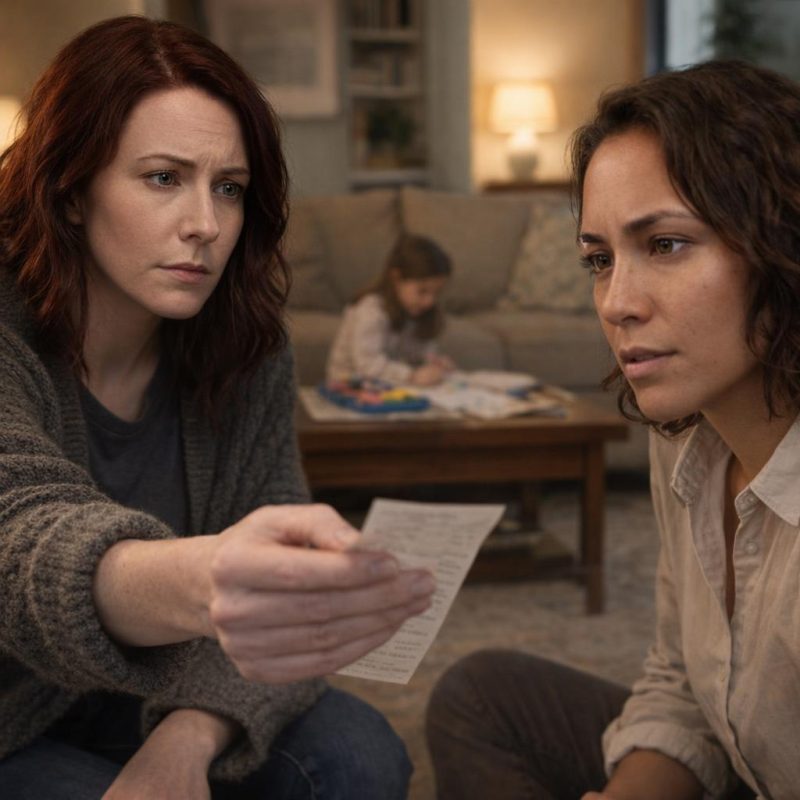 Image by RM AI
Feeling Paranoid
After Elena left I sat on the living room floor with Maya, helping her sort her crayons by color the way she liked, and I kept turning the conversation over in my head. The explanation had made sense. It had fit together — a coworker named Sarah, a family visit, a candle set, a Friday birthday party. I'd asked a question and gotten an answer, and the answer had fit. So why did I still feel unsettled? I thought about that for a while, and then I started to wonder if the problem was me. I'd been doing this for almost ten months — every Sunday, up early, the same routine, the same careful management of my own schedule and David's patience and Maya's needs. Maybe the tiredness was getting to me. Maybe when you're that worn down, you start seeing shadows where there aren't any. Maya handed me a purple crayon and asked me to draw a butterfly, and I did, and I smiled at her, and I tried to let the whole thing go. But sitting there on the floor, I felt the weight of it — not the receipt, not the explanation, just the sheer exhaustion of turning over small doubts about someone I loved.
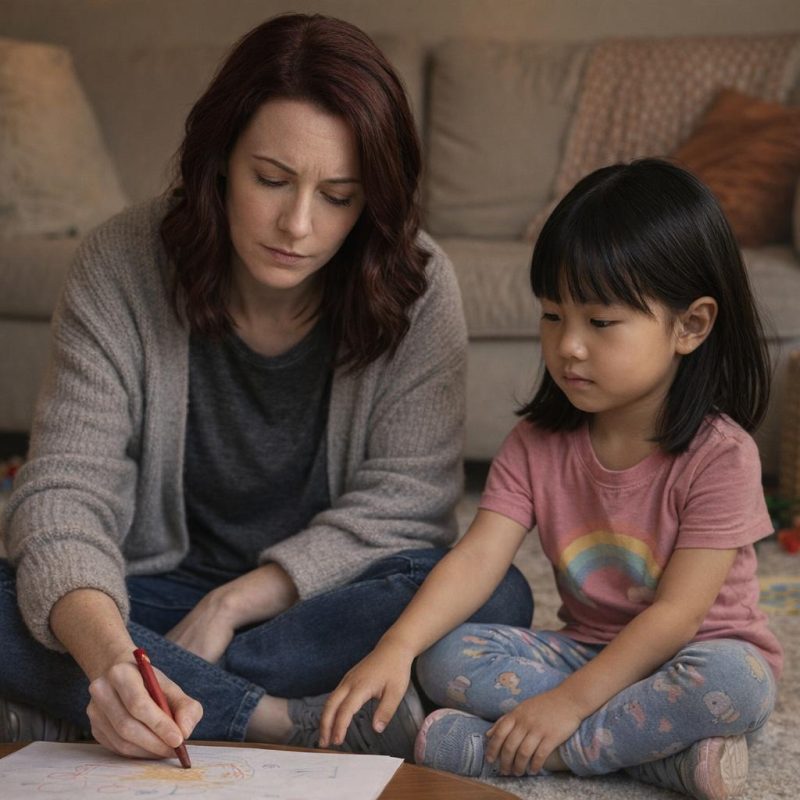 Image by RM AI
David's Skepticism Grows
I told David about the receipt that evening after Maya was asleep. I hadn't planned to — it just came out while we were cleaning up the kitchen, the way things do when you've been holding them too long. He listened without interrupting, which was how David always listened, and when I finished he was quiet for a moment. Then he asked a few questions. He asked whether Elena had ever mentioned Sarah before — any coworker by name, ever, in ten months of talking about her job. I opened my mouth and then closed it. He asked why a coworker would drive two hours to the coast for a family visit and think to pick up a birthday gift along the way, and whether that struck me as the kind of thing people actually did. I told him it wasn't impossible. He said he knew it wasn't impossible. He wasn't saying it was impossible. He just thought it was worth noticing. I felt defensive in the way you do when someone says out loud the thing you've been trying not to think. I told him Elena was going through a hard stretch and deserved the benefit of the doubt. David nodded and didn't push. He just rinsed his glass and set it in the rack, and the kitchen went quiet. His question about the coworker names sat in the silence between us, and I had no answer for it.
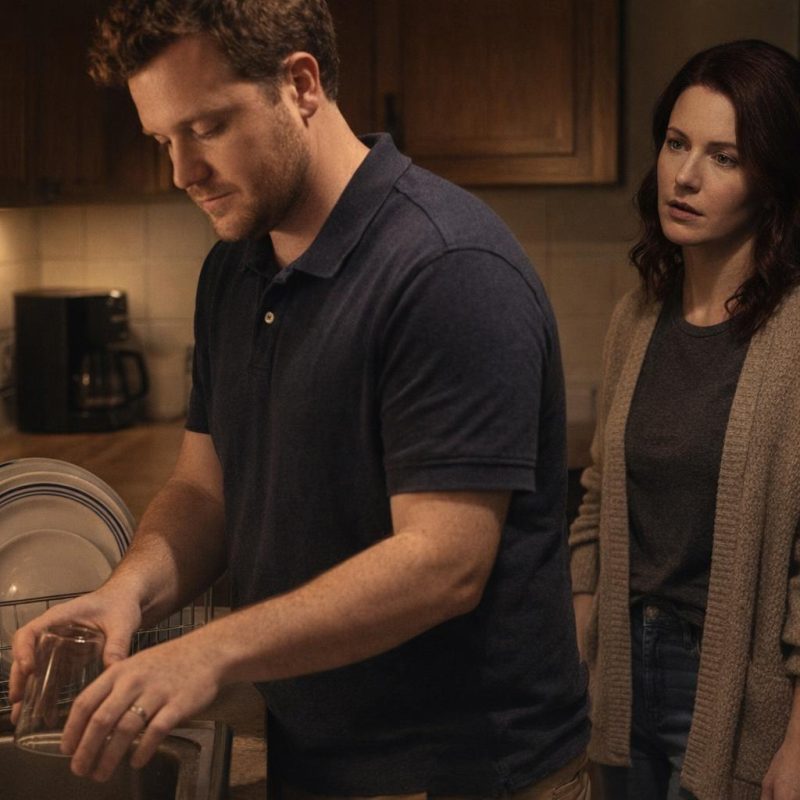 Image by RM AI
The Tenth Month Approaches
I counted the Sundays one night when I couldn't sleep. I lay there in the dark doing the math — forty-something Sundays, give or take, stretching back almost ten months. It was a number that felt different written out than it did lived through. Lived through, it had been manageable, one week at a time. Written out in my head at midnight, it felt enormous. I thought about David's question, still unanswered. I thought about the receipt, still sitting in the kitchen drawer because I hadn't known what else to do with it. I thought about Elena's hands, smooth and soft. I thought about how tired I was, and how I kept telling myself that the tiredness was making me paranoid, and how I wasn't entirely sure anymore that was true. Maya had been asleep for hours. The house was quiet. I'd almost drifted off when my phone lit up on the nightstand. I reached for it without thinking. It was a text from Elena — she was sorry for the short notice, but her supervisor had asked her to cover an extra shift next Sunday, longer hours than usual, and she hoped that was okay.
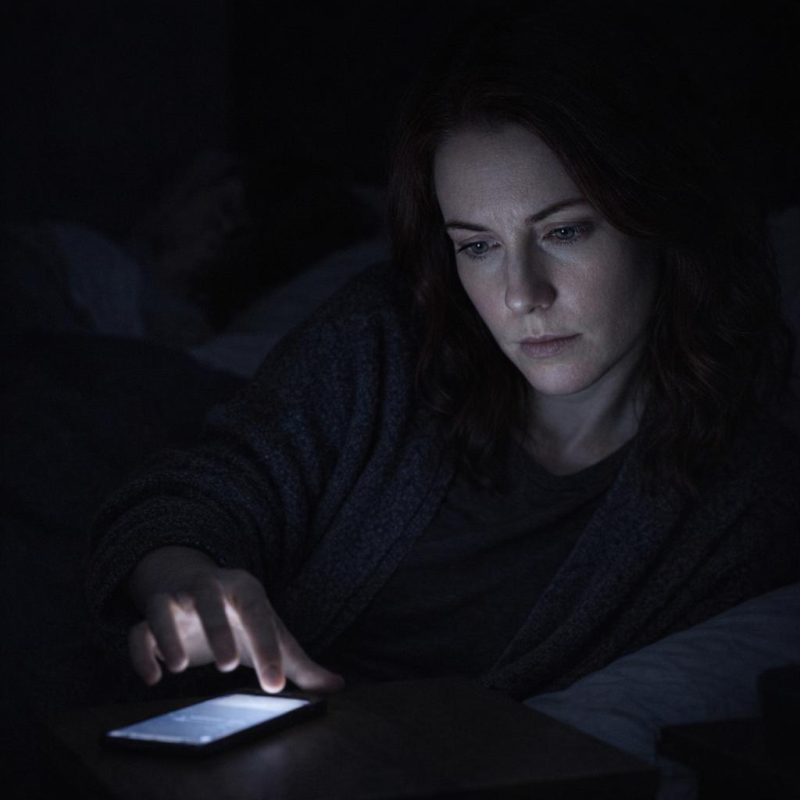 Image by RM AI
Maya's Fever
Maya had been fine all morning — a little quieter than usual, maybe, but I'd chalked it up to the gray sky outside and the fact that we'd skipped our usual walk. Then around noon she climbed into my lap and just stayed there, which wasn't like her. I pressed my lips to her forehead the way my mom used to do with me, and my stomach dropped. I got the thermometer from the bathroom cabinet and took her temperature properly. One hundred and two. I sat her on the couch with her favorite blanket and called Elena. Straight to voicemail. I left a message, kept my voice calm, said it wasn't an emergency yet but to please call me back as soon as she could. Fifteen minutes passed. Maya started to cry — not her loud, frustrated cry, but the soft, miserable kind that's somehow worse. I called again. Voicemail again. I set the phone down on the coffee table and looked at my niece, her cheeks flushed and her eyes glassy, and I tried to remember the last time Elena had actually picked up on a Sunday. The thermometer sat on the cushion beside Maya, and the number on its little screen hadn't moved.
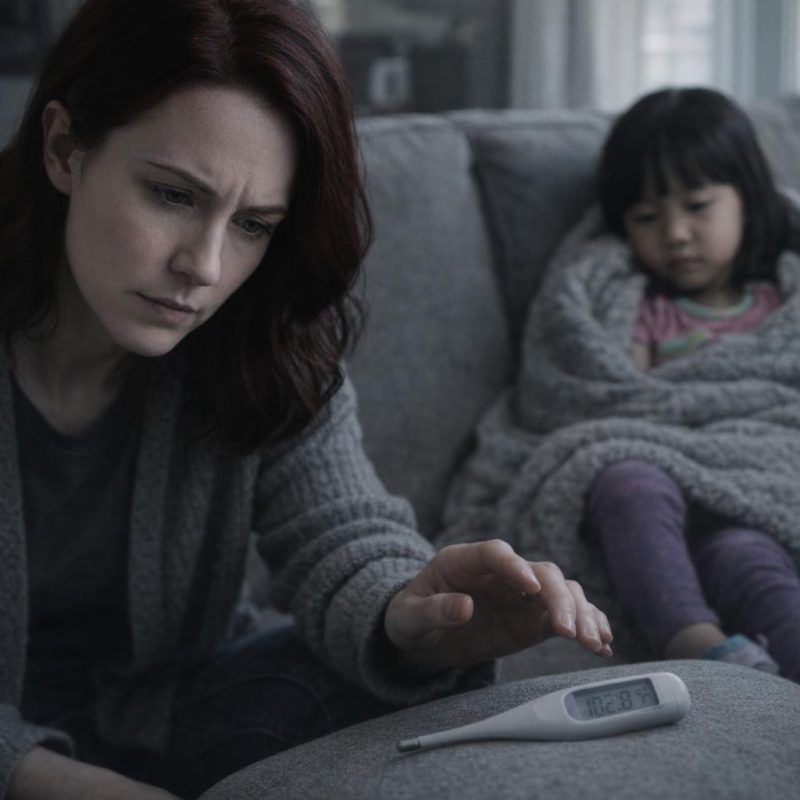 Image by RM AI
The Decision to Drive
I gave Maya a dose of infant Tylenol and sat with her for another half hour, watching the clock and willing her temperature to drop. It didn't. She was limp against my shoulder, her breathing shallow and warm, and every few minutes she'd make this small, exhausted sound that twisted something in my chest. I tried Elena one more time. Voicemail. I stood in the middle of my living room holding my phone and thought about waiting until seven, when Elena was supposed to pick her up. Seven was four hours away. Four hours felt impossible. I remembered Elena mentioning the company name once — Swift-Link Logistics, out in the industrial park on the east side of town. She'd said it casually, the way you mention a place you go every week without thinking about it. I figured if I showed up there, someone would know how to reach her. It felt like the only option I had left. I changed Maya into a fresh shirt, packed her little bag with her water cup and the blanket she wouldn't let go of, and carried her out to the car. She whimpered when the cool air hit her face. I buckled her into her car seat as gently as I could, smoothed her curls back from her forehead, and pulled out of the driveway.
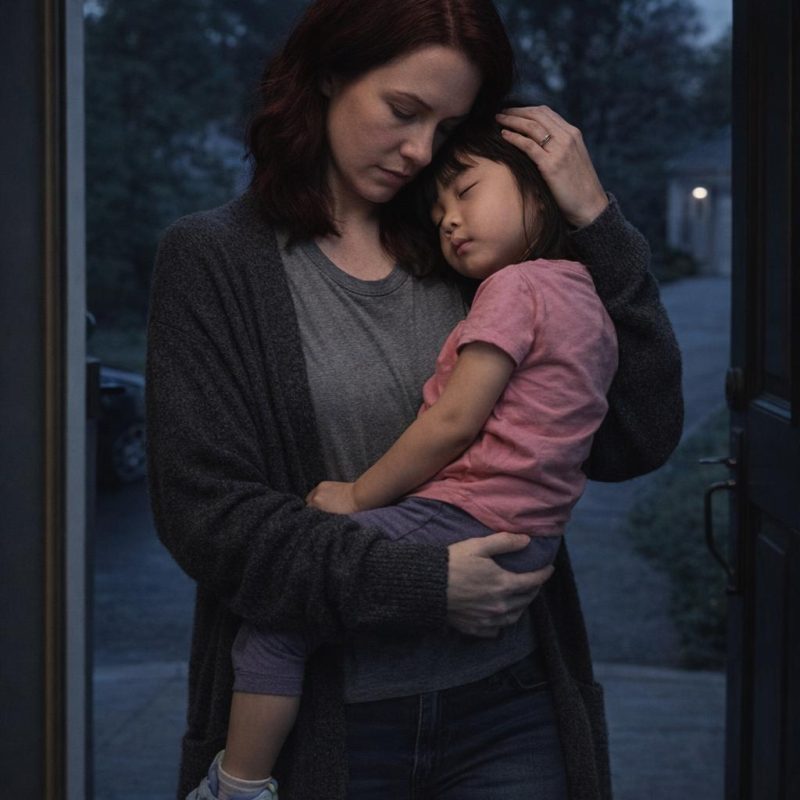 Image by RM AI
The Empty Parking Lot
The industrial park was about twenty minutes east, past the highway overpass and a stretch of warehouses that all looked the same from the road. I had the address pulled up on my phone and followed the turns until I found the right building — a low, wide facility with a faded logo above the entrance. The gate across the parking lot entrance was chained shut with a heavy padlock. I pulled up to it anyway and sat there with the engine running, looking through the chain-link at the lot beyond. It was completely empty. Not a single car, not a forklift, not a delivery truck — nothing. The asphalt had that particular stillness of a place that hadn't seen traffic in a long time. Maya was quiet in the back seat, her head tipped sideways against the car seat padding, too worn out from the fever to fuss. I got out and walked up to the gate, shading my eyes to look toward the building's entrance. The windows were dark. There was a piece of paper taped to the front door, too far away to read from where I stood, but above it, clearly visible even from the gate, was a laminated sign hanging in the window that read Closed.
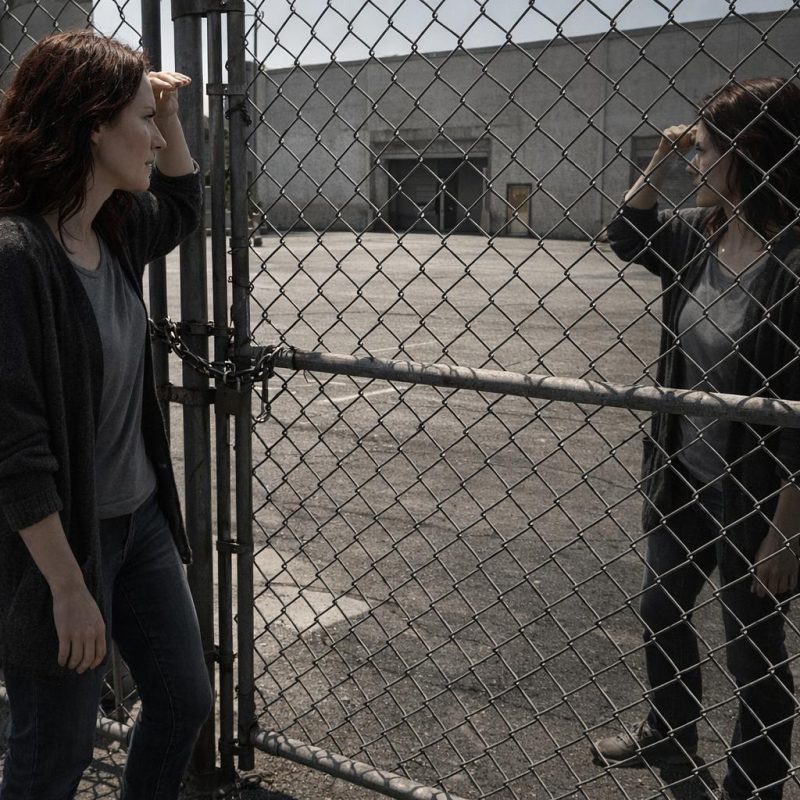 Image by RM AI
The Search
I got back in the car and sat there for a moment with my hands in my lap. Maya had drifted into a restless half-sleep in the back seat. I picked up my phone and typed Swift-Link Logistics into the search bar, not entirely sure what I was looking for — maybe a second location, maybe a phone number, maybe something that would explain the empty lot. The first result wasn't a website. It was a local business news article. I tapped it. The headline said the company had entered voluntary liquidation and ceased all operations. I scrolled down, reading faster than I was processing. There were quotes from a company spokesperson, something about restructuring debt, something about employees being notified. I scrolled back up to check the date on the article. I read it again to make sure I hadn't misread it. I hadn't. I looked up at the building through the windshield — the dark windows, the chained gate, the sign on the door — and then back down at my phone. The article was dated six months ago.
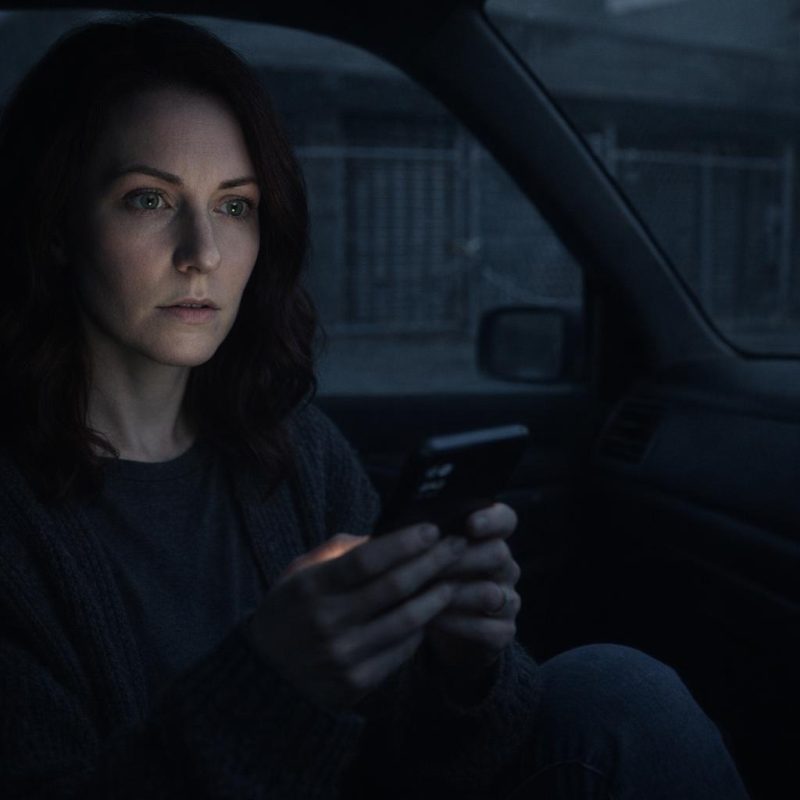 Image by RM AI
The Truth Lands
I drove home on autopilot. I got Maya inside, got more Tylenol into her, got her settled on the couch with the TV on low and her blanket tucked around her. Her fever was starting to ease by then, color coming back into her cheeks, and she fell into a real sleep sometime around five. I sat at the kitchen table and printed the article from my laptop. I didn't highlight anything or write notes in the margins. I just set it face-up on the coffee table and waited. Elena knocked at 7:15. She came in looking tired, hair slightly disheveled, already talking about a system crash that had made the last two hours a nightmare. I let her finish. Then I picked up the printout and held it out to her without saying a word. She took it the way you take something when you don't know what it is yet. I watched her eyes move across the page — and then I watched the color leave her face.
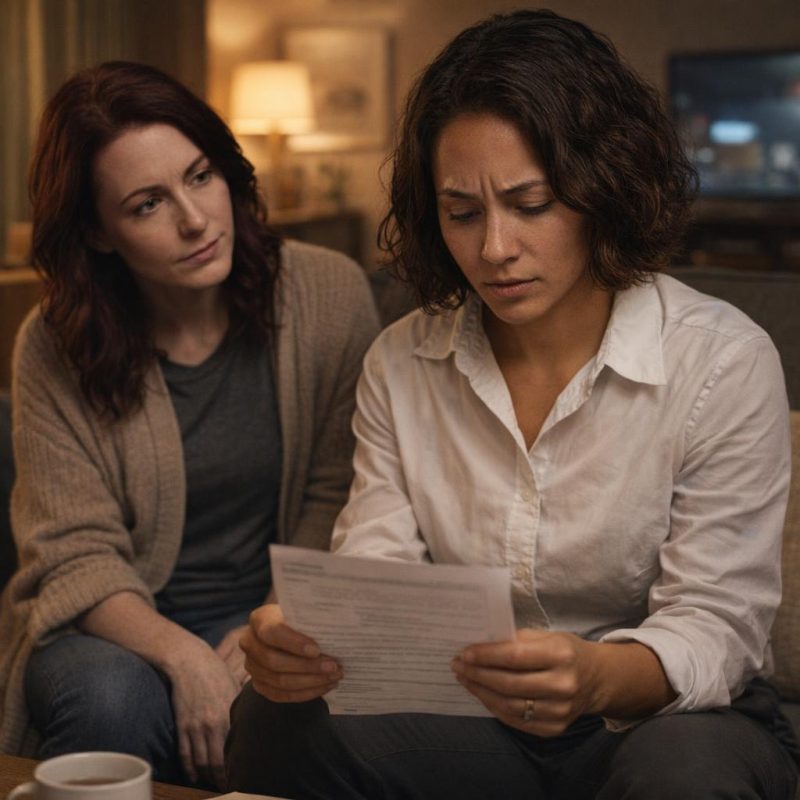 Image by RM AI
The Silence Before
She didn't say anything. She just stood there holding the paper, her eyes still fixed on it even though I could tell she'd stopped reading. I crossed my arms and waited. Maya was in the corner of the room, stacking her foam blocks with the focused seriousness that only a three-year-old can bring to something like that, completely unbothered. The TV was still on low in the background. Everything in the room felt ordinary except for the two of us standing in the middle of it. I'd spent the drive home and the hours of waiting rehearsing what I was going to say — the questions I had, the things I deserved to know — but standing there now, I didn't say any of it. I just waited. Elena opened her mouth once, then closed it. She opened it again and nothing came out. The paper shifted in her grip, and that's when I noticed it — her hands had started to shake.
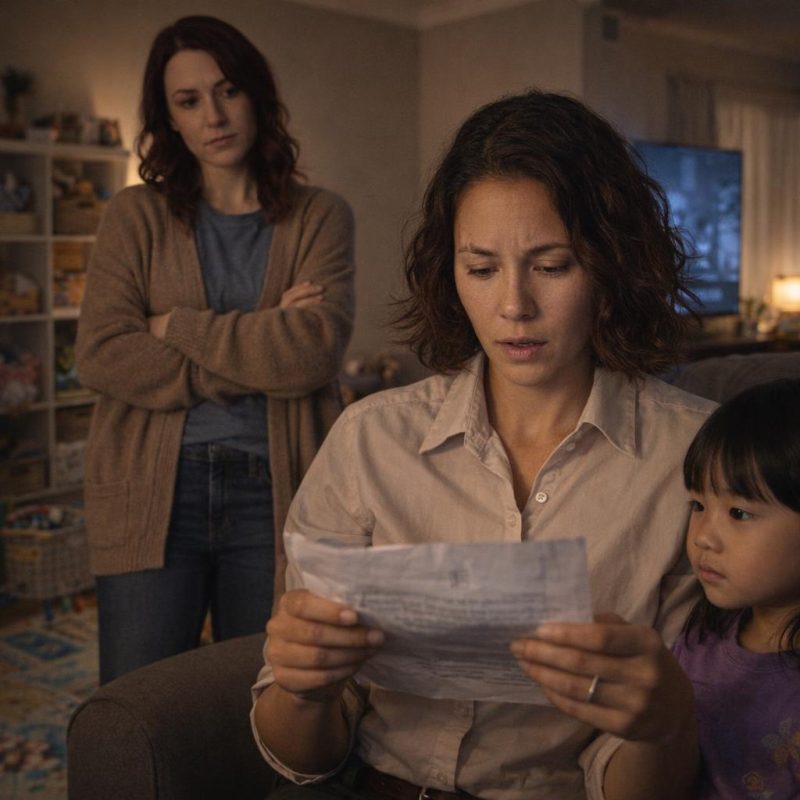 Image by RM AI
The First Excuse
She finally spoke. Her voice came out careful and measured, like she was choosing each word before she let it go. She said the company had gone through a restructuring — that it wasn't a full closure, more of a reorganization — and that she'd been transferred to a different facility on the other side of the county. She said it the way you say something you've half-convinced yourself is true. I asked her for the address of the new location. She paused. Just a beat too long. She said she'd have to look it up, that she didn't have it memorized, that it was all in her work email. I asked her what the facility was called. Another pause. She said she thought it was still under the Swift-Link name but she wasn't sure, they might have rebranded. Maya stacked another block in the corner, humming something tuneless to herself. I kept my eyes on my sister and didn't say anything. Elena's voice had started out careful and ended up somewhere smaller — thin and unconvincing, even to her own ears, trailing off into the quiet room like smoke that had nowhere left to go.
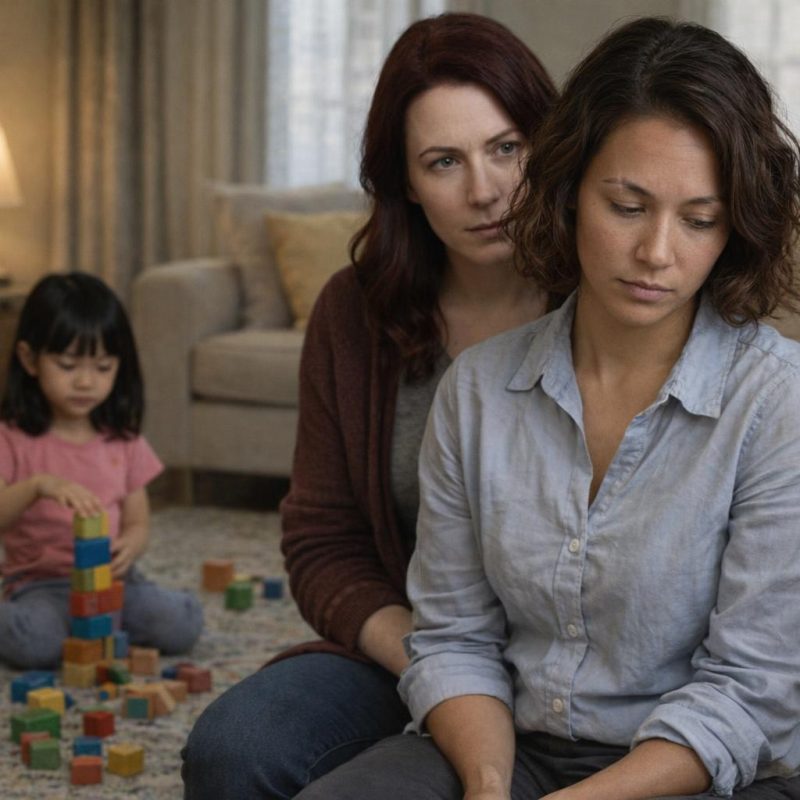 Image by RM AI
The Beach House
I told her to stop. Just that — stop. She did. I said I didn't want another explanation. I said I wanted the truth, and I wanted it now. Elena's shoulders dropped. It wasn't a dramatic collapse — it was more like something she'd been holding up for a long time finally got too heavy. She said there was no job. She said there hadn't been one for months, not since Swift-Link closed. She said she'd meant to tell me, that she'd kept thinking she'd find something else and then she wouldn't have to, but the weeks kept passing. And then she said there was someone — a man named Marcus — and that she'd been spending Sundays at his place, a beach house a few towns up the coast. She said it quietly, looking at the floor, while Maya hummed in the corner and stacked her blocks without looking up. I didn't move. I didn't say anything. I just stood there and let the words settle into the room around me, each one landing with a weight I hadn't been prepared for, even though some part of me had been bracing for something like this for weeks.
The Justifications
She started talking before I could say anything else. She said she'd been through so much — the breakup with Maya's father, the financial stress, the loneliness of doing everything alone. I stood there and listened. I let her talk. And with every sentence, something in my chest pulled tighter. She said I'd seemed happy with Maya, that I loved spending time with her, that it wasn't like she was burdening me with something I didn't want. She reached down and picked Maya up, settling her on her hip like a shield, and Maya rested her head against Elena's shoulder without a word. Elena said she'd never asked me to do anything I hadn't agreed to. She said she'd just — needed this. Needed Marcus, needed the beach house, needed a break from her life. She said it like it was the most reasonable thing in the world. And then she looked at me, steady and almost calm, and said she deserved to have something for herself.
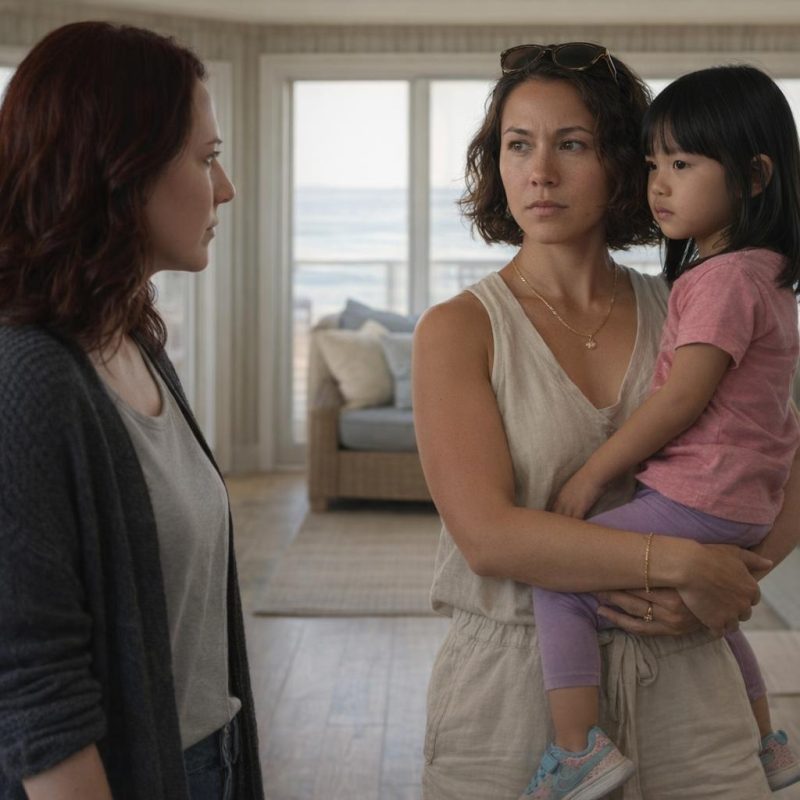 Image by RM AI
The Pattern Revealed
I asked her about the regional manager. The one she'd complained about for months — the micromanaging, the passive-aggressive emails, the way he'd passed her over for the quarterly review. Elena's jaw tightened. She said she'd made him up. I asked about the promotion track, the performance metrics, the coworker named Diane who'd apparently been undermining her in team meetings. Made up. All of it. I could hear my own breathing. I thought about the corporate jargon she'd dropped so casually — synergy, deliverables, pipeline reviews — and how I'd nodded along like it meant something, like it was proof she was working hard and building something real. I asked about the new car. She looked at the floor. Marcus. I asked about the rent she'd caught up on back in February. Marcus again. She didn't deny any of it once I named it directly. She just stood there holding Maya, confirming each thing with a word or a nod, like she was reading off a list. I thought about every Sunday I'd rearranged my life around, every excuse I'd made to David, every hour I'd given — and I saw the whole year differently, all at once, like a photograph developing in reverse.
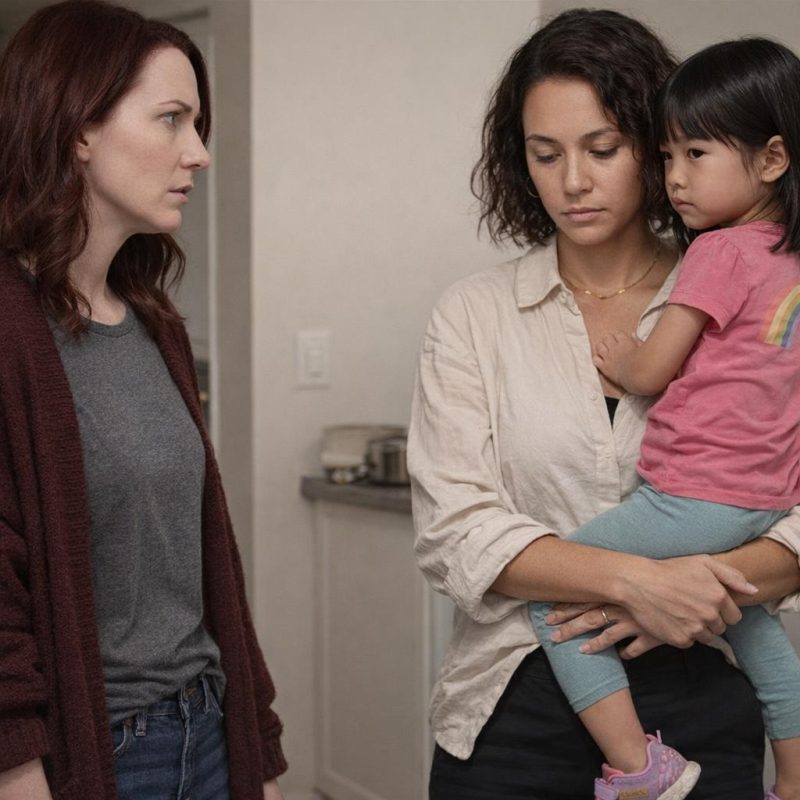 Image by RM AI
The Demand
I asked her when it actually started. Not the arrangement — the lying. She shifted Maya to her other hip. Maya's eyes were drooping, heavy with the kind of tiredness that doesn't care what's happening around it. Elena said she'd worked at Swift-Link for the first three months. That part was real. She'd genuinely needed the help then, she said, like that was supposed to soften it. I asked when she met Marcus. Four months in, she said. So one month after she'd stopped working, she'd already found him, already had somewhere to go, and she'd kept coming to my door every Sunday morning anyway. I did the math out loud. Nine months. Nine months of showing up with Maya's bag packed, kissing my cheek, and driving to a beach house. She said she hadn't known how to tell me. She said it had gotten away from her. She said a lot of things that were technically words. Maya's breathing had gone slow and even against Elena's shoulder, completely asleep now, unbothered by any of it. I stopped trying to respond. There was nothing left to say that the silence wasn't already saying better.
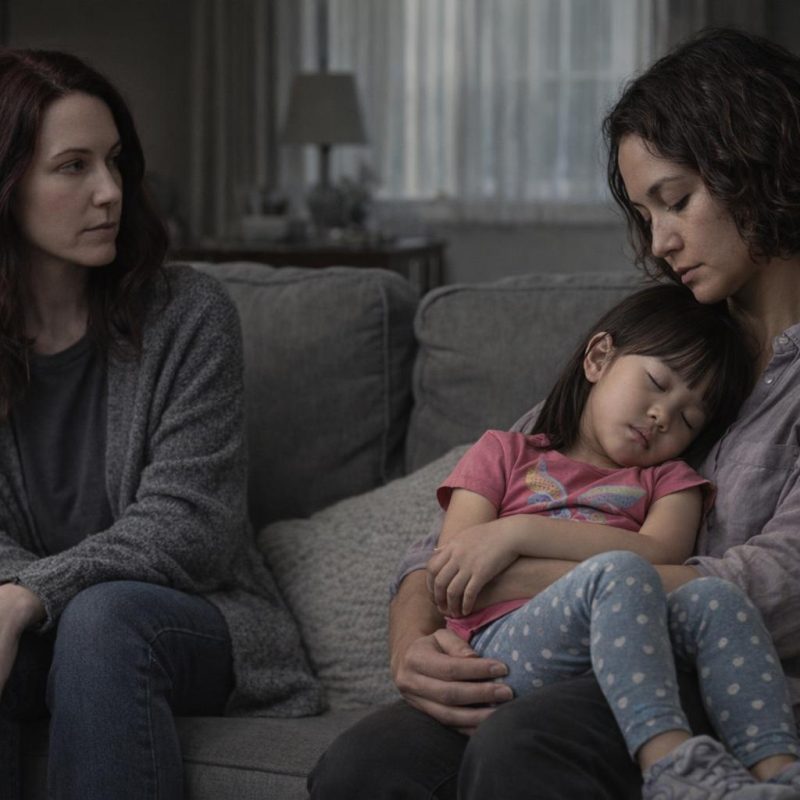 Image by RM AI
The Defensive Turn
Then she pivoted. I watched it happen in real time — the moment she decided that the best defense was to make me the problem. She said I didn't understand what it was like. She said I had David, a stable marriage, a house, a life that made sense, and that I had no idea what it felt like to be doing everything alone with a toddler and no safety net. She said I was being judgmental. She said I was making her feel like a criminal for wanting one day a week to feel like herself. I told her I wasn't judging her for wanting a break. I was angry that she'd lied to get it. She said I was splitting hairs. She said if I'd been more approachable, maybe she could have told me the truth. I let that one sit for a second. Then I told her that she'd had nine months of Sunday mornings to be honest with me, and she'd chosen not to, every single time. She said I was making this about myself. I didn't argue. I just looked at her — this woman I'd trusted completely — and felt something go very flat and very tired inside me.
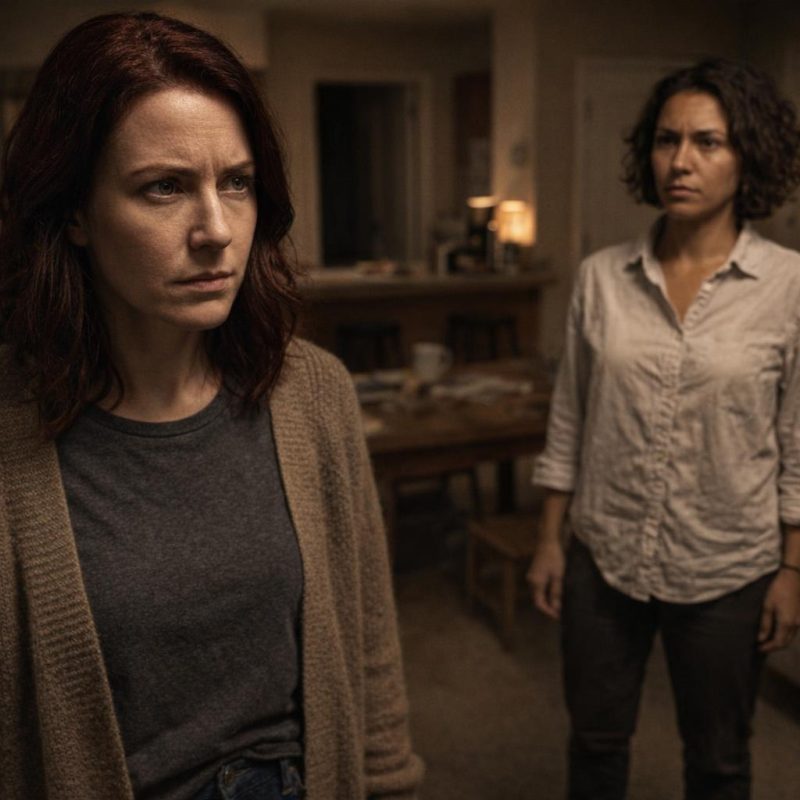 Image by RM AI
The Boundary
I told her it was over. Not in a dramatic way — I didn't raise my voice. I just said it plainly, the way you say something when you've already decided and there's nothing left to negotiate. I said I wouldn't be watching Maya anymore, and she needed to make other arrangements. Elena's face changed. The defensiveness dropped out of it and something closer to real panic came in. She said she needed me, that she didn't have anyone else, that I couldn't just pull the rug out like this. I said she should have thought about that before lying to me for nine months. She asked what she was supposed to do now. I said that was her problem to figure out, not mine. She kept going — her voice rising, Maya stirring against her shoulder — saying it wasn't fair, saying I was punishing Maya for something that wasn't her fault. I told her I loved Maya and that had nothing to do with this. She stared at me like she was waiting for me to take it back. I didn't. And when I heard my own voice say the word 'over' again, steady and final, I barely recognized it — but I knew I meant it.
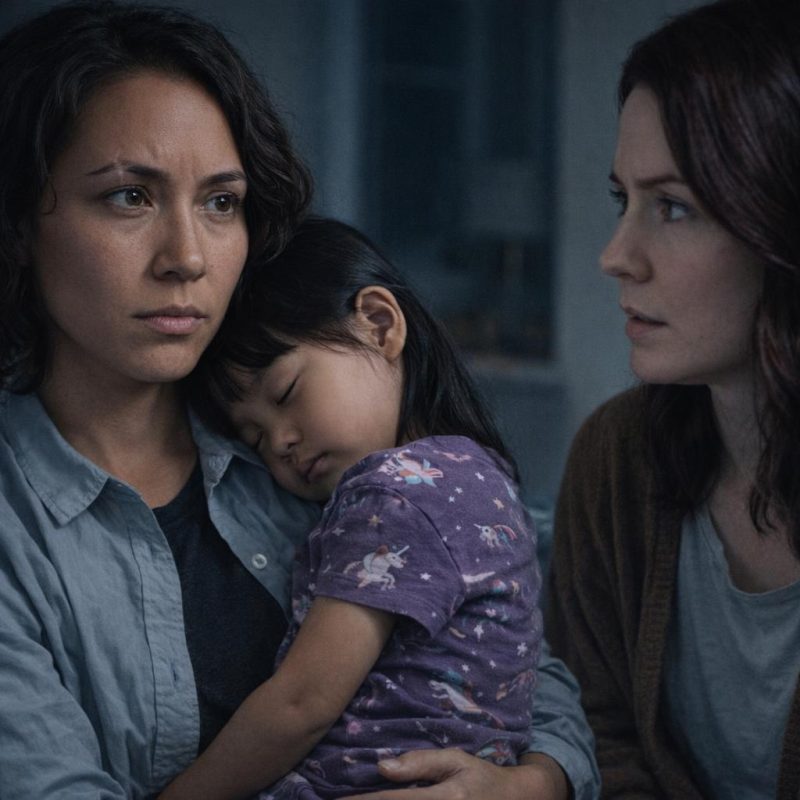 Image by RM AI
David's Validation
David came home about an hour after Elena left. I was sitting on the couch in the dark, hadn't bothered to turn on a lamp. He didn't ask why — he just sat down next to me and waited. I told him everything. All of it, from the confession to the justifications to the moment I told her it was done. He listened without interrupting, which is one of the things I love most about him. When I finished, he was quiet for a moment, and then he said he'd had a feeling something wasn't right. He said the work stories had always seemed a little too polished, a little too detailed in the wrong ways, but he hadn't wanted to push me when I seemed so certain. He said he was sorry he hadn't said something sooner. I told him I probably wouldn't have listened. He put his arm around me and I leaned into him and we just sat there in the quiet for a while. I felt some of the tension in my shoulders start to loosen — not gone, not even close, but less crushing than it had been an hour ago. Then he pulled back just enough to look at me and said he was proud of me for standing up for myself.
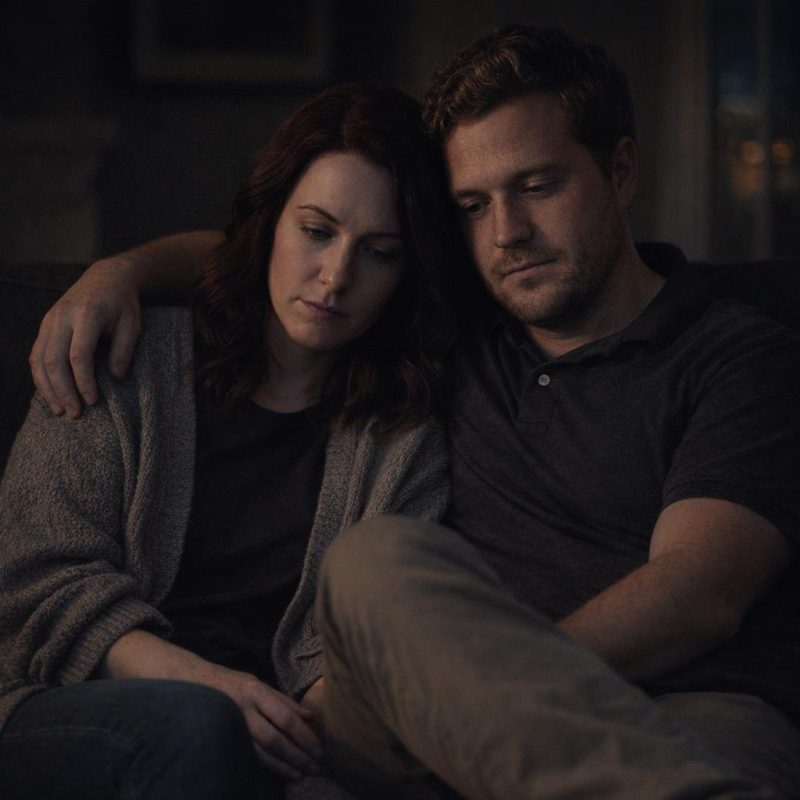 Image by RM AI
The Departure
Elena came back the next morning for Maya's things. I'd packed everything the night before — the spare clothes, the little rain boots, the stuffed rabbit Maya called Bun, the box of crayons we kept in the kitchen drawer. It was all in two bags by the front door when she knocked. I opened it and stepped back. She came in, picked up the bags, and didn't meet my eyes. I didn't offer coffee. She didn't ask. Maya was on her hip, looking between us with that careful, watchful expression kids get when they know something is wrong but can't name it. She reached out toward me and said my name — just 'Claire,' soft and uncertain — and I touched her hand and told her I loved her. Elena said something about being in touch about logistics. I said okay. That was the whole conversation. She carried the bags to the car in two trips, buckled Maya into her seat, and got in. I stood in the doorway and watched. The engine turned over, and then the sound of it faded down the street and was gone.
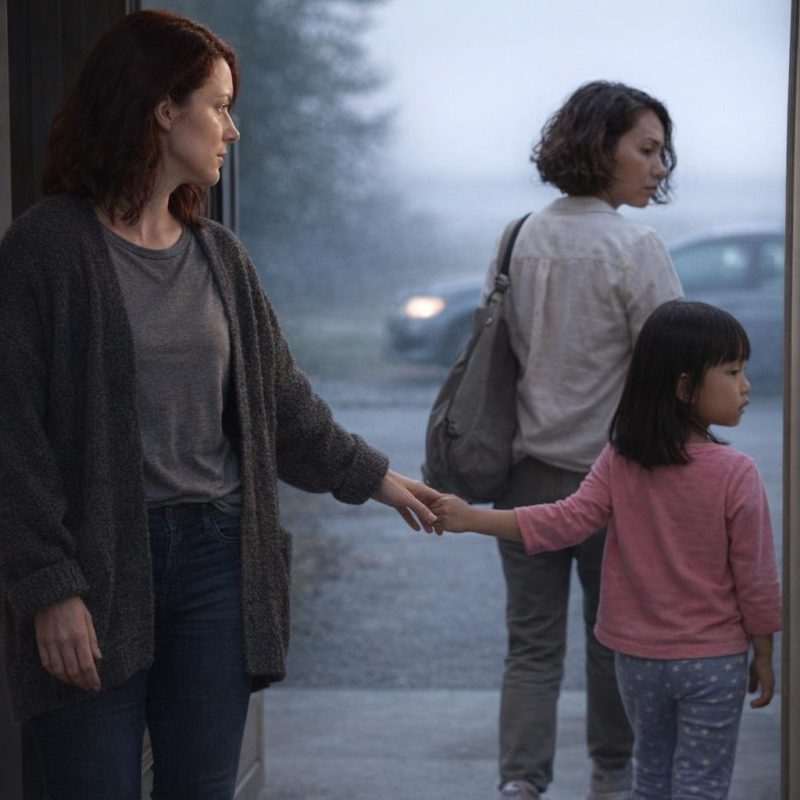 Image by RM AI
The Empty Sunday
Sunday came anyway. It always does. I woke up at the same time I always had — just before eight — and lay there for a moment before I remembered there was nowhere to be. No little knock at the door, no Maya smell of lavender soap and warm sleep, no cartoons to put on. David was already up. I could hear him in the kitchen, moving quietly, giving me space. I got up eventually and walked through the house, which felt larger than usual in that specific way empty houses do on quiet mornings. I went out back and stood by the marigolds for a while. They were still blooming, bright and indifferent to everything that had happened. David came out with two mugs and sat on the back step without saying much, which was exactly right. I was angry at Elena — I was still so angry — and I knew I'd made the right call. But standing there in the yard where Maya had chased butterflies and eaten popsicles and fallen asleep in my arms more times than I could count, I felt it settle into me, clear and aching: I missed her.
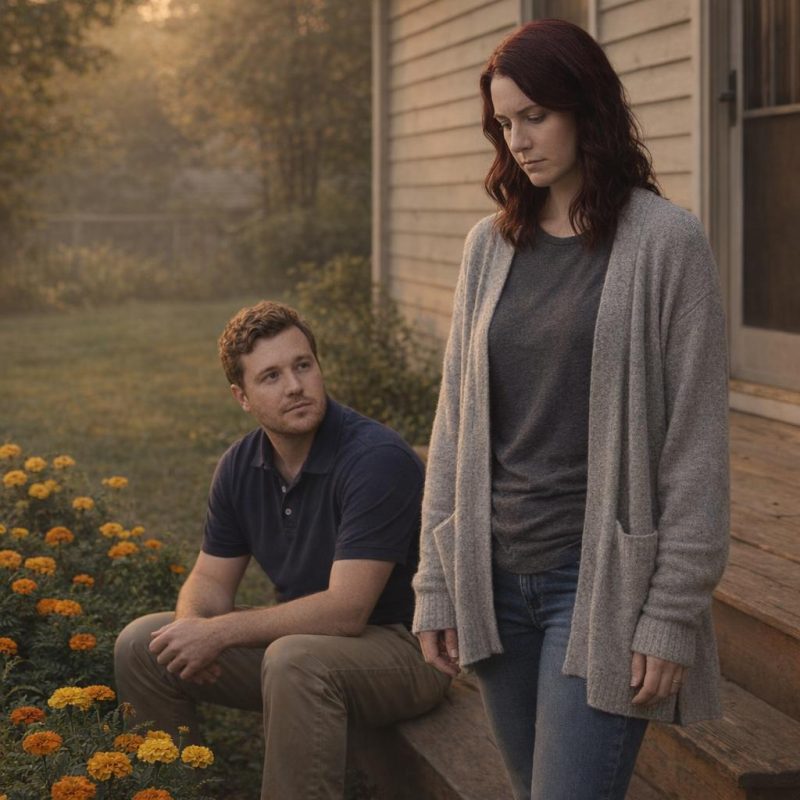 Image by RM AI
The Reckoning
I got out a notebook — the kind I used to use for grocery lists and weekend plans — and I started writing things down. Fifty-two Sundays. That was the number I kept coming back to. Fifty-two mornings I'd woken up early, made the guest room ready, put cartoons on, packed snacks. I wrote down the yoga workshop I'd registered for and cancelled three times. The brunches with friends that became apologies and rain checks until the invitations stopped coming. The Sunday afternoons with David that had quietly disappeared, one by one, until he'd stopped suggesting them. I wrote it all down and I let myself feel it — the anger, the grief, the specific humiliation of having been so willing, so available, so completely taken in. David sat across from me at the kitchen table and didn't say a word. He just stayed. At some point I stopped writing and looked at what I'd put on the page, and something shifted. All of it was real. All of it had happened. But I was still here, still the person who had shown up every single week because I believed in it. I picked up the pen and drew a line under the list. That list was not going to be the story I carried forward.
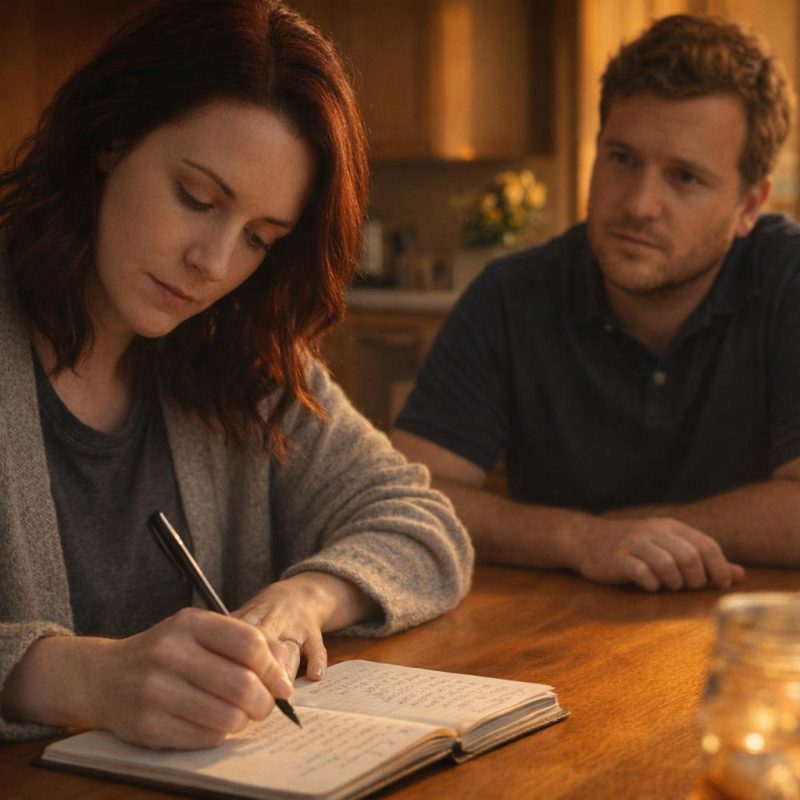 Image by RM AI
Reclaiming Sunday
I registered for the workshop on a Wednesday night, sitting at the kitchen table with my laptop and a cup of tea that had gone cold. Sunday morning I drove to the studio alone, which felt strange in a way I hadn't expected — no car seat to check, no little voice asking where we were going. The studio was on a quiet street with a painted wooden sign and a window full of plants. Inside, the room smelled like cedar and something faintly floral, and it was full of people I didn't know at all. I unrolled my mat near the back and sat there for a moment, feeling oddly exposed without a task to do or a child to watch. Then the instructor started, and I followed, and somewhere in the middle of a long slow stretch I felt my shoulders drop in a way they hadn't in months. There was a grief in it — I won't pretend there wasn't. The freedom had a shape to it, and that shape had edges. But by the end, when the room went quiet and everyone just breathed together, I felt something loosen in my chest that I hadn't even known was still held tight.
 Image by RM AI
The Lesson
It was a Tuesday evening, dishes done, the house quiet, when David asked me how I was actually doing — not the surface version, the real one. I thought about it for a moment before I answered. I told him I kept coming back to the warning signs I'd talked myself out of. The tan that appeared in November. The vague answers. The way she'd always had a reason I couldn't quite argue with. I said I think I ignored them because I wanted to believe I was helping. That believing her was easier than asking the question I was afraid to ask. David nodded slowly. He said he'd watched me bend myself into smaller and smaller shapes to make the arrangement work, and that he hadn't pushed harder because he hadn't wanted to be the one who made me choose. We sat with that for a while. I told him I understood now that there's a difference between supporting someone and just absorbing whatever they need from you without asking why. That love isn't the same thing as unlimited access. It was a hard thing to have learned the way I learned it, but sitting there with David in our quiet kitchen, I knew it was mine to keep.
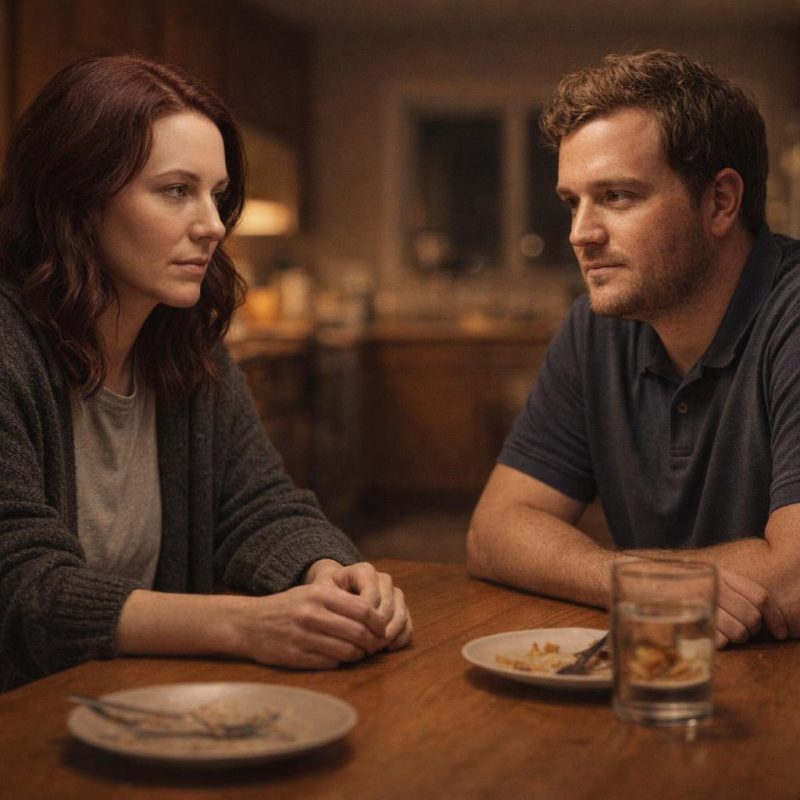 Image by RM AI
The Safety Net Rebuilt
The text from Elena came on a Saturday afternoon, short and careful: *I think we should talk. When you're ready.* I read it twice and set my phone face-down on the counter. I stood there for a minute, looking out the back window at the marigolds, which were still going, still bright, completely unbothered. David came in and I showed him the message without saying anything. He read it and handed the phone back. I told him I wasn't ready yet, but that I thought I would be eventually. That I still believed in showing up for family — I just understood now that showing up had to mean something real on both sides. He said he'd be there either way, and I believed him. I thought about Maya, who hadn't done anything wrong and who I still missed with a specific ache I didn't have a word for. I thought about the person I'd been a year ago, handing over my Sundays without a second thought, and I didn't regret that person — I just knew more now. I would help again someday, if it came to that. But I would ask the questions I'd been too trusting to ask before, and I would mean it when I needed the answer.
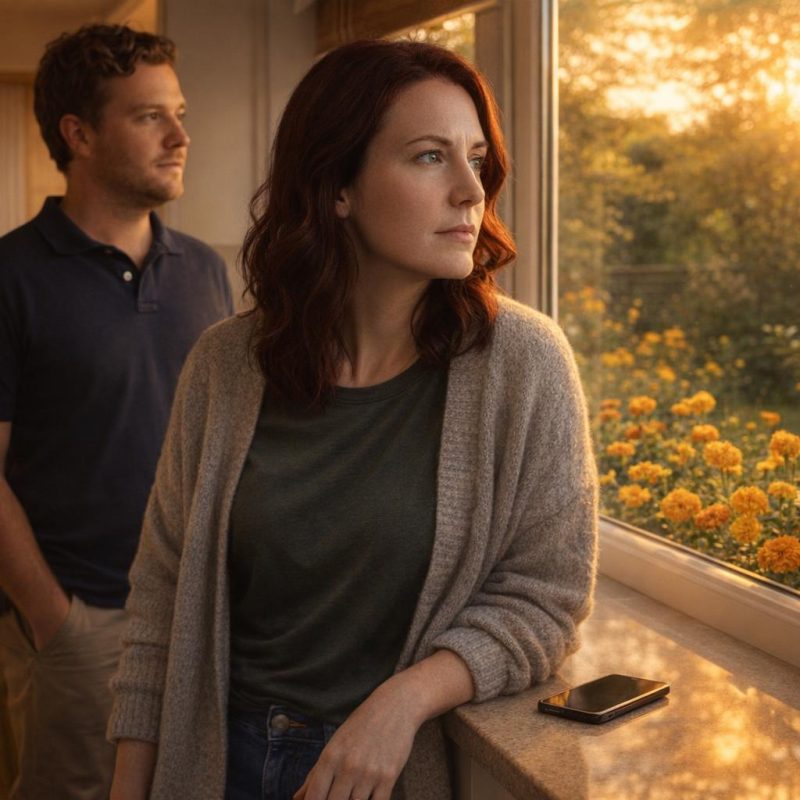 Image by RM AI